Elon Musk Says He’s Building a Chip “2 to 3 Times” Better Than NVIDIA at 10% The Cost. Is He Bluffing?
Tesla (NASDAQ:TSLA | TSLA Price Prediction) CEO Elon Musk dropped a striking claim during a recent conversation with Baron Capital founder Ron Baron, circulated widely after being posted to X by @carm1nee. Musk said he is building a chip that…

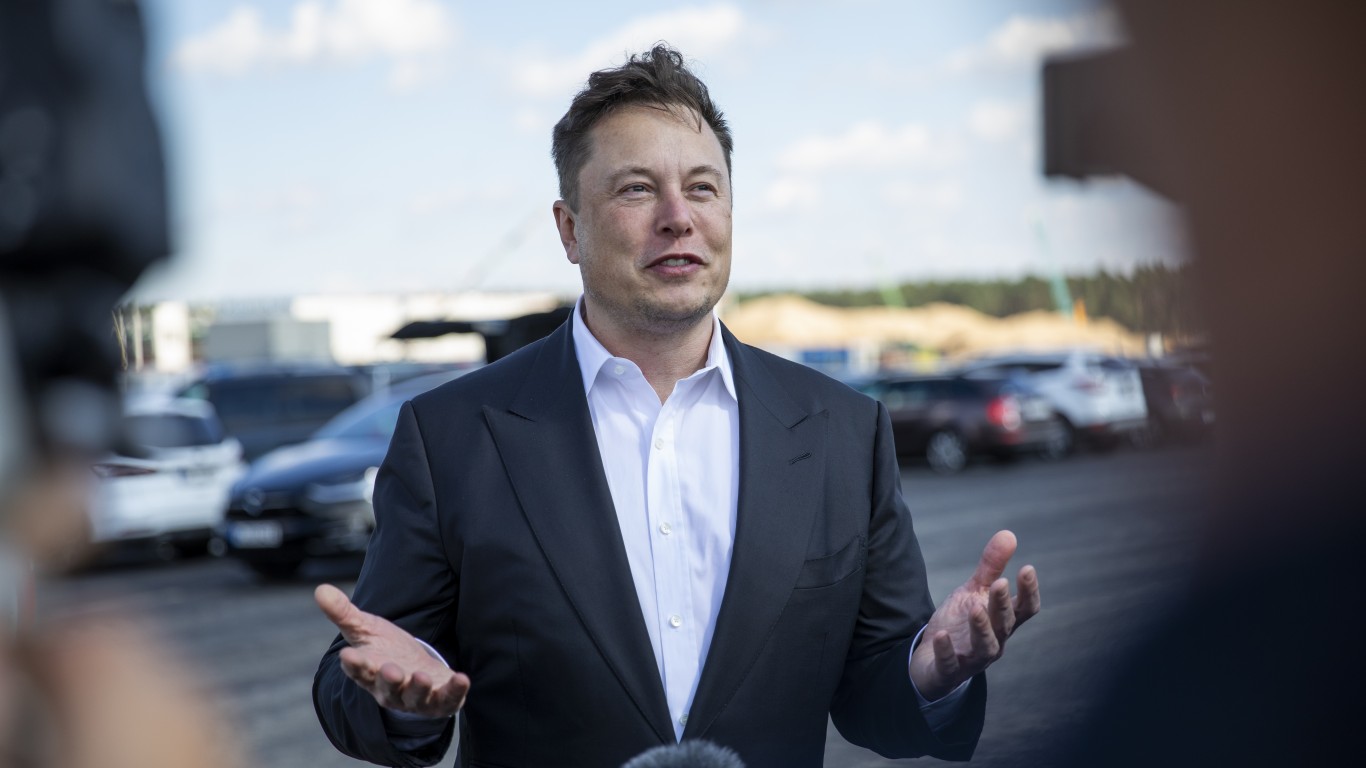
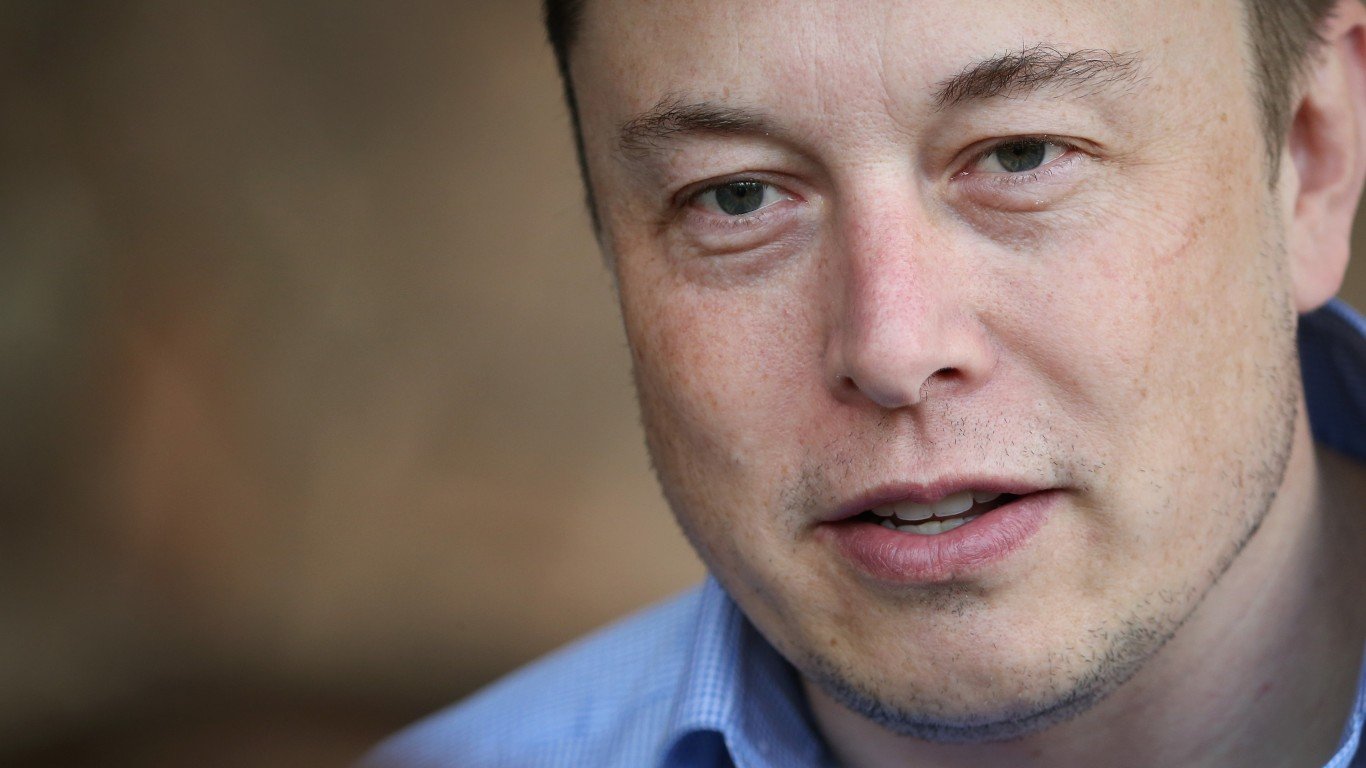
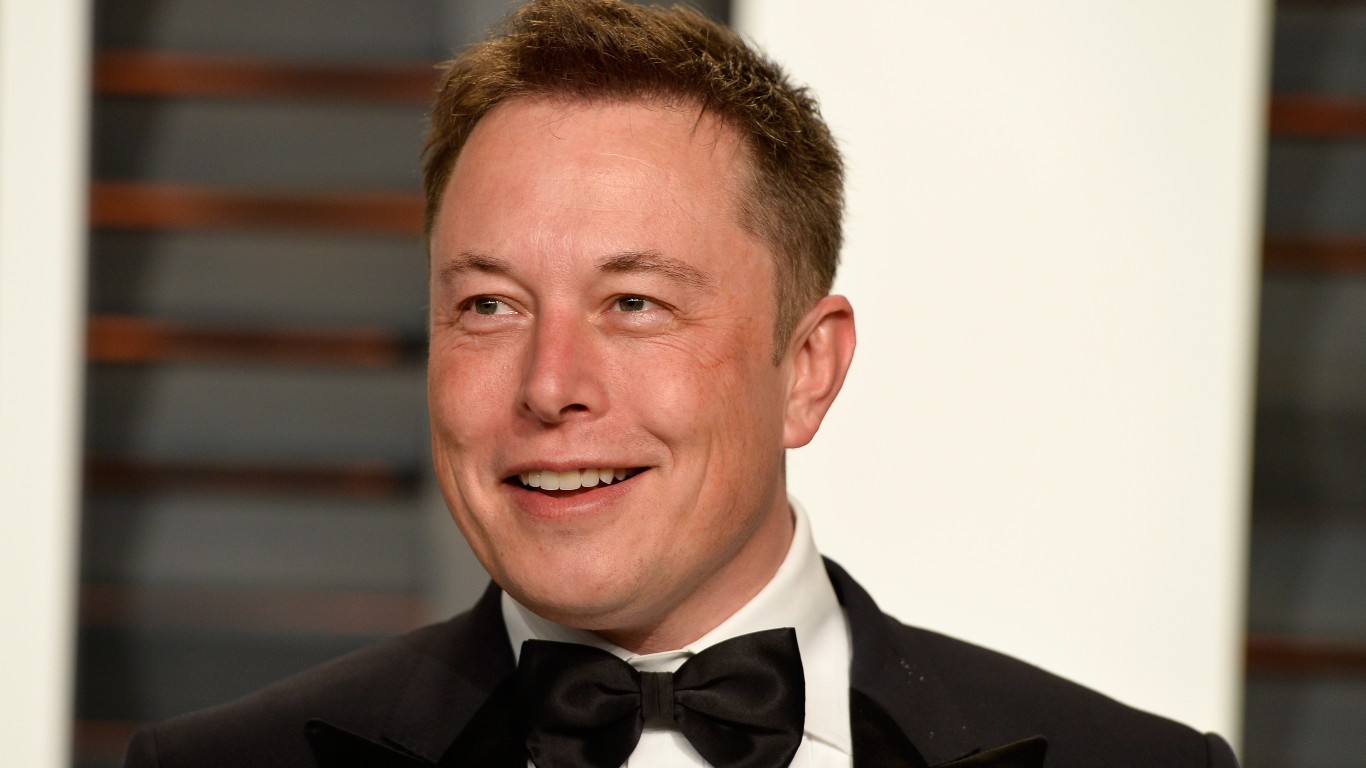
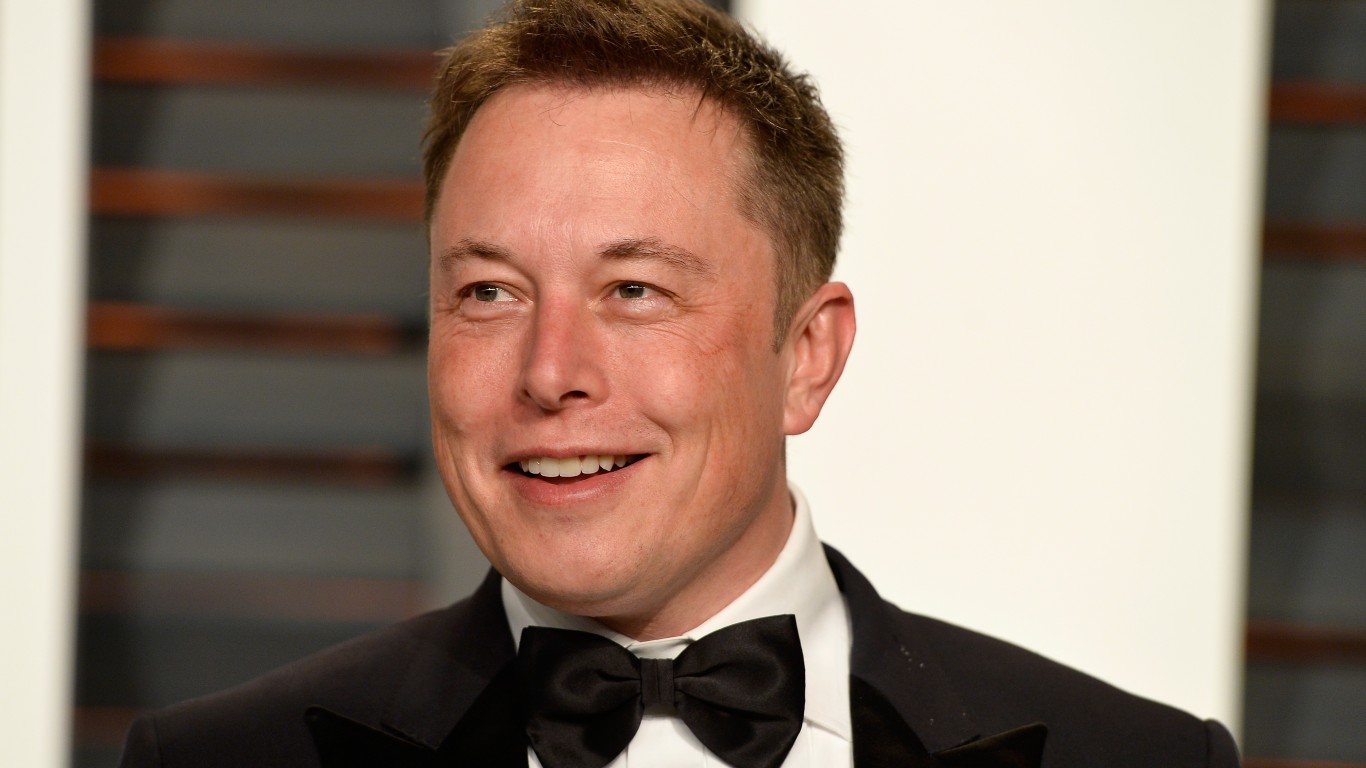
Tesla (NASDAQ:TSLA | TSLA Price Prediction) CEO Elon Musk dropped a striking claim during a recent conversation with Baron Capital founder Ron Baron, circulated widely after being posted to X by @carm1nee. Musk said he is building a chip that will be “two to three times better than NVIDIA” at 10% of the cost, with a specific focus on inference workloads.
The boast lands at a sensitive moment for the AI chip trade. NVIDIA (NASDAQ:NVDA) commands a $5.02 trillion market cap and posted Q1 FY2027 revenue of $81.61 billion, while Intel (NASDAQ:INTC) has surged on a foundry comeback that includes a Tesla partnership.
The question is whether Musk is laying out a real roadmap or projecting ambition that won’t survive execution timelines. The answer requires looking at his track record on both sides of that ledger.
Musk’s Bold Claim, Broken Down
Musk asserted that he can “visualize” the entire physical chip design and that Tesla’s next-generation processors will beat NVIDIA at inference by a wide margin. He also brushed off Taiwan Semiconductor Manufacturing‘s (NYSE:TSM) claim that a new fab takes five years.
“Five years to me is an eternity,” Musk declared. “My timelines go one year, two year, and at year three it goes to infinity.” He framed the chip as critical to scaling Tesla’s autonomy, citing 10 billion miles of Full Self-Driving (FSD) data and claiming the system is already “4 times safer than a human driver” with a 10x improvement coming.
The substance behind the claim is the AI5 inference chip, which Tesla taped out in April. Production is planned for 2027, with AI6 following in 2028 and Tesla targeting a 50x improvement over AI4. TSLA stock is down 10.5% year to date (YTD), suggesting investors haven’t fully priced this roadmap in.
Terafab and the Vertical Integration Bet
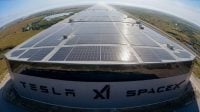
The manufacturing side runs through Terafab, the joint chip-fab initiative Musk announced with Tesla in March, with Intel joining as a partner in April. The SpaceX S-1 filing describes a long-term goal of producing “one terawatt of compute hardware each year” with chips designed for both terrestrial and orbital AI deployments.
Intel’s Q1 FY2026 results show why Musk wanted it in the tent. The Intel Foundry segment grew to $5.42 billion (up 16% year over year), and Intel 18A is now in high-volume manufacturing in Arizona and Oregon. Musk has said Terafab will use Intel’s 14A process.
Intel CEO Lip-Bu Tan has called Intel “a fundamentally different company,” with AI-driven businesses contributing 60% of revenue. INTC stock is up 195% YTD on the foundry revival, Apple (NASDAQ:AAPL) manufacturing rumors, and a nearly 10% U.S. government stake.
The SpaceX S-1 filing frames Terafab as in-house vertical integration for Musk’s own companies rather than a commercial foundry chasing Taiwan Semiconductor’s external customer book. Whether the closed-loop model can beat the world’s most advanced foundry on cost per usable chip remains the central question.
Why NVIDIA Still Has the High Ground
NVIDIA’s most recent earnings report shows the gap any challenger must close. The company’s revenue rose 85% YoY, data center revenue hit $75.25 billion (+92%), and non-GAAP gross margin came in at 75% (see the Q1 FY27 release). NVIDIA CEO Jensen Huang called the AI factory buildout “the largest infrastructure expansion in human history.”
The Vera Rubin platform, NVIDIA’s Blackwell successor, claims a 10x reduction in inference token cost. That matters because inference is the workload Musk says Tesla can beat NVIDIA on, and NVIDIA is racing its own roadmap directly into that argument.
NVDA stock trades at a forward P/E ratio of 23x with an average analyst target of $298. The bear case is the one Michael Burry has voiced, calling the Musk-NVIDIA dynamic a “Fugazi” while questioning AI infrastructure pricing power.
Is He Bluffing? Weighing the Track Record
Musk’s history cuts both ways. He delivered reusable rockets and scaled Tesla into the world’s most valuable automaker. However, his FSD timelines have slipped repeatedly, and the “year three goes to infinity” pacing has often proven more aspirational than predictive in the autonomy business.
The prediction markets implicitly side with skepticism. Polymarket has no active markets on Tesla’s chip milestones, and the Tesla-xAI merger market sits at 99% “No” probability by June 30, suggesting that traders aren’t pricing near-term validation of Musk’s integrated compute thesis.
Investors can hold both ideas at once. NVIDIA’s moat is enormous and self-reinforcing, while Tesla’s AI5, AI6, and Terafab work could legitimately reshape inference economics if even half of Musk’s claims land. Watch for whether AI5 production timelines hold in 2027 and whether Intel 14A yields support Terafab’s cost math, and then form your own judgment on the rest.
Contact [email protected] for any questions or corrections.
David Moadel is financial writer specializing in stocks, ETFs, options, precious metals, and Bitcoin. David has written well over 1,000 articles for leading online publications, helping investors understand markets, income strategies, and risk.His work has appeared in The Motley Fool, InvestorPlace, U.S. News & World Report, TipRanks, ValueWalk, Benzinga, Market Realist, TalkMarkets, Finmasters, 24/7 Wall St., and others.With a master’s degree in education, David has taught at the elementary, high school, and college levels. That teaching background shapes his writing style: clear, educational, and practical. David has also built a loyal social-media audience by providing trustworthy financial content on YouTube, X/Twitter, and StockTwits.