Kevin Warsh Comments Send Shiver Down Investors’ Spines. Would He Really ‘Murder This Bull Market?’
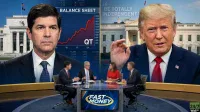
Federal Reserve Chair Kevin Warsh’s first post-meeting press conference rattled risk assets on Wednesday, and the loudest pushback came from a strategist who thinks the bull market remains structurally intact. On CNBC’s Closing Bell Overtime, Warren Pies, co-founder of 3Fourteen…

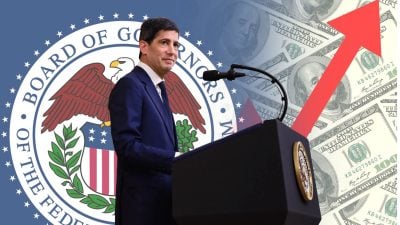
Federal Reserve Chair Kevin Warsh’s first post-meeting press conference rattled risk assets on Wednesday, and the loudest pushback came from a strategist who thinks the bull market remains structurally intact. On CNBC’s Closing Bell Overtime, Warren Pies, co-founder of 3Fourteen Research, argued that “Bull markets do not die of old age. They’re usually murdered by the central bank.” The question for investors holding broad market exposure through SPDR S&P 500 ETF Trust (NYSEARCA:SPY), Invesco QQQ Trust (NASDAQ:QQQ), and SPDR Dow Jones Industrial Average ETF (NYSEARCA:DIA): is Warsh actually willing to pull the trigger?
What Spooked the Market
According to the CNBC segment, the Dow dropped about 500 points, the S&P 500 and Nasdaq both fell more than 1%, and the 2-year Treasury yield spiked about 15 basis points as Warsh signaled a higher-for-longer stance. The bond market told the same story. The 10Y-2Y spread compressed to 0.29% on June 17, the tightest level in twelve months, while the VIX jumped 12.4% in a single session to 18.44. Adding to the unease, Warsh declined to submit a dot for the economic projections, while the other 18 policymakers submitted dots pointing toward higher rates.
The backdrop matters. The Fed has held the upper bound of the funds rate at 3.75% since December 11, 2025, a stretch of roughly six months.
Pies’ Thesis: Earnings Are the Bull’s Armor
Pies’ framework leans on fundamentals. He cited projected S&P 500 earnings growth in the “20-something percent” range for 2026 and 10% forward sales growth, arguing the cash flow engine remains intact. BEA data backs the trajectory: total U.S. corporate profits hit $4,392.5 billion in 2026 Q1, up 12% year over year, an acceleration from 2025’s pace.
His historical anchor is 2018. “We’ve only seen one year where earnings have grown by 20% and the market has not produced double-digit returns. That was 2018… that was when the Fed was tightening,” Pies said. The implication is clean: strong profits get neutralized only when policy turns into a headwind.
The Tripwire: A Pivot to Hikes
Pies’ framework treats positioning as conditional. With no recession signal in his indicators and a Fed still nominally easing, investors “can’t be underweight equities”. The danger zone opens if the Fed pivots to hiking. On that point Pies was careful: “I don’t think we’re there yet,” while conceding “that’s what the market’s worried about… today.”
Core PCE keeps that fear alive. The Fed’s preferred gauge sits at a 12-month high index value of 129.63 as of April 2026, with month-over-month gains accelerating into 2026. For a Warsh-led Fed worried about anchoring inflation expectations, that data offers cover for a hawkish hold. Treasury markets agree: the spread has compressed from 0.54% on May 17 to 0.29% on June 17, a textbook flattening when short-rate expectations reprice higher. See the underlying FRED series for the historical context.
Reading the Indexes
The damage looks contained so far. SPY closed Wednesday’s session at $740.96, still up 8.66% year to date and 24% over the past year. QQQ is the higher-beta read on Pies’ AI question. The host pressed on whether the AI trade is “getting a little tired”, yet QQQ closed at $722.51, up 17.61% year to date and 36.56% over twelve months. DIA sat at $516.30, up 7.43% year to date.
Markets rallied today following Donald Trump’s signing of an MOU with Iran. Chip stocks saw the biggest gains.
SPY’s exposure to the policy debate is concentrated. The fund’s top weights run through NVIDIA at 7.58%, Apple at 6.66%, and Microsoft at 4.91%, with Information Technology making up 32.91% of the index. A hawkish Warsh hits long-duration growth hardest, which is why QQQ remains the cleanest barometer of how seriously markets take the murder threat.
The setup leaves investors watching one variable: whether Warsh’s next move is a pause that holds or the first step toward a hike. Pies’ read is that earnings carry the index through anything short of the latter. The bond market is already hedging.
Contact [email protected] for any questions or corrections.
I've spent more than 15 years inside enterprise software, working alongside the finance, sales operations, and HR leaders who run the revenue engines at some of the largest tech companies in the country.
My day job is helping enterprise executives make smarter decisions about retention, compensation, and growth. These are the same operational levers that show up in every earnings report investors actually read. That perspective shapes my writing for 24/7 Wall St.
The headline numbers are easy. The interesting stuff is underneath: how companies make money, what executives are worried about, and what any of it means for the person checking their 401(k) on a Sunday afternoon. I write about personal finance and business as someone who has spent her career inside the rooms where these decisions get made.