Memory Price Tsunami Swamps Apple as Tim Cook Hikes Prices 20%
The artificial intelligence boom is creating winners and losers in places many investors never expected. While most attention remains fixed on GPUs from Nvidia (NASDAQ:NVDA | NVDA Price Prediction), memory chips have quietly become one of the industry’s biggest bottlenecks. Every…

This post may contain links from our sponsors and affiliates, and Flywheel Publishing may receive compensation for actions taken through them.

The artificial intelligence boom is creating winners and losers in places many investors never expected. While most attention remains fixed on GPUs from Nvidia (NASDAQ:NVDA | NVDA Price Prediction), memory chips have quietly become one of the industry’s biggest bottlenecks.
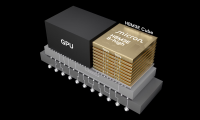
Every AI server requires massive amounts of high-bandwidth memory (HBM) and DRAM, and supply simply can’t keep pace with demand. The result is a classic supply crunch: memory manufacturers are reporting surging profits while technology companies are paying sharply higher component costs.
Apple’s decision to raise prices on select Mac and iPad models by roughly 20% is the latest sign that AI-driven inflation has arrived — and consumers are beginning to feel it.
Micron’s Earnings Reveal the Scale of the Shortage
If investors want to understand why Apple is raising prices, they only need to look at yesterday’s stunning earnings report from Micron Technology (NASDAQ:MU).
Micron reported revenue and profit growth fueled by soaring demand for both HBM and DRAM. Its HBM supply is effectively sold out through 2026, while customers are placing orders years in advance to secure capacity.
Even more telling, Micron has indicated it can currently satisfy only about 50% to 66% of customer demand in HBM and DRAM for AI applications. That’s not a sign of weak production but rather evidence demand is overwhelming supply.
The same dynamic is playing out across the industry.
| Company | Key AI Memory Products | Current Market Condition |
| Micron | HBM, DRAM, NAND | HBM sold out through 2026, expanding capacity |
| Samsung Electronics | HBM, DRAM, NAND | Expanding AI memory capacity |
| SK hynix | HBM, DRAM | Leading HBM supplier, capacity constrained but expanding |
AI infrastructure spending is absorbing nearly every available memory chip manufacturers can produce.
Apple Is Paying the Price
Apple (NASDAQ:AAPL) sits at the center of this storm because it is the world’s largest buyer of memory chips. The company just announced it was increasing average prices about 20% across select Mac and iPad models, citing higher memory and storage component costs. Those increases weren’t arbitrary. They reflect a market where DRAM and NAND prices have risen sharply as suppliers prioritize higher-margin AI products.
CEO Tim Cook recently compared today’s memory pricing environment to a “100-year flood,” an unusually vivid description from a CEO known for measured language.
Micron reporting record earnings because memory prices are climbing — and Apple raises prices because memory costs are climbing — makes it clear who is helping fund those higher profits.
That doesn’t necessarily mean Apple will suffer. The company benefits from one of the strongest customer ecosystems in consumer technology. Many users own an iPhone, Mac, iPad, Apple Watch, and multiple subscription services. That loyalty gives Apple pricing power many competitors simply don’t have.
‘AI-Flation’ Is Just Getting Started
The bigger concern may be what happens to the rest of the consumer electronics industry.
Unlike Apple, many PC manufacturers compete primarily on price. As memory costs rise, they face a difficult choice: absorb the higher costs and accept lower margins, or raise prices and risk weaker sales. Consumers are already holding onto smartphones and laptops longer than they did a decade ago. Higher prices could extend replacement cycles even further.
Granted, memory manufacturers are investing billions to expand capacity. Yet industry forecasts suggest shortages may persist into 2027 because AI data centers continue consuming growing amounts of HBM. More importantly, memory makers are allocating increasing production toward higher-margin HBM rather than the commodity DRAM used in many consumer devices.
That means AI servers aren’t just competing with other AI servers for memory. They’re competing with laptops, tablets, smartphones, and virtually every connected device consumers buy.
Key Takeaway
In short, Apple’s 20% price increase is less about Apple and more about the new economics of AI. Memory has become the critical choke point in the semiconductor industry, allowing suppliers like Micron, Samsung, and SK hynix to command higher prices. Apple’s loyal customer base may help it weather the storm better than rivals, but consumers across the technology landscape are likely to face higher prices as memory shortages persist.
Ultimately, AI’s appetite for memory is creating a ripple effect that stretches far beyond data centers. The latest earnings from Micron and the latest price hikes from Apple suggest the same conclusion: AI-flation has arrived with a vengeance, and it may be with us for years.
Contact [email protected] for any questions or corrections.
After two decades of patrolling the dark corners of suburbia as a police officer, Rich Duprey hung up his badge and gun to begin writing full time about stocks and investing. For the past 20 years, he’s been cruising the markets looking for companies to lock up as long-term holdings in a portfolio while writing extensively on the broad sectors of consumer goods, technology, and industrials. Because his experience isn’t from the typical financial analyst track, Rich is able to break down complex topics into understandable and useful action points for the average investor. His writings have appeared on The Motley Fool, InvestorPlace, Yahoo! Finance, Money Morning, and, of course, 24/7 Wall St. He has been featured in both U.S. and international publications, including MarketWatch, Financial Times, Forbes, Fast Company, and USA Today.