Deere’s $20 Billion Precision Ag Push Is Transforming Farming– What That Means For the Stock
John Deere just put a staggering sum of money on the line for U.S. manufacturing while its core ag business sits near a cycle bottom, and the combination creates a setup that stock investors cannot afford to ignore.


Anytime we’re talking about a $20 billion buildout of anything, that’s big money. I know, trillions of dollars in this AI buildout are being thrown around, and that number can get lost in the fray. But in the manufacturing or agricultural sectors, that’s big money.
Let’s dive into why this matters for farm equipment supplier Deere (NYSE:DE | DE Price Prediction), and where this stock could be headed from here.
The Number
The $20 billion number I put forward earlier represents the commitment Deere has put on the table for U.S. manufacturing investment over the next 10 years, disclosed by CFO T. Brent Norwood on the fiscal Q2 2026 earnings call.
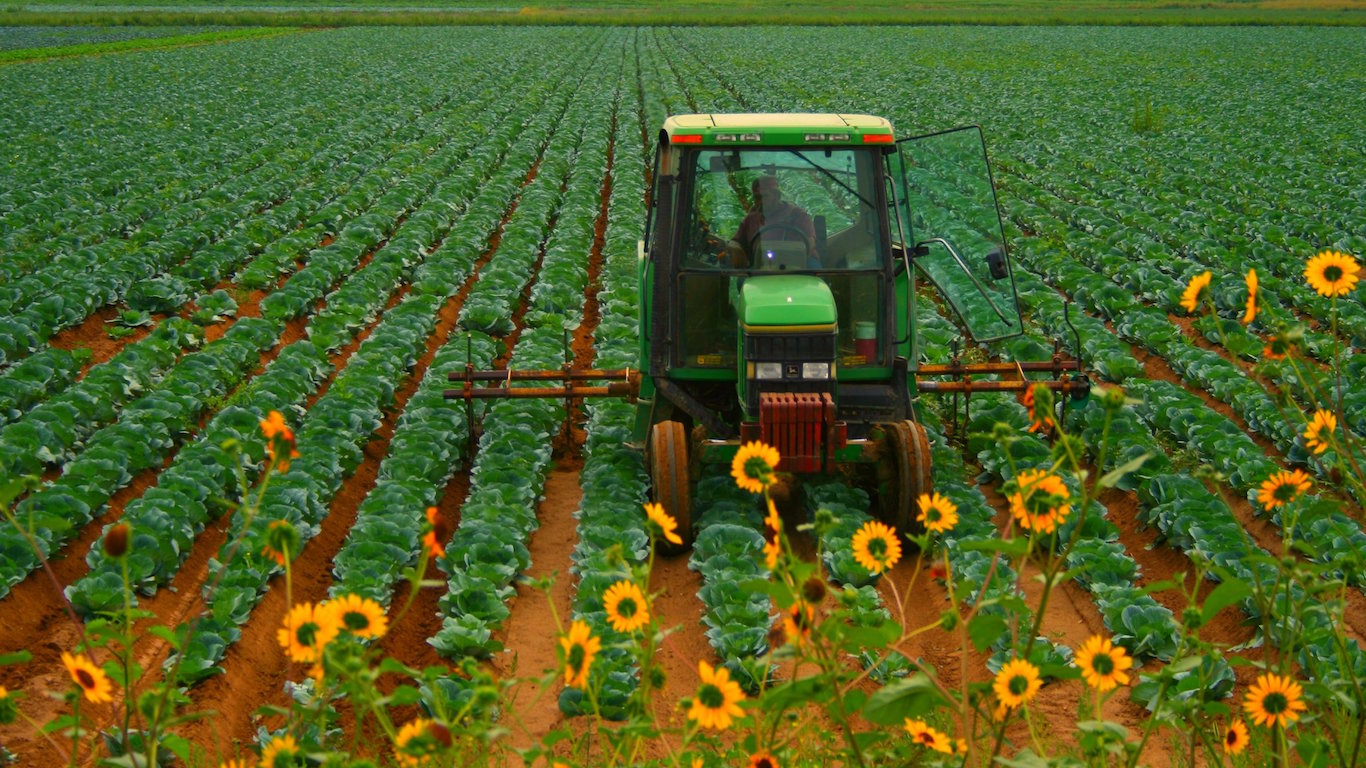
This capital will support precision agriculture buildout that already has customers spraying 5 million acres with See and Spray technology, and running nearly 440,000 monthly active users through the John Deere Operations Center. Indeed, if the manufacturing and construction industries can continue to strengthen from here, this is a company that investors shouldn’t sleep on.
What It Means
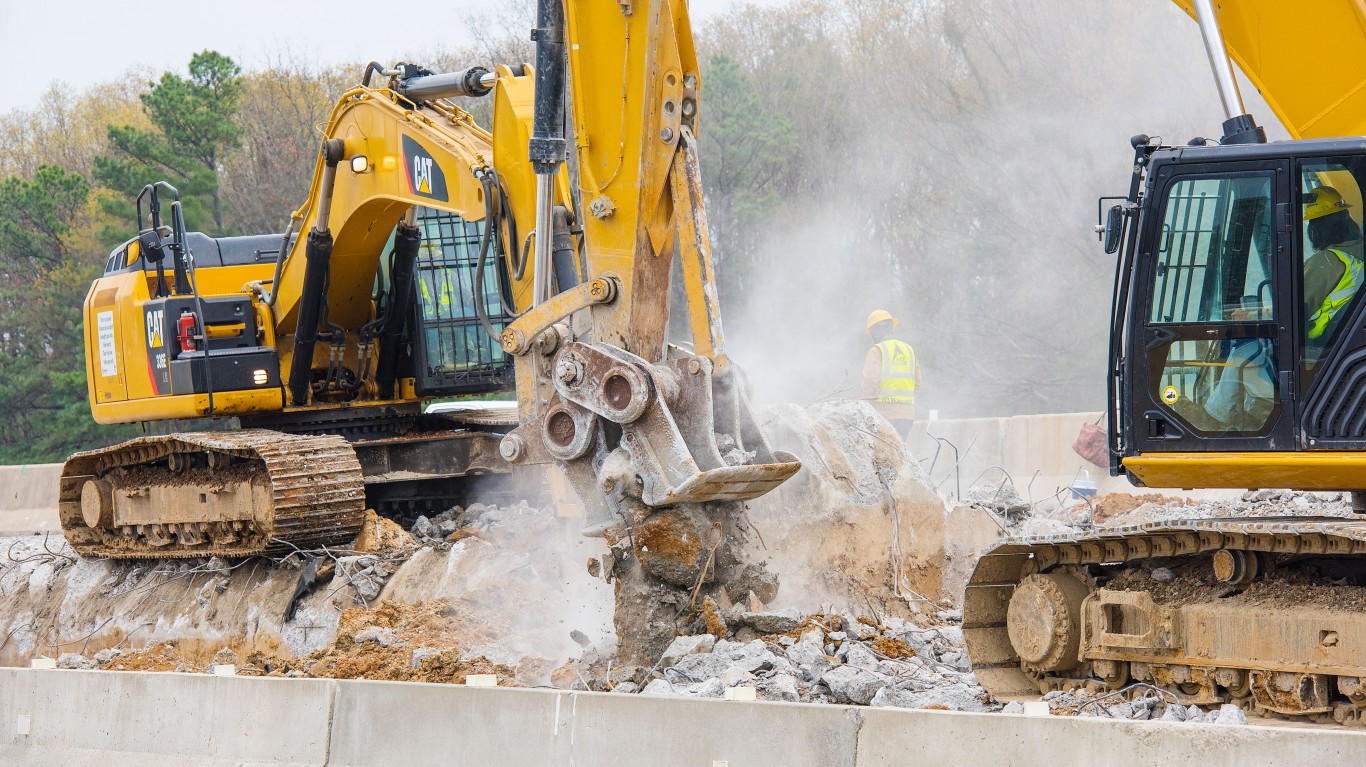
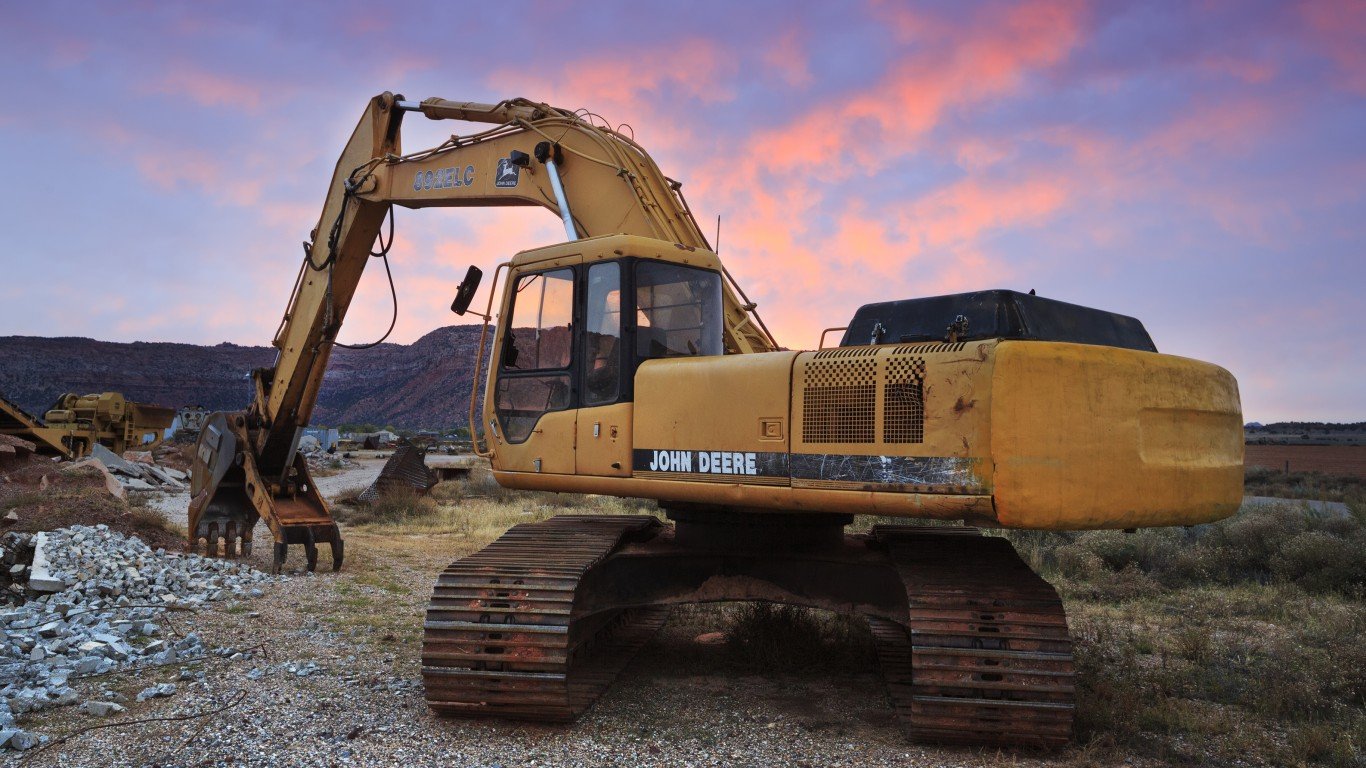
The aforementioned $20 billion dollar figure is a concrete factory-and-supplier commitment. Norwood laid out the math on the call – approximately 80% of John Deere’s U.S. complete good sales are produced at U.S. manufacturing facilities, and roughly 75% of those components are sourced from U.S.-based suppliers. The Kernersville, North Carolina plant just began building John Deere designed excavators following a $70 million expansion investment.
That manufacturing footprint is what carries the technology. Deere’s R&D spend hit $583 million in Q2 2026, up from $549 million a year earlier. See and Spray scaled from 1 million acres in year one to 5 million acres globally last year, with demonstrated 50% to 60% herbicide savings. Additionally, JDLink Boost kit sales crossed 12,500 units since launch in the second half of 2024, growing 25% in the last quarter alone, and Precision Essentials renewal rates sit at 70% overall and over 90% for second-year customers. That’s evidence that adoption sticks after the first season.
Bull Case
The company’s Q2 earnings report delivered where it mattered. Revenue of $13.369 billion beat expectations, and diluted EPS of $6.55 came in ahead of estimates. That represents four consecutive quarters of EPS beats. Construction & Forestry sales rose 29% to $3.79 billion, and Small Agriculture & Turf rose 16% to $3.485 billion. Importantly, Deere’s construction order book is also up more than 60% since November, with over 80% of production slots filled for the year, buoyed by data center construction expected to top $100 billion in 2026.
Management held full-year net income guidance at $4.5 billion to $5.0 billion, raised the Construction & Forestry sales outlook to up approximately 20%, and lifted Financial Services net income to $860 million. Capital returns matched the confidence, with $500 million in buybacks over six months and a $1.62 quarterly dividend. Norwood put the cycle thesis plainly: “our baseline view remains that fiscal 2026 will represent the bottom of the ag cycle.”
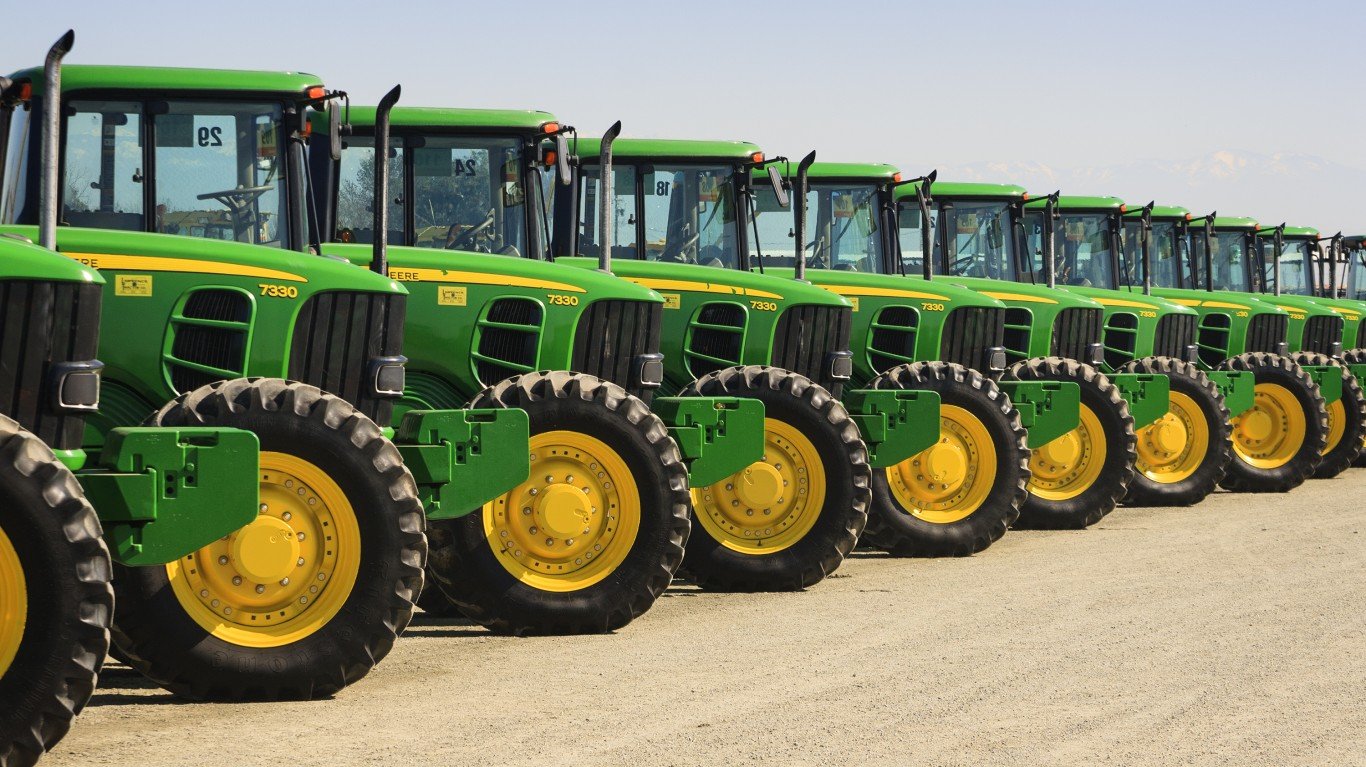
New inventory of high horsepower tractors and combines is down more than 50% from the mid-2024 peak. When large ag turns, Deere will turn with a technology stack customers are already paying for.
Bottom Line
Deere’s $20 billion manufacturing commitment matters because it makes the precision ag story tangible. Factories in Iowa and North Carolina, a supplier base that is 75% U.S. sourced, and software adoption compounding at over 90% second-year renewals give long-term holders a story with numbers behind it. With a trailing P/E of 36-times (which is not cheap), and Production & Precision Ag sales falling 14% in the quarter, there is some cyclicality to this stock.
Thus, I think the next key data point investors need to pay attention to will arrive on August 20, 2026, when Deere reports Q3 results. If the cycle bottoms where management says it will, the factories are ready.
Contact [email protected] for any questions or corrections.
Chris MacDonald is a 24/7 Wall St. contributor and long-time contributor to other notable finance publications, including The Motley Fool and InvestorPlace. With an MBA in Finance, and more than a decade of experience in venture capital and the corporate finance world, Chris brings a long-term perspective to his analysis of equities and alternative assets.
His love of investing and focus on finding quality undervalued stocks is complemented by recent research into alternative assets as well. He takes a long-term approach to analyzing companies and cryptos, with a focus on directing the reader to the most sustainable and important catalysts for each respective potential investment.