Forget QQQ. This Semiconductor Fund Nearly Quintupled Its 2026 Gain
QQQ has had a strong 2026, but investors chasing the AI chip cycle may be leaving a staggering amount of return on the table by sticking with a fund that only partially owns the sector doing the heavy lifting.


Anyone holding the Invesco QQQ Trust (NASDAQ:QQQ) in 2026 has watched a decent year unfold. QQQ tracks the Nasdaq-100 and has returned 18.1% year-to-date, riding the AI capex wave that continues to power its largest holdings. With $680.53 billion in assets and a 0.18% expense ratio, QQQ remains the default vehicle for broad, tech-heavy US growth. The case for holding it is real. The case for supplementing it with a narrower, purer semiconductor sleeve is stronger than most QQQ owners realize, and one of Invesco’s sister funds has quietly made this year a very different story.
Why QQQ Owners Are Leaving Return on the Table
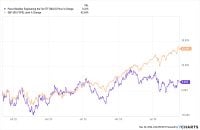
The Invesco Semiconductors ETF (NYSEARCA:PSI) is the concentrated version of the trade QQQ makes only partially. PSI is up 92.33% year-to-date through July 13, more than five times QQQ’s YTD gain. Over the trailing year, PSI has returned 145.91% versus QQQ’s 30.62%. Over the past 10 years, PSI has returned 1,591.7%, compared with QQQ’s 550.74%. The gap is not a one-year fluke.
What PSI Actually Owns
The Tradeoffs Are Real
Tax treatment is another consideration. Selling QQQ in a taxable account after a 30.62% one-year run likely triggers meaningful capital gains. For readers weighing a full swap, the arithmetic often favors adding PSI as a satellite position around a QQQ core rather than replacing it outright. Investors focused on the AI infrastructure buildout may find the Next Nvidia Playbook a useful frame for identifying which chip-adjacent names are pricing in the most durable demand.
How to Think About the Swap
For a QQQ holder whose thesis is specifically the chip cycle, PSI captures that thesis with far greater fidelity, at the cost of 27 additional basis points and materially higher volatility. For a QQQ holder who wants the whole Nasdaq 100, including its non-semiconductor giants, the incumbent still does its job. The decision comes down to which exposure the investor actually meant to buy.
Contact [email protected] for any questions or corrections.
David Beren has been a Flywheel Publishing contributor since 2022. Writing for 24/7 Wall St. since 2023, David loves to write about topics of all shapes and sizes. As a technology expert, David focuses heavily on consumer electronics brands, automobiles, and general technology. He has previously written for LifeWire, formerly About.com. As a part-time freelance writer, David’s “day job” has been working on and leading social media for multiple Fortune 100 brands. David loves the flexibility of this field and its ability to reach customers exactly where they like to spend their time. Additionally, David previously published his own blog, TmoNews.com, which reached 3 million readers in its first year. In addition to freelance and social media work, David loves to spend time with his family and children and relive the glory days of video game consoles by playing any retro game console he can get his hands on.