3 Major Reasons to Buy Microsoft Before July 29 Q4 Earnings
Microsoft shares sit nearly 25% below their 52-week high even as Azure accelerates and its AI business explodes, which raises a pointed question about whether Wall Street has mispriced one of the most dominant growth stories in tech ahead of…

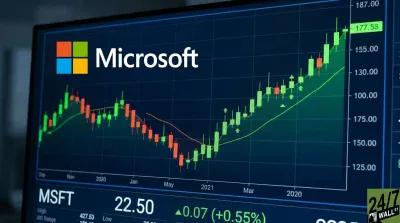
Microsoft (NASDAQ:MSFT | MSFT Price Prediction) reports fiscal Q4 2026 earnings on July 29, with its stock down 24.69% over the past year, despite accelerating demand across Azure and artificial intelligence.
Azure grew 40% last quarter, Microsoft’s AI business reached a $37 billion annual revenue run rate, and commercial remaining performance obligations nearly doubled to $627 billion. Yet shares now trade at $381.70 and approximately 20 times forward earnings.
Three Reasons to Buy Microsoft Ahead of Earnings
First, valuation. MSFT trades at a forward P/E of 20 with a PEG ratio of 1.18, well below where this business has traded for most of the AI cycle. The stock’s 52-week high of $551.05 sits far above today’s price of $381.70, and the consensus analyst target of $556.75 is backed by 54 buy ratings against zero sells.
Second, income and capital return. Microsoft pays a $3.56 annual dividend and returned $12.7 billion to shareholders in Q2 FY26, up 32% year over year. A debt-to-equity ratio of 0.18 and interest coverage of 53.89x shows Microsoft has a fortress balance sheet. The business also has an excellent 33.28% return on equity.
Third, the growth engine. Azure grew 40% last quarter, the AI business hit a $37 billion annual run rate, up 123% year over year, and commercial remaining performance obligations reached $627 billion, nearly doubling year over year.
Can a $627 Billion Backlog Justify Microsoft’s AI Spending?
The bear case for Microsoft (and hyperscalers at large) is capital intensity. Microsoft spent $30.88 billion on capex last quarter, up 84.39% year over year, and skeptics question the return. The $627 billion RPO shows promise from this spending. Customers have already signed the checks that pay for the buildout, with roughly 25% recognized as revenue in the next 12 months, up 39% year over year.
With commercial backlog nearly doubling, a fortress balance sheet, and Azure growing faster than AWS, Microsoft appears better positioned than most companies to turn its AI investments into decades of earnings and cash-flow growth.
Contact [email protected] for any questions or corrections.
Thomas Richmond is a financial writer and content strategist with 5+ years of experience covering stocks and financial markets. He has published over 500 articles focused on individual stock analysis, helping investors better understand business fundamentals, stock valuations, and long-term opportunities.
Thomas previously served as a Content Lead at TIKR, a stock research platform, where he helped scale the company’s blog to hundreds of articles per month and contributed to a weekly newsletter reaching more than 100,000 investors.
Outside of work, Thomas enjoys weight lifting and soccer.