Alphabet Capex Concerns are Bogus But There’s an Internal Hedge Against Them Regardless
Wall Street is spooked by Alphabet's ballooning capex bill, but the earnings report buried a number that reframes the entire bear case and points to a second AI bet most investors overlook entirely.


I keep hitting the buy button on Alphabet (NASDAQ:GOOGL | GOOGL Price Prediction) because the loudest bear case, the capex panic, is missing the receipts that came with the last earnings report. Every quarter I add. Every quarter the case gets stronger.
The panic centers on one number: $44.924 billion in Q2 2026 capex, doubling year over year, dragging free cash flow to negative $5.855 billion. Long-term debt jumped from $46.5 billion to $98.2 billion. Buybacks paused. On paper it looks reckless. Look at what that money is buying.
The Internal Hedge Is Already Booked
Google Cloud posted $24.768 billion in Q2 revenue, up 82% YoY, with operating income more than tripling and operating margin expanding to 35.6%. CFO Anat Ashkenazi disclosed a cloud backlog of $514 billion, up more than $50 billion sequentially. That is contracted demand. That capex funds infrastructure for customers who have already signed. Sundar Pichai said it plainly on the call: “Demand for our models is translating to strong token usage across developers and enterprise customers, and we continue to be supply constrained, a sign of momentum and rapid adoption.”
The rest of the P&L supports the spend. Q2 EPS landed at $9.11 against a $3.0427 consensus, the 11th consecutive EPS beat. Revenue of $119.796 billion grew 24.23%. Trailing 12-month operating cash flow of $185.7 billion means Alphabet can self-fund most of this. At a P/E of 16, I am paying a market multiple for a company growing revenue at 24%.
Waymo Is the Hedge Inside the Hedge
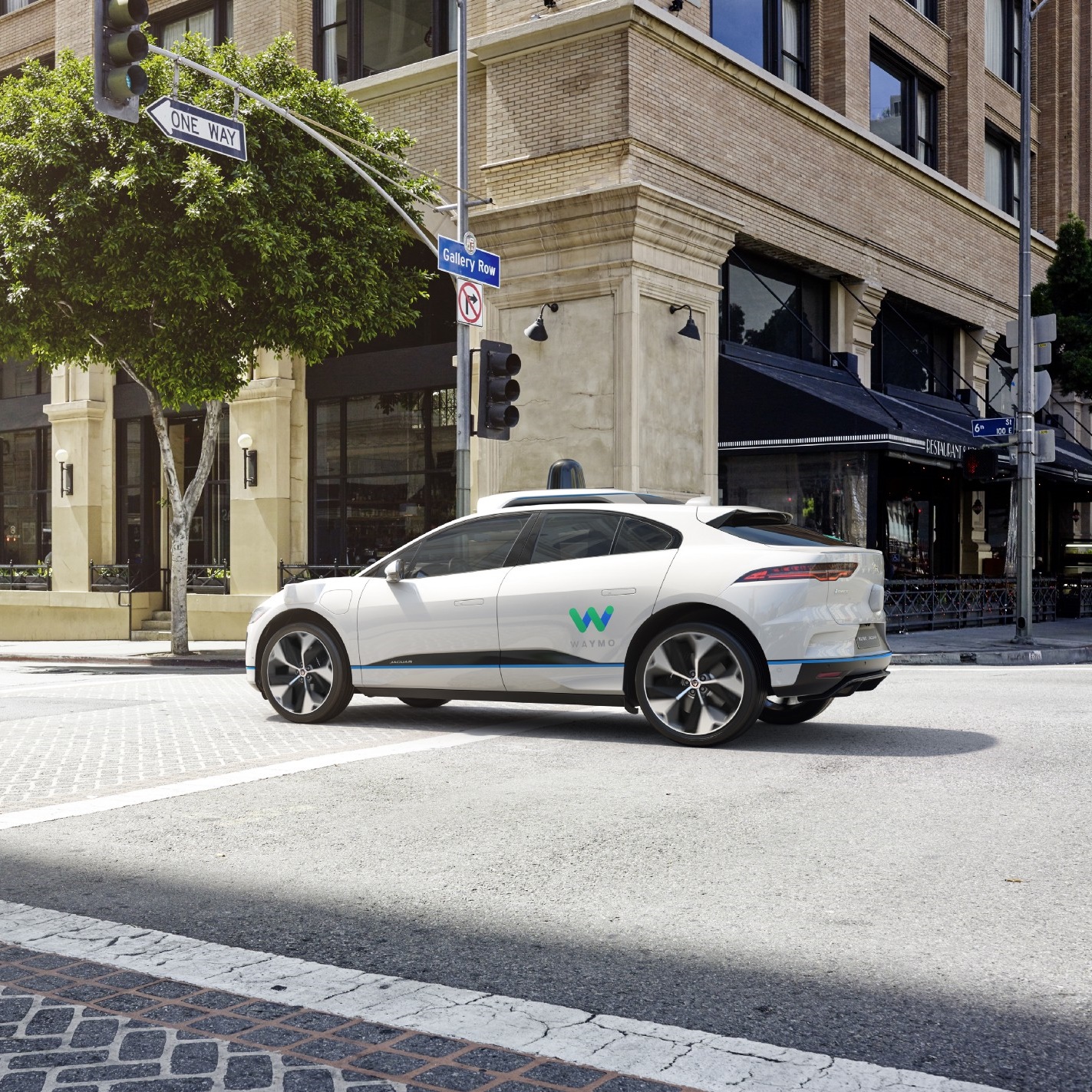
Here is the piece the bears skip. Digital AI is a software fight. Autonomous driving is a real-world AI problem with 200+ million autonomous miles driven and Waymo already surpassing 500,000 fully autonomous rides per week. That is a data and safety lead competitors are struggling to close, and it opens a multi-trillion-dollar global mobility, logistics, and ride-hailing TAM that has nothing to do with search ads or LLM licensing.
Why Not the Obvious Alternatives
I compared this to the obvious names. Microsoft (NASDAQ:MSFT) has Azure, but it trades at a richer multiple with slower reported cloud growth than Google Cloud’s 82%. Meta Platforms (NASDAQ:META) is spending on AI infrastructure with no cloud revenue line to monetize the buildout, so the capex is a pure ad-monetization bet. Amazon (NASDAQ:AMZN) still runs the largest cloud, but AWS is growing well below Google Cloud’s Q2 rate. Apple (NASDAQ:AAPL) has no comparable AI infrastructure revenue stream. GOOGL gives me the growth, the cloud monetization, the real-world AI optionality, and the lowest multiple of the group.
The Real Risk
Capex could keep climbing. Guidance was already raised to $195 billion to $205 billion for full-year 2026, up from $180 billion to $190 billion, with more coming in 2027. Interest expense is up nearly 5x YoY. If demand ever softens, the depreciation schedule bites hard. What holds my thesis together is the $514 billion backlog and Ashkenazi’s own framing: “our goal is to invest as long as we see an attractive return on that investment.”
I keep buying because the receipts are on the invoice, not the wish list.
Contact [email protected] for any questions or corrections.
Alex Sirois is a financial writer with experience spanning both retail and institutional investing. He has written for InvestorPlace and held roles at BNY Mellon and Bernstein, giving him a perspective that bridges Main Street portfolios and Wall Street analysis.
Alex holds an MBA from George Washington University and has built his career across multiple industries, including e-commerce, education, and translation — a breadth of experience that informs how he breaks down complex financial topics for everyday investors. His writing is conversational, actionable, and grounded in long-term, buy-and-hold investing principles.
At 247 Wall St., Alex focuses on delivering analysis that is both accessible and useful, with a clear emphasis on helping readers make more informed decisions with their money.