The Real Reason Berkshire Sold Every Amazon Share Has Nothing to Do With Amazon
Berkshire Hathaway dumped its entire Amazon stake right as the stock was about to explode higher, and the explanation has almost nothing to do with Amazon's business. The real story is buried inside a personnel change that reshaped what Berkshire…

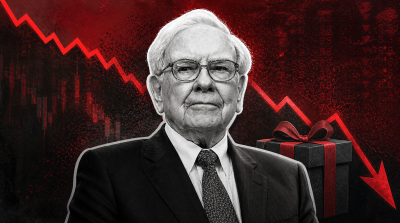
Berkshire Hathaway finished selling its Amazon (NASDAQ:AMZN | AMZN Price Prediction) position earlier this year in two clean sweeps. Warren Buffett sold 77% of the stake in Q4 2025, his final quarter as CEO, and Greg Abel cleared out the remaining 2,276,000 shares in Q1 2026. The tempting read is that Berkshire lost faith in the business. The likelier read is that Berkshire lost the person who owned the trade.
The Personnel Story Hiding Inside the 13F
Todd Combs, who had run the Amazon position, left Berkshire in January 2026 to lead JPMorgan’s $10 billion Strategic Investment Group, and Berkshire appears to have liquidated the names he oversaw. This is how a lot of institutional selling actually works. A portfolio manager walks out, the fund’s remaining principals do not want to inherit convictions they did not build, and positions get wound down on a schedule that has nothing to do with the underlying business. If you have ever seen a mutual fund quietly exit a stock two months after a manager change, you have seen the pattern.
Valuation gave Abel a second reason to finish the job. Amazon’s forward PE sits near 27x, which is not cheap in any environment and looks especially rich against Berkshire’s usual price discipline. Abel is a stricter value buyer than his predecessor. He also inherited the position, not the thesis. Selling a stock at $208 at the end of March, when the fundamentals were still compounding, reads as a fresh-CEO decision made once the internal case for owning it walked out the door.
What Tepper Saw That Berkshire Did Not Care About
The counterweight sharpens everything. David Tepper read the same setup in reverse, nearly doubling Appaloosa’s Amazon stake on the view that the market was wrongly punishing Amazon for AI infrastructure spending it would eventually monetize. Look at what Tepper was actually buying. AWS grew 37% year over year in Q2 2026, the fastest pace in 18 quarters, at a 39.4% operating margin. The AI and chips businesses each cleared a $25 billion annualized run rate. Advertising put up $19.81 billion, up 26%.

Against that, $54.21 billion of capex in a single quarter and roughly $200 billion planned for 2026. Free cash flow gets wrecked in the near term. That is exactly the mismatch Tepper was betting on. Depreciation lands now, revenue lands later, and the market marks the stock down in between. Amazon fell 5.6% between October 2025 and March 2026, right through Berkshire’s selling window. It then rallied 22.75% in the past week after the Q2 print and closed at $284.02 on August 3.

How to Weigh This If You Are Deciding Now
For a retirement-focused investor, the analytical takeaway is that Berkshire’s exit tells you about Berkshire’s internal process, with little to say about Amazon’s business. Combs left, Abel does not pay 27x for anything, and the shares hit the tape.
Tepper is running the actual Amazon debate, and his answer is that AWS at 37% growth plus a chip business compounding at triple digits is worth paying up for even with a capex hangover. Analyst consensus tracks with Tepper here, 16 strong buys and 43 buys against 3 holds and zero sells, with a target of $321.95. Skip the Berkshire sale as a template. The Tepper thesis is the one worth reading before you decide.
Contact [email protected] for any questions or corrections.
Omor Ibne Ehsan is a writer at 24/7 Wall St. He is a self-taught investor with a focus on growth, cyclical, and dividend equities that have strong fundamentals, value, and long-term potential. He also has an interest in high-risk, high-reward investments such as penny stocks.