Analyst Warns “US Basically Has No Strategic Petroleum Reserve Anymore,” As Reserves Just Fell Below 300 Million Barrels for the First Time Since 1983
For the first time since Ronald Reagan was in his first term, the U.S. Strategic Petroleum Reserve has collapsed below a threshold that one analyst says renders it effectively gone, and the infrastructure meant to refill it may be too…

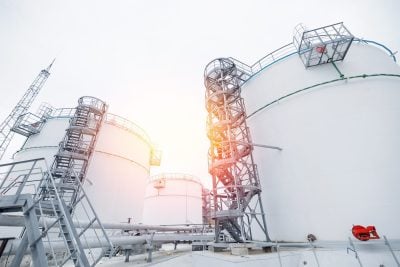
The U.S. Strategic Petroleum Reserve slipped to 298.7 million barrels in the week reported Aug. 10, 2026, down 6.1 million barrels in one week and the first time the stockpile has held below 300 million barrels since January 1983. RBA wrote in a note shared by CNBC’s Carl Quintanilla: “Yet another inflation impulse. The US basically has NO Strategic Petroleum Reserve anymore.” Gasoline is already telling the same story at the pump, at $4.08 per gallon.
What the Warning Actually Means
“Basically no reserve” is rhetorical. 298.7 million barrels is still a substantial physical stockpile, just one at a 43-year low. Against authorized storage capacity of 714 million barrels, the SPR sits roughly 42% full. It remains above the statutory minimum of 252.4 million barrels under the Energy Policy and Conservation Act, and the Department of Energy said in July that only about 70 million barrels is the real safe-operating floor. The more concrete version of the alarm concerns the reserve’s physical machinery: the pumps and pipelines that move oil in and out of the salt caverns have degraded.
How the Reserve Got Hollowed Out
Before the U.S. and Israel launched an attack on Iran on Feb. 28, 2026, the SPR held approximately 415 million barrels. After Iran moved to choke off tanker traffic through the Strait of Hormuz, a chokepoint that carried nearly 20% of global oil supply pre-conflict, President Trump authorized a 172-million-barrel release in March 2026. Washington’s drawdown is part of an IEA-coordinated release, with member nations collectively committing 400 million barrels, the largest emergency stock mobilization the agency has ever undertaken. The mechanism matters: this is largely a lending program, not outright sales. DOE has contracted out 133-plus million barrels to companies that must return the same volume later, with repayment premiums as high as 28% on individual deals. Brent spiked around Aug. 9-10 as Middle East cease-fire talks stalled, giving RBA’s “inflation impulse” framing its urgency.
The Infrastructure Problem
A GAO report from early July 2026, reported by S&P Global, found the SPR could draw down oil at only about 61% of its originally intended rate as of December 2025, and its capacity to accept returning crude had fallen to 56% of design specifications. The reserve is not just smaller. It is slower on the way out and slower on the way back in, which is the falsifiable version of the analyst’s warning.
How This Compares to 2022
The largest single SPR release on record remains President Biden’s 180-million-barrel release starting in early 2022, in response to Russia’s invasion of Ukraine. The current mobilization is comparable in cumulative scale, though the reporting stops short of naming it the biggest ever.
The Pushback
David Goldwyn, former State Department special envoy for international energy affairs under President Obama, told CNBC: “I’m not worried about the stability of the reserve or our ability to do another drawdown if we needed to.” Between today’s level and DOE’s 70-million-barrel operational floor, there is still room before a genuine crisis point.
The open question is how much further Washington can push before refilling becomes urgent. With Brent last trading at $88.90/bbl after a July spike to $105.32, and no cease-fire in sight, the answer will show up in the next weekly SPR print and in whether DOE starts writing repayment premiums even higher than 28%.
Contact [email protected] for any questions or corrections.
AJ spent 10 years writing about financial markets at The Motley Fool. His coverage centers on technology stocks and the broader macroeconomic trends, from interest rates to geopolitics, that shape where markets are headed next. AJ is drawn to the stories where big-picture economics and individual companies collide.