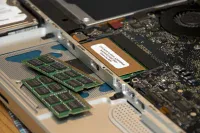
Humanoid Robots Need 10x the Memory of a Self-Driving Car. Micron Is Positioned to Win
Everyone wants to pick the winning humanoid robot company, but that race may already be the wrong bet. The real opportunity hides inside a supply constraint that no robot builder can sidestep, no matter who comes out on top.


Every gold rush produces two kinds of investors: the ones betting on which prospector strikes it rich, and the ones who just sell the picks and shovels. The humanoid robot race has turned into exactly that kind of rush, with dozens of companies — American, Chinese, and everywhere in between — racing to put a walking, talking machine on a factory floor.
Investors keep trying to guess which robot maker wins. That’s the wrong question. The right one is: what does every single robot need, regardless of who builds it or where it ships? The answer is memory, and that points investors toward a company that never shows up in the humanoid robot headlines at all — Micron Technology (NASDAQ:MU | MU Price Prediction).
The Robot Race Nobody Can Handicap
Figure AI‘s Brett Adcock announced the company’s 1,000th Figure 03 unit on July 23, off a line running at roughly one robot per hour. China’s AgiBot rolled its 15,000th unit off the line in late June — and by its own disclosures, the jump from 5,000 to 10,000 units took just three months. TrendForce’s December 2025 forecast called 2026 the inflection year, projecting 50,000 humanoid shipments, up more than 700% from 2025.
Forbes says reality outpaced even that. Smart Analytics Global’s newest report puts global shipments at 19,100 units in the first half of 2026 alone – up 272% year over year — with the full year now tracking toward 60,000 units and 500,000 by 2030. Chinese vendors built 97% of them, and Chinese buyers absorbed 85% of demand.
Meanwhile, the most documented American deployment — Figure’s fleet at BMW‘s Spartanburg plant — ran eleven months, helped build 30,000 X3s, and was retired in November for a newer model.
That’s the trap: China currently owns the volume, and picking the eventual global winner among Figure, AgiBot, Unitree, Tesla (NASDAQ:TSLA), and a few hundred others is genuinely unknowable this early.
Every Robot Needs a Landlord for Its Memory
Here’s what skips the guessing game entirely. Whoever wins, every humanoid robot buys memory. On Micron’s fiscal Q3 earnings call, CEO Sanjay Mehrotra told investors a humanoid robot carries roughly ten times the DRAM content of today’s average L2+ driver-assist vehicle, and he expects a “sustained, substantial multi-decade memory demand cycle” to begin in the back half of this decade. A humanoid running multiple cameras continuously through a full shift needs serious bandwidth just to move that video through its model.
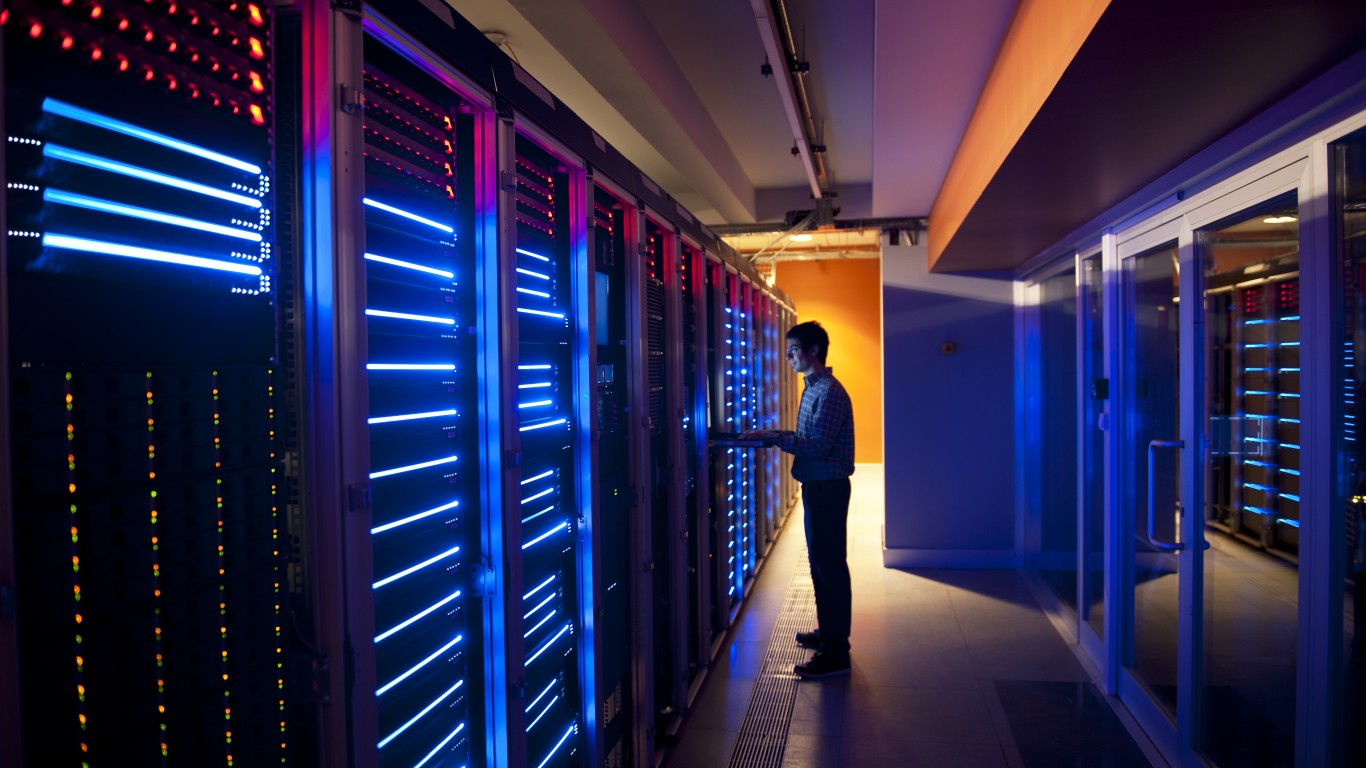
Only three companies make DRAM at scale: Micron, Samsung, and SK Hynix (NASDAQ:SKHY). Mehrotra said on that same call Micron has no line of sight to supply catching up with demand, with tightness persisting beyond 2027. Granted, 50,000 or even 500,000 robots’ worth of DRAM is negligible compared to data center consumption — a hyperscaler’s data center can have between 10 million and 20 million individual DRAM silicon chips.
But that demand arrives after data centers have already claimed most of the available supply — and the training behind these fleets runs in data centers too, scaling with fleet size rather than chip count per unit. This thesis doesn’t require any of the predictions to land exactly; it just needs shipments to keep growing at the torrid pace companies are already announcing, while new fab capacity takes years to come online.
SK Hynix and Samsung have committed roughly $870 billion combined toward new capacity, but SK Hynix’s first new fab doesn’t open a clean room until February 2027, and Micron’s newly approved capacity doesn’t arrive until 2028.
Key Takeaway
Investors don’t need to guess whether Figure, AgiBot, or Unitree wins the humanoid race. Every winner buys DRAM from one of three suppliers, and Micron trades at a fraction of the market’s growth multiple while supply stays structurally tight into 2028. That’s a memory trade, not a robotics bet — and it’s the more durable way in.
Contact [email protected] for any questions or corrections.
After two decades of patrolling the dark corners of suburbia as a police officer, Rich Duprey hung up his badge and gun to begin writing full time about stocks and investing. For the past 20 years, he’s been cruising the markets looking for companies to lock up as long-term holdings in a portfolio while writing extensively on the broad sectors of consumer goods, technology, and industrials. Because his experience isn’t from the typical financial analyst track, Rich is able to break down complex topics into understandable and useful action points for the average investor. His writings have appeared on The Motley Fool, InvestorPlace, Yahoo! Finance, Money Morning, and, of course, 24/7 Wall St. He has been featured in both U.S. and international publications, including MarketWatch, Financial Times, Forbes, Fast Company, and USA Today.