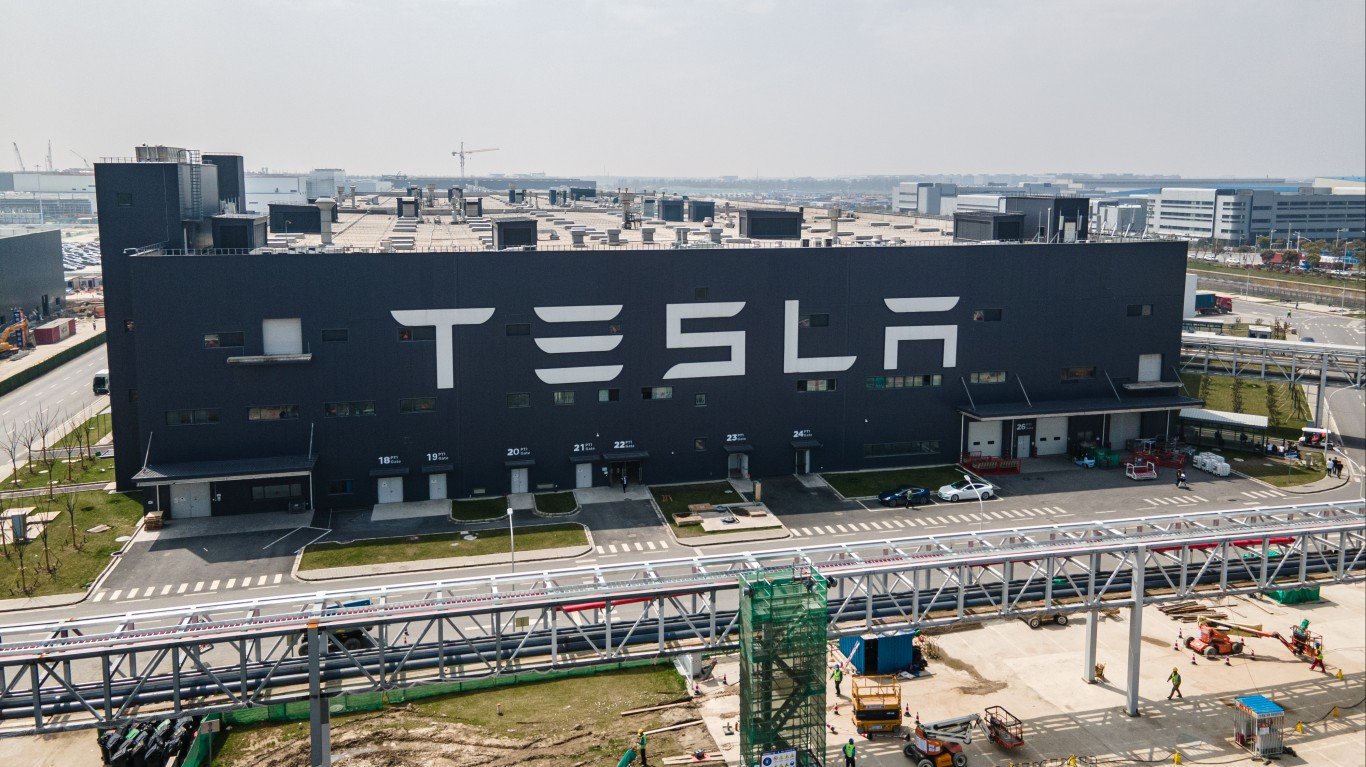
Tesla Just Keeps Crashing: One of Wall Street’s Most Outspoken Names Sees 80% Gains Anyway
Tesla's earnings just delivered a brutal profit shock, yet one of Wall Street's loudest voices is calling for 80% gains from here. The bull and bear cases could not be further apart, and the gap reveals everything about what this…

This post may contain links from our sponsors and affiliates, and Flywheel Publishing may receive compensation for actions taken through them.
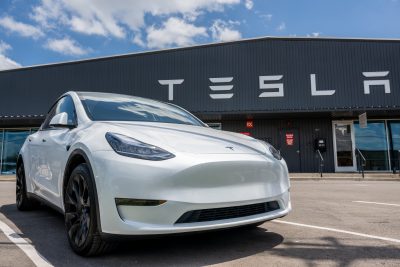
Tesla (NASDAQ:TSLA | TSLA Price Prediction) currently trades at $332.81, while Wall Street’s consensus price target sits at $396.62, implying roughly 19% of upside if analysts are right.
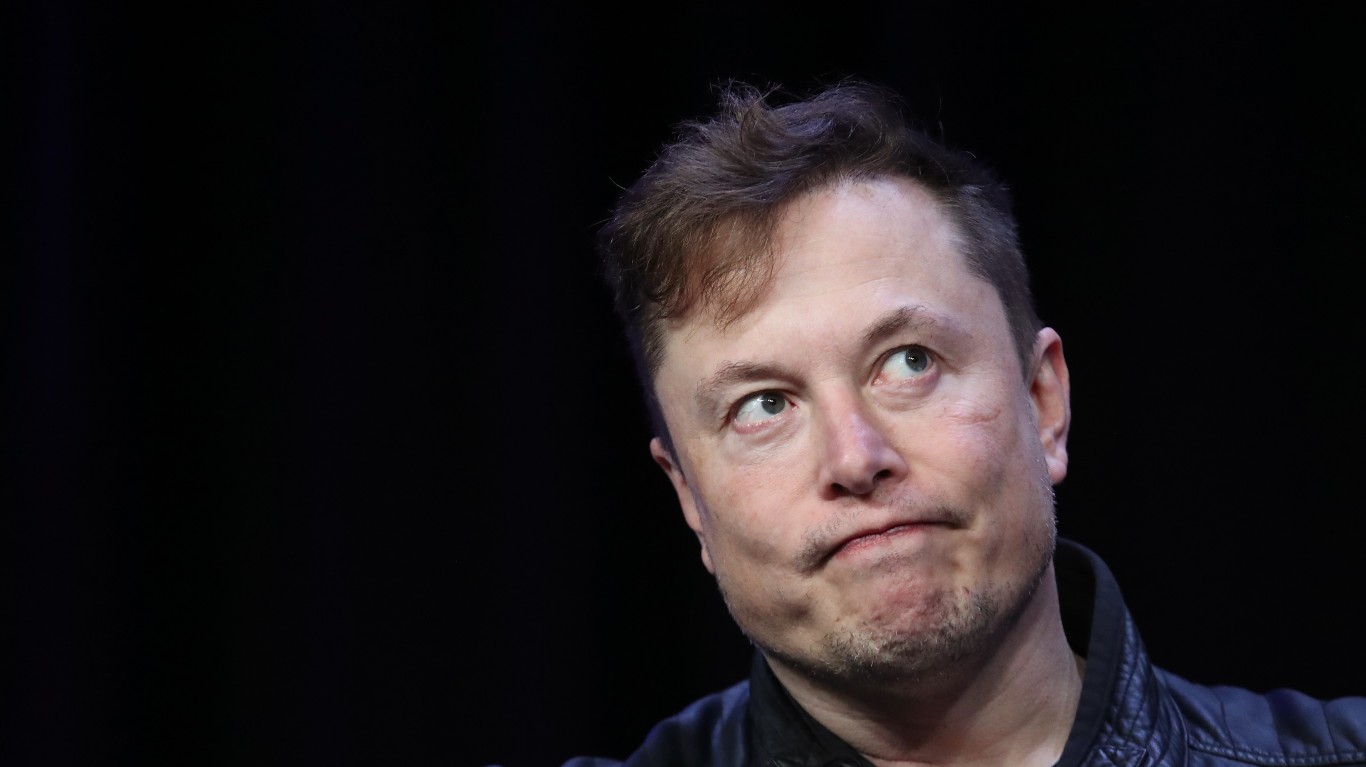
Wedbush’s Dan Ives carries a Street-high $600 price target on the stock, implying about 80% in potential gains. His thesis treats Tesla as an AI and robotics company that happens to build cars.
Tesla’s core business remains electric vehicles, energy storage, and autonomous driving software. Wall Street is watching because near-term financials have deteriorated sharply while management pours cash into Robotaxi, Optimus, and AI infrastructure.
The Q2 Miss That Reset the Narrative
Tesla posted non-GAAP EPS of $0.33 against a $0.5367 estimate, missing expectations by 38.51%, while revenue of $28.24 billion beat by 7.1%.
Operating expenses jumped 47% year over year to $4.35 billion, capex surged 141.81% to $5.79 billion, and free cash flow flipped to negative $1.09 billion. Operating margin collapsed to 1.4%. Record deliveries of 480,126 vehicles and a 56% jump in FSD subscriptions to 1.48 million could not offset the profit shock.
Tesla is down 18.38% over the past month, trading below both its 50-day moving average of $378.22 and its 200-day moving average of $408.24. Recent recalls tied to excessively bright headlights on more than 20,000 Model 3 and Model Y vehicles and Autopilot scrutiny have kept sentiment defensive.
Why the Bull Case Just Got Louder
Analysts have not folded because the spending they dislike funds AI, autonomous software, and robotics. Ives applies a tech-like multiple of roughly 214x estimated 2026 EPS to build his $600 target, projecting a $2 trillion to $3 trillion market cap as those businesses scale.
Robotaxi has expanded to seven US metros including Austin, Dallas, Houston, Miami, Orlando, and Tampa. Cybercab production started at Gigafactory Texas, Optimus lines are being installed at Fremont targeting 2026 output, and FSD attach rate has cleared 55% of new North American deliveries. Morgan Stanley is more cautious but argues Tesla needs tangible proof of the Robotaxi flywheel before conviction returns.
Of 47 analysts covering Tesla, 23 rate it Buy or Strong Buy, 18 rate it Hold, and 6 rate it Sell or Strong Sell. Recent activity has been reiterations rather than upgrades or downgrades.
How the EV Peer Group Stacks Up
Rivian (NASDAQ:RIVN) trades near $16.43 against a consensus target of $19.23, roughly 17% of upside. Q1 revenue of $1.38 billion beat, but free cash flow was negative $1.08 billion. Ratings run 12 Buy, 8 Hold, 5 Sell, with the R2 launch as the key swing factor.
Lucid Group (NASDAQ:LCID) sits around $6.61 versus a $8.20 target, or about 24% upside. Q2 delivered a 20% EPS miss and a $299 million inventory write-down. Analysts skew 1 Buy, 8 Hold, 3 Sell.
General Motors (NYSE:GM) trades near $87.96 against a $100.04 target, roughly 14% of upside. GM raised full-year adjusted EPS guidance to $12.00 to $14.00 after a Q2 beat, and 22 of 28 analysts rate it Buy or Strong Buy.
Tesla holds the largest outlier upside in the group through Ives’ $600 call.
What the Stock Actually Says
Tesla trades at $332.81, down 26% year to date, while the S&P 500 is up 13% over the same span. The stock sits closer to its 52-week low of $297.38 than its high of $498.83.
The consensus $396.62 target on 47 analysts translates to 19% of upside. The bull outlier at $600 implies 80%. Prediction markets assign only 14.5% probability to an Optimus release by year-end, a core Ives catalyst.
Tesla trades at a forward P/E of 169, meaning the bull case is already partially embedded even at this reset price.
Where I Land on Tesla Here
The bull case works at these levels if the AI and robotics thesis plays out as a 2027 to 2028 story. Robotaxi scales beyond the current seven metros, Optimus reaches meaningful volume, FSD attach rates climb past 55%, and current spending generates recurring software margins. That path leads to $396.62 and toward Ives’ $600.
The bear case dominates if capex outruns commercialization. Free cash flow is already negative $1.09 billion, operating margin has been reduced to 1.4%, and a forward P/E near 169 leaves no margin for slipping timelines. Prediction market probabilities suggest the crowd is not yet buying the roadmap.
My lean is cautiously constructive. Tesla is meaningfully cheaper than a month ago, and optionality on AI and robotics has real value. One clean quarter of margin stabilization is the key marker to watch before assuming the worst is over.
Contact [email protected] for any questions or corrections.
Alex Sirois is a financial writer with experience spanning both retail and institutional investing. He has written for InvestorPlace and held roles at BNY Mellon and Bernstein, giving him a perspective that bridges Main Street portfolios and Wall Street analysis.
Alex holds an MBA from George Washington University and has built his career across multiple industries, including e-commerce, education, and translation — a breadth of experience that informs how he breaks down complex financial topics for everyday investors. His writing is conversational, actionable, and grounded in long-term, buy-and-hold investing principles.
At 247 Wall St., Alex focuses on delivering analysis that is both accessible and useful, with a clear emphasis on helping readers make more informed decisions with their money.