Cramer Asked Micron’s CEO the “December 9th” Question. Here’s Why It Could Be Micron’s Most Important Day of 2026
Micron's CEO just confirmed a specific date when a government-imposed restriction on buybacks expires, and with competitors already returning tens of billions to shareholders, what happens next on that calendar day could reshape how investors value the stock entirely.


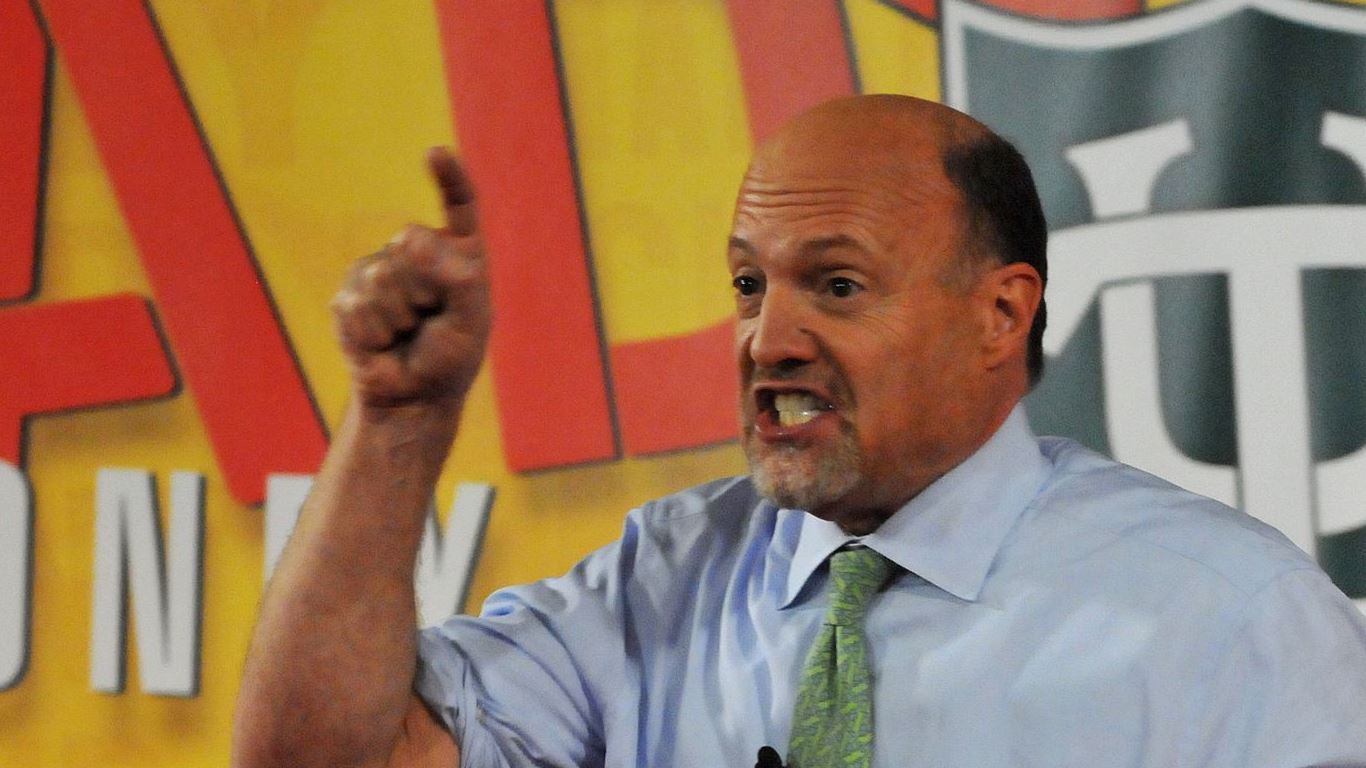
On a CNBC “Mad Money” special edition filmed at Micron’s Boise, Idaho headquarters, Jim Cramer walked Micron Technology (NASDAQ:MU | MU Price Prediction) Chairman and CEO Sanjay Mehrotra to a specific spot on the 2026 calendar: December 9, 2026, the second anniversary of Micron’s negotiated CHIPS Act funding agreement and the day a company-specific restriction on large-scale share repurchases expires.
Cramer’s framing was blunt. “Okay, now come December 9, your deal with the government, it’ll be two years. I understand that after that you’re allowed to buy back stock. I know you can’t [right now]. Right now your compadres SanDisk, Western Digital, [Kioxia] are buying back huge amounts of stock. You see a situation where you too can buy back a huge amount of stock?” Mehrotra affirmed direction without committing to size, structure, or timing. “We will of course invest, invest first in growing the business… We had $25 billion of net cash positive last quarter. Free cash flow this quarter will even be greater. Of course, excess cash we will return to shareholders, and we are best positioned ever to grow the business as well as provide return to our shareholders at larger levels than before. And yes, we are committed to doing that.” Growth investment came first in his answer, with no buyback figure or schedule named.
What the Dec. 9 Date Represents
The general CHIPS Act guardrail prevents award funds from being used for stock buybacks, dividends, or expanding advanced semiconductor manufacturing in countries of concern such as China. Micron’s Dec. 9, 2026 date is specific to the two-year anniversary of Micron’s own negotiated agreement.
Micron finalized a roughly $6.1 billion CHIPS Act funding award in December 2024, disclosed in an SEC Form 8-K filed Dec. 10, 2024 (see the filing index at SEC EDGAR). Under that agreement, Micron is currently limited to only minor buybacks that offset dilution from employee stock compensation. On the fiscal Q3 2026 call, CFO Mark Murphy told analysts, “From December 9, 2026, the second anniversary of the signature of our definitive CHIPS agreements, we intend to increase our capital return.” He added the company expects “Over time, we expect to return 100% of our excess cash to shareholders.”
Why the Restriction Stings Now
Micron’s direct memory competitors are returning capital during extraordinary industry profitability. SK Hynix announced a $29 billion buyback program in mid-August 2026, coverage of which ran on our site on Aug. 19, 2026. Kioxia completed a $5 billion buyback earlier in August 2026. Samsung is expected to announce shareholder returns exceeding $78 billion, though that program has not yet been confirmed. SK Hynix, Kioxia, and Samsung are foreign-listed, and Micron cannot yet match them at scale.
Numbers Behind the Wait
Micron shares closed Thursday, Aug. 20, 2026 at $974.33, up 3.97% on the session. Year to date the stock is up 241.59%, and over the trailing year it is up 732.62% from $117.02 on Aug. 20, 2025. Cramer characterized the stock as trading at roughly six times next year’s earnings estimates and framed that as cheap given the growth.
Fundamentals underpin the enthusiasm. Fiscal Q3 2026 revenue reached $41.46 billion, non-GAAP EPS came in at $25.11, and free cash flow set a company record at $18.304 billion. Fiscal Q4 guidance calls for revenue of $50.0 billion ± $1.0 billion and non-GAAP EPS of $31.00 ± $1.00. Mehrotra described more than 16 multi-year take-or-pay strategic customer agreements, backed by roughly $22 billion in customer cash deposits and commitments, and said customers are seeking about 50% more memory supply than Micron can currently commit to delivering.

Bullish Scenario and Its Limits
UBS analyst Timothy Arcuri has projected Micron could generate roughly $380 billion to $400 billion in cumulative free cash flow through the end of 2028, potentially enabling retirement of as much as 40% of outstanding shares. That is a single approximate analyst estimate; different outlets have reported slightly different figures for the same underlying projection. The share-retirement math depends entirely on that estimate holding. Arcuri also notes the restriction does not impose limits on debt reduction, and Micron reduced debt by $4.4 billion in fiscal Q3.
Skepticism on the Buyback Math
Analyst commentary from Barchart citing Jabran Kundi raises two substantive doubts. First, execution risk: free-cash-flow projections depend on sustained high-bandwidth-memory demand and pricing power, which is not guaranteed. Second, a self-defeating dynamic. If Micron performs well enough to generate that much cash, the share price will likely have risen sharply by then, making a large buyback “extremely difficult to execute” at attractive valuations. Pair that with Mehrotra’s answer, which committed to no specific size or timeline.
Why Dec. 9 Is Worth Watching
Micron’s capital-return posture changes on Dec. 9, 2026. Management has flagged intent to increase returns. Competitors are already returning capital at scale. The order book supports the cash-generation story. What is missing is a specific commitment on program size or timing. Mehrotra affirmed direction; the specifics are still ahead. Investor materials and calendar updates are posted at Micron Investor Relations.

Contact [email protected] for any questions or corrections.
AJ spent 10 years writing about financial markets at The Motley Fool. His coverage centers on technology stocks and the broader macroeconomic trends, from interest rates to geopolitics, that shape where markets are headed next. AJ is drawn to the stories where big-picture economics and individual companies collide.