




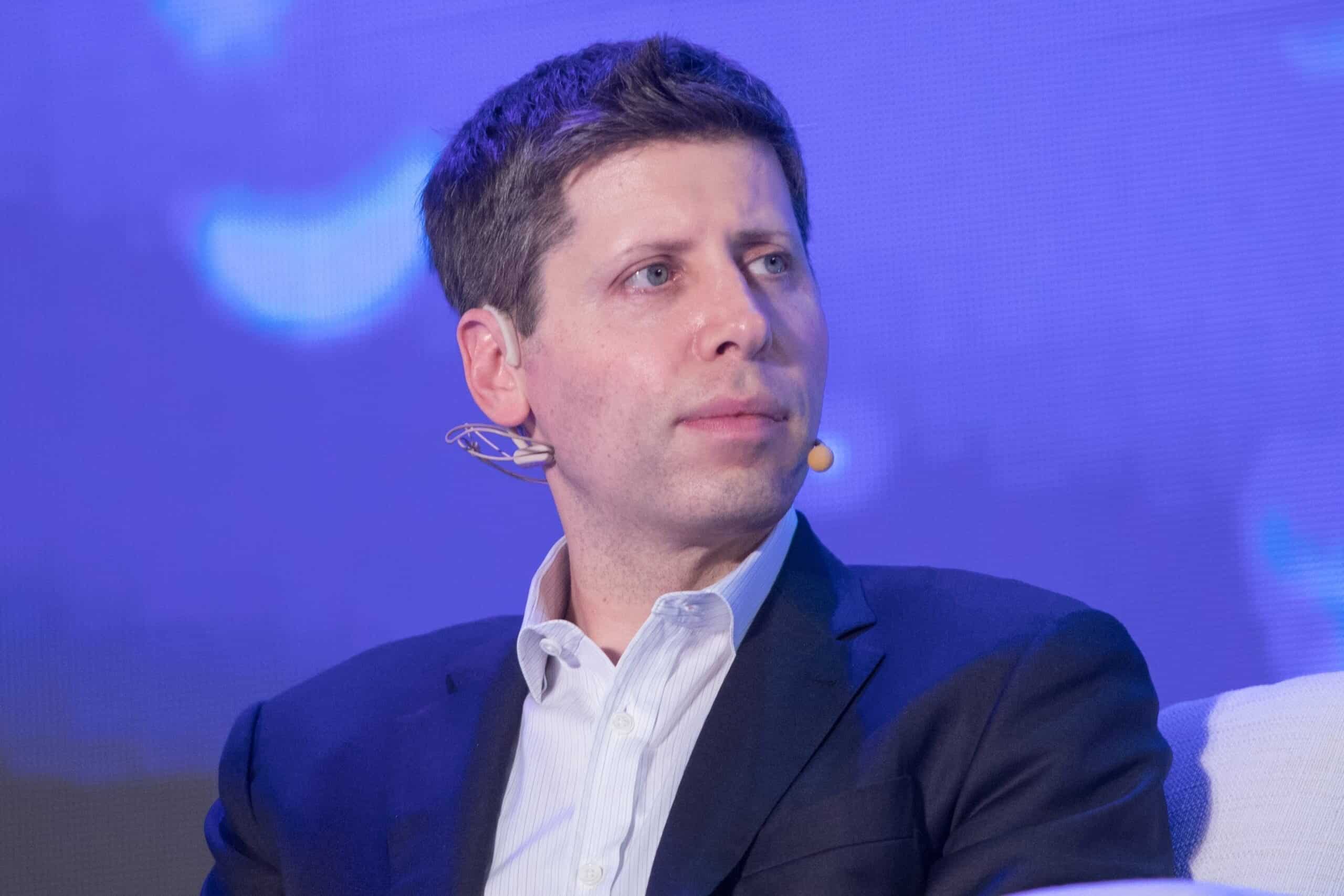
Over the weekend, Sam Altman sat down for a podcast and described the state of AI adoption in terms that would have sounded odd to him a year ago. “We’re still at the palm pilot stage of adoption,” Altman said. “We have all of the technological pieces, but we have not had the iPhone moment of like completely changing how someone interfaces with technology.”
The striking thing is which direction his caution runs. His doubt is aimed at the speed at which people and institutions change around the models, and he pinned the blame on habit rather than capability: “The economy just has so much inertia. People keep doing the same things they’re doing. They keep buying from the same company. I think that means we’ve all been too ambitious on timelines, even with this incredible technology.”
Those are very different claims with very different investment consequences, and the difference matters if you own the picks-and-shovels names.
Palm Pilot Comment Points at People, Not Chips
Altman’s most revealing detail was operational. He told the podcast, “We ditched Sora, for example, because it was taking up too much compute.” A company shelving a flagship consumer product because it consumes too much capacity signals something a forecast cannot.
Rooney also reported that Altman called compute the biggest bottleneck and where he spends most of his time, consistent with a world in which demand for training and inference cycles outpaces what the supply chain can deliver.
If adoption is slower than expected while compute remains the binding constraint, near-term economics tilt toward whoever sells capacity. Application revenue waits on customer habits changing. Capacity gets consumed either way, because model builders compete for every available watt.
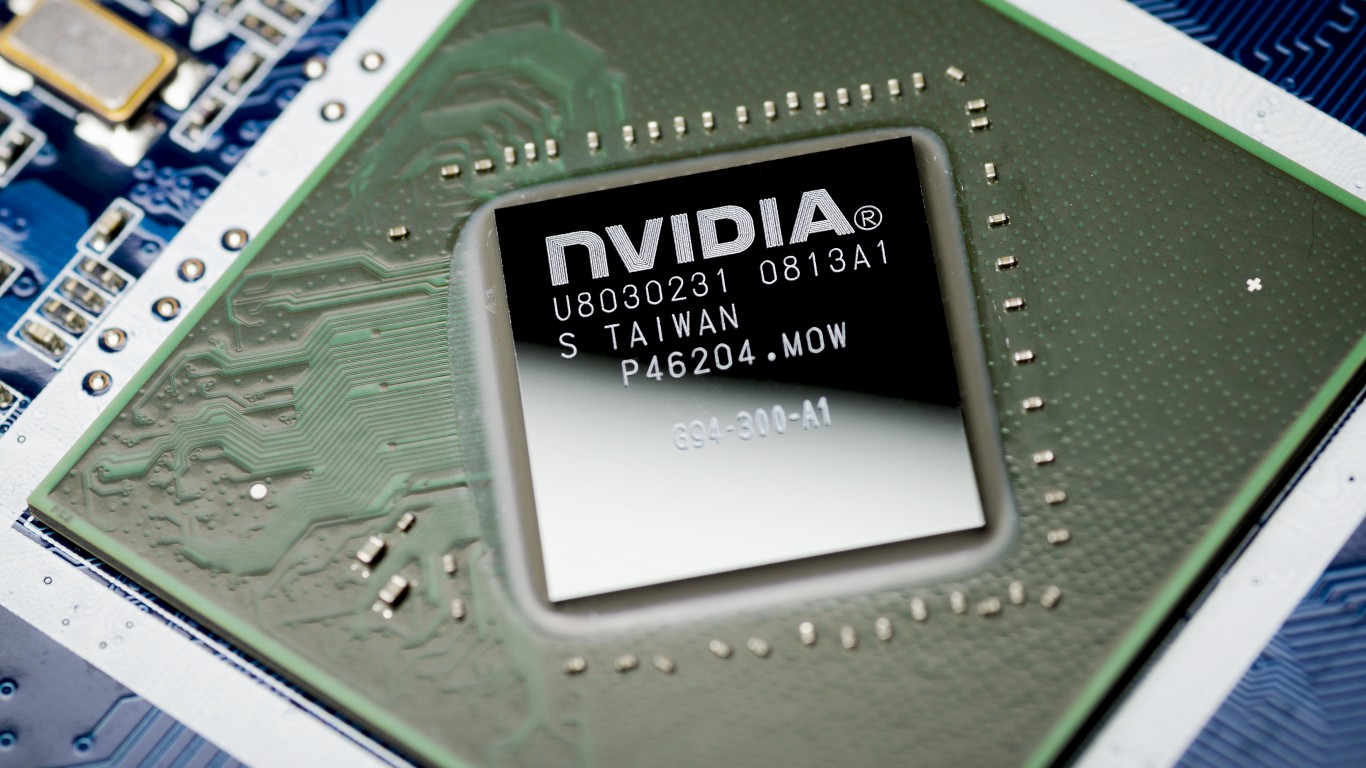
NVIDIA’s Order Book Reads Like the Opposite Signal

NVIDIA (NASDAQ:NVDA | NVDA Price Prediction) closed Monday at $208.48, giving it a market capitalization of roughly $5.05 trillion. The shares are up 17.28% over the past year.
The Q1 fiscal 2027 release showed revenue of $81.6 billion, up 85.23% year over year, with Data Center revenue of $75.2 billion, up 92%. Data Center Networking alone grew 199%.
Jensen Huang described the backdrop on the earnings call in language that reads as the mirror image of Altman’s: “Demand has gone parabolic. The reason is simple. Agentic AI has arrived.” Management said it has $119.0 billion in total supply-related commitments and guided Q2 revenue to $91.0 billion, plus or minus 2%.
Two executives can be right at the same time. Enterprises are slow to change how they work, and the frontier labs are still buying every GPU they can source to prepare for the moment enterprises finally do.
TSMC Is the Constraint Behind the Constraint
Taiwan Semiconductor Manufacturing (NYSE:TSM) closed at $410.12, up 77.93% on the year. That performance has a physical explanation.
Q2 2026 results delivered revenue of $40.2 billion and a gross margin of 67.7%. Chairman C.C. Wei told analysts, “From this day on all the way to probably 2029, 2030, the demand is very strong”, and management raised the 2026 capital budget to between 60 and 64 billion US dollars.
Advanced nodes drove the mix, with 7nm and below at 77% of wafer revenue and 2nm contributing 3% in its commercial debut. TSMC also said its packaging capacity is “so tight” that it is limiting customer growth.
When Altman shelves Sora because compute is scarce, the scarcity ultimately traces back to a foundry in Hsinchu deciding how many wafers to allocate to which customer.
Platform Question Altman Left Open
Rooney also reported that Altman said OpenAI wants to be a platform company rather than compete with its customers, and he flagged two risks: losing control as AI grows more powerful, and too much power concentrating in one company or one model.
Those two ideas sit in tension. A platform that hosts developers is, by construction, the layer that captures the most concentration risk if adoption ever accelerates.
For investors weighing the picks-and-shovels thesis, Altman’s caution supports it in the near term, because slow adoption and scarce compute mean capacity gets sold regardless of which application wins. That case weakens if the compute bottleneck loosens before the iPhone moment arrives, which is worth watching rather than dismissing.
Contact [email protected] for any questions or corrections.









 Top Gaining Stocks
 Top Losing Stocks