“They’re Financing” a Rival: Jim Cramer Challenges Nvidia’s $30 Billion OpenAI Investment
Jim Cramer is raising an uncomfortable question about Nvidia before its earnings report: when a company writes a massive check to a partner that then builds a direct competitor, is that strategic genius or a self-funded threat?

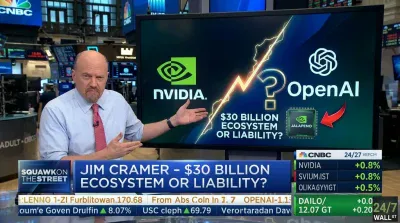
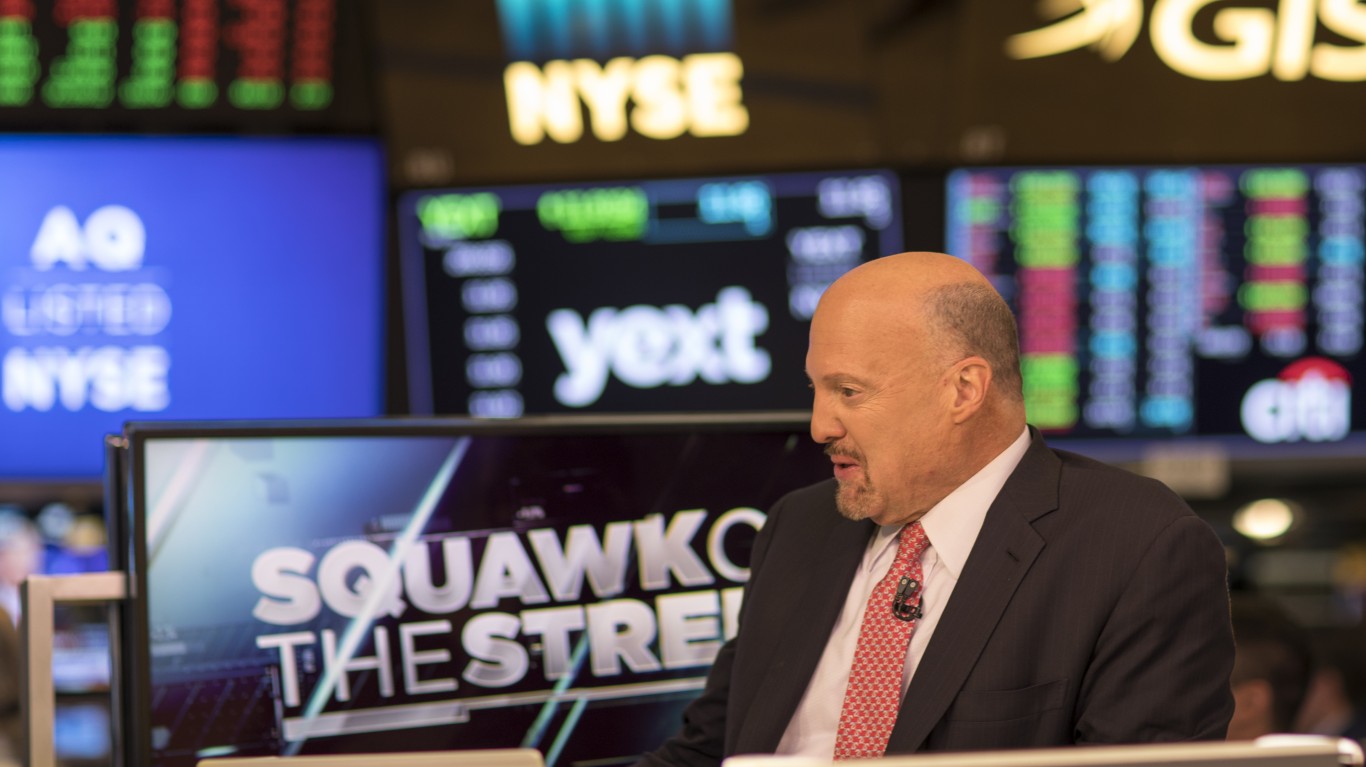
Ahead of NVIDIA‘s (NASDAQ:NVDA | NVDA Price Prediction) second-quarter earnings report scheduled for Wednesday, August 26 at 4:20 PM ET, Jim Cramer used a CNBC Squawk on the Street segment with David Faber to question the roughly $30 billion Nvidia has invested in OpenAI, and whether that capital is buying loyalty or financing a rival.
Cramer was direct. “If Jensen Huang can explain what his master plan is with all these investments, then maybe we can decide exactly whether it’s an ecosystem he’s creating or just a liability he’s creating. When you give $30 billion to OpenAI, what does OpenAI do? They create Jalapeño as a competitor to Jensen and Nvidia.”
He returned to the point moments later: “If you give $30 billion to someone, doesn’t that usually say, you know what, you’re our partner, you’re our pal? But instead, what they got was a competitor. So they’re financing Jalapeno.”
Why Nvidia’s OpenAI Deal Looks Different From Its Other AI Bets
Faber added the more revealing structural detail. “They don’t have an ownership stake in OpenAI, as opposed to what Nvidia has done with so many others where they’re the backstop, they’re the residual guarantee, they have preferred, they have warrants, they have common stock, they have backstop. There are multiple different forms of support they’re providing to the ecosystem.” In other words, the OpenAI check went out without the layered equity and guarantee protections Nvidia has typically attached elsewhere.
As of the last reported quarter, Nvidia’s multi-year cloud service commitments stood at $30.0 billion and total supply-related commitments reached $119.0 billion. CFO Colette Kress described the strategy on the last call as “strategic investments, both upstream supply chain and downstream go-to-market ecosystem” that are “critical to the market’s development and our long-term position.”
The Bull Case: Nvidia Trades Like a Bank Despite 85% Growth
Cramer did mention that Nvidia’s current valuation makes the stock look attractive today: Nvidia trades at 16x expected earnings in fiscal year 28, which is comparable to JPMorgan. That is not a speculative growth multiple.
However, Nvidia’s underlying business remains a monster, with Q1 FY27 revenue of $81.61 billion, up 85.23% year over year, Data Center revenue of $75.25 billion, and free cash flow of $48.55 billion. The Q1 GAAP net income line also included $15.9 billion in net gains from equity securities, a figure that itself sharpens the ecosystem-versus-liability question because it ties reported earnings to marks on the same portfolio companies Cramer is asking about.

Wall Street Wants Answers About Nvidia’s AI Money Machine
Nvidia’s core business remains formidable, and its valuation doesn’t seem unreasonable given the business’s extraordinary growth. But the company is increasingly using its balance sheet to shape the market around it, making the quality and structure of those investments impossible to ignore. Tonight, investors will want CEO Jensen Huang to explain whether Nvidia is building an ecosystem it controls or financing companies that could eventually challenge it.
Contact [email protected] for any questions or corrections.
Thomas Richmond is a financial writer and content strategist with 5+ years of experience covering stocks and financial markets. He has published over 500 articles focused on individual stock analysis, helping investors better understand business fundamentals, stock valuations, and long-term opportunities.
Thomas previously served as a Content Lead at TIKR, a stock research platform, where he helped scale the company’s blog to hundreds of articles per month and contributed to a weekly newsletter reaching more than 100,000 investors.
Outside of work, Thomas enjoys weight lifting and soccer.