The Kohl’s Recesson
Kohl's, McDonald's, and Walmart are all flashing the same warning sign, and it points to a crisis already swallowing half the country before most economists will admit it exists.

This post may contain links from our sponsors and affiliates, and Flywheel Publishing may receive compensation for actions taken through them.
Half of Americans live paycheck to paycheck.
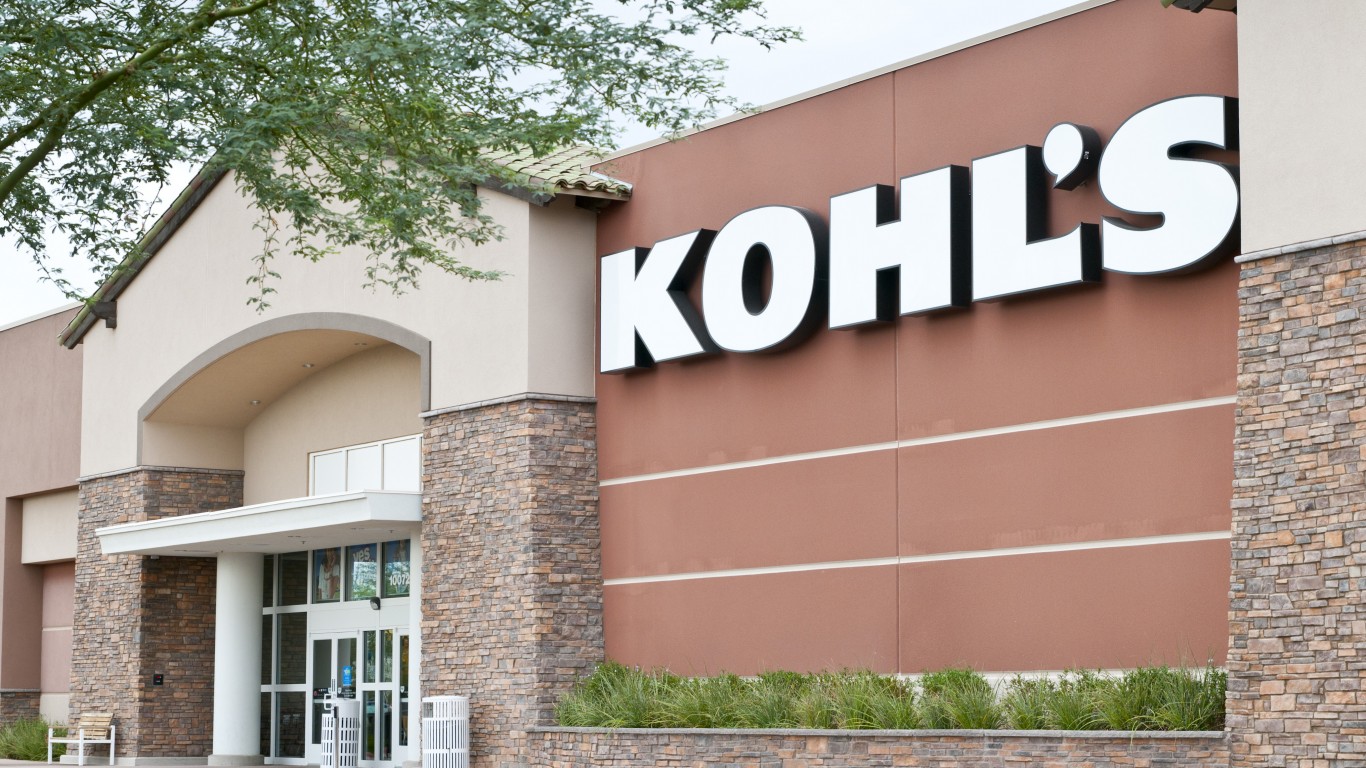
Low-end retailer Kohl’s (NYSE: KSS | KSS Price Prediction) announced good earnings. Comparable store sales and revenue each dropped less than 1%. That put revenue at $3.3 billion for the most recent quarter. EPS was slightly off at $1.34. The company lifted guidance. Kohl’s got $150 million from tariff refunds.
The trouble at Kohl’s and many other retailers could spread across the economy. It showed up in McDonald’s (NYSE: MCD) earnings and in Walmart’s (NYSE: WMT) as well. The low-income consumer is limping. Much of this is due to gas prices. But it goes deeper. Inflation isn’t gone and, in many cases, wages aren’t keeping up.
They call the problem a K-shaped recovery. The problem is that upper-income people with money to spend cannot carry the entire US economy. If the lower- and middle-income parts buckle enough, GDP suffers. Most of it is based on consumer spending.
Gas is not the only thing that will drag consumers down. Diesel prices are up over 40% year over year. That price gets passed on to companies that rely on trucks for freight. Trucks deliver about 70% of the freight shipped in the US. Blame the blockade of the Strait of Hormuz.
And blame the blockage for rising agricultural prices. Part of what transits the Strait is urea and ammonia, which are used to make nitrogen fertilizer. Farmer products become more expensive. That is also passed along to the consumer. Add all these up, and the consumer is in trouble, and that trouble will get worse.
Add McDonald’s and Kohl’s and Walmart together. A recession is already underway in the low-income part of the US economy.
Half of Americans live paycheck to paycheck.
Contact [email protected] for any questions or corrections.
Douglas A. McIntyre is the co-founder, chief executive officer and editor in chief of 24/7 Wall St. and 24/7 Tempo. He has held these jobs since 2006.
McIntyre has written thousands of articles for 24/7 Wall St. He is an expert on corporate finance, the automotive industry, media companies and international finance. He has edited articles on national demographics, sports, personal income and travel.
His work has been quoted or mentioned in The New York Times, The Wall Street Journal, Los Angeles Times, The Washington Post, NBC News, Time, The New Yorker, HuffPost USA Today, Business Insider, Yahoo, AOL, MarketWatch, The Atlantic, Bloomberg, New York Post, Chicago Tribune, Forbes, The Guardian and many other major publications. McIntyre has been a guest on CNBC, the BBC and television and radio stations across the country.
A magna cum laude graduate of Harvard College, McIntyre also was president of The Harvard Advocate. Founded in 1866, the Advocate is the oldest college publication in the United States.
TheStreet.com, Comps.com and Edgar Online are some of the public companies for which McIntyre served on the board of directors. He was a Vicinity Corporation board member when the company was sold to Microsoft in 2002. He served on the audit committees of some of these companies.
McIntyre has been the CEO of FutureSource, a provider of trading terminals and news to commodities and futures traders. He was president of Switchboard, the online phone directory company. He served as chairman and CEO of On2 Technologies, the video compression company that provided video compression software for Adobe’s Flash. Google bought On2 in 2009.