Who Really Got Rights to Venezuela’s 65 Billion Barrels Of Oil Prize?
Washington just handed a 100-year lease on tens of billions of barrels of Venezuelan oil to a private company nobody has heard of, while Chevron quietly hit a 52-week high on a completely separate deal. The two stories are getting…


Venezuela reportedly lays claim to over 300 billion barrels of proven oil reserves, and the U.S. has set its sights on more of them.
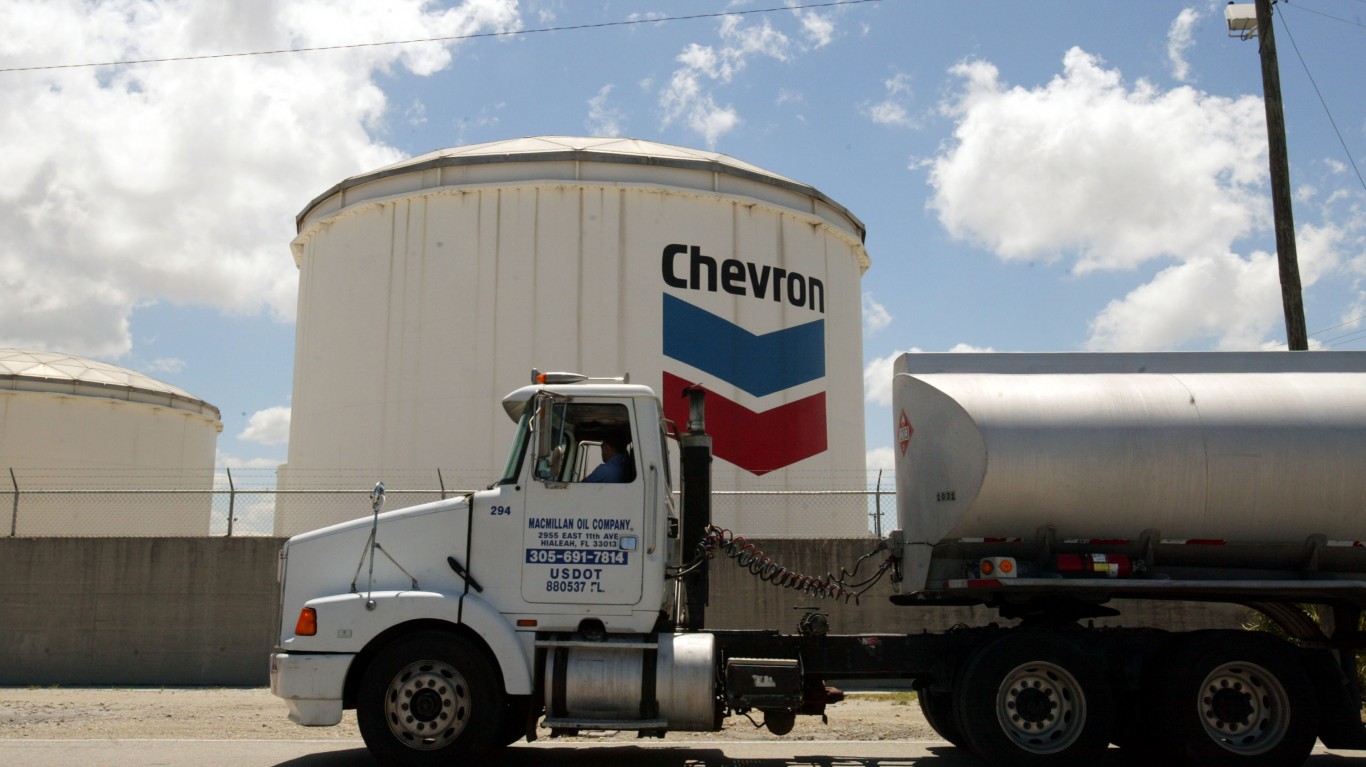
Bloomberg News correspondent Tyler Kendall reported from Caracas this week that the headline prize of Washington’s Venezuela deal, a 100-year lease on 17 strategic oil fields holding a claimed 65 billion barrels, went to a private, non-supermajor bidder: North American Blue Energy Partners, a private company that cannot develop the fields alone and has yet to sign on producing partners. Meanwhile, Chevron (NYSE:CVX | CVX Price Prediction) stock just printed a fresh 52-week high at $212.79 on a separate, parallel Venezuela commitment. The two developments deserve to be evaluated separately.
What Washington Actually Signed
Kendall’s on-the-ground reporting laid out the mechanics. The US government is taking an equity stake in the private joint venture and securing the right to purchase 20% of the offtake at cost, below market, through a swap mechanism designed to help refill the Strategic Petroleum Reserve. US Energy Secretary Chris Wright told Bloomberg that Venezuelan production, already up 25%, with exports up 50%, could double by the end of this decade from the current 1.1 million barrels per day; that output is still far below the 3.5 million peak from nearly three decades ago.
The catch is that North American Blue Energy Partners cannot develop the 17 fields alone. It must bring in other producers, including some fields previously operated by Russian, Chinese, or smaller local companies. Constitutional questions surrounding Venezuela’s competitive-bidding requirements remain unresolved, although the State Department says the deal was fully vetted.
Chevron’s Separate Lane
Chevron is executing a distinct, older track, separate from the 65-billion-barrel lease. On the Q2 2026 call, CEO Mike Wirth described Venezuela as one of Chevron’s “special situations,” revealing, “We’re in negotiations right now to try to improve the fiscal terms and enable more investment in Venezuela.”
Management also said the company operates three Venezuelan joint ventures and has bolstered production from those agreements from 40,000 to 250,000 barrels per day, with full debt recovery expected by early 2027. Chevron’s Q1 2026 growth-initiative slate specifically listed an agreement to expand its heavy oil interest in Petroindependencia and develop the adjacent Ayacucho 8 area, alongside its long-running Petropiar operations with PDVSA.
Wirth’s framing in the Q4 2025 8-K: “We have been a part of Venezuela’s past for more than a century. We remain committed to its present.” That century of ground presence is what separates Chevron’s exposure from the newer, splashier lease.
Economist Parallel Investors Should Weigh
Not everyone is convinced. Bloomberg Economics’ Chris Kennedy compared the deal structure to the 1953 US-backed coup in Iran, warning it could rekindle nationalist and anti-American sentiment and affirming the view that “this was all about oil.” Iran’s oil was nationalized in 1979. Kennedy called a democratic transition in Venezuela “a matter of when, not if,” raising real questions about the durability of a 100-year lease under a future elected government. Wirth has emphasized contractual protections including dispute resolution and tax and royalty regime guarantees, though those provisions face a hostile-precedent problem.
What The Market Is Actually Pricing

CVX is up 39.5% year to date and 35% over one year, backed by tangible Q2 2026 numbers: adjusted EPS of 6.06, revenue of $67.2 billion up 51.43% year over year, and free cash flow of $18.1 billion. The stock trades at a forward P/E of 15 with a 3.4% dividend yield backed by 39 consecutive annual increases.
Hess synergies, Permian scale, Guyana’s Stabroek block, and a 20-year Microsoft (NASDAQ:MSFT) power purchase agreement for 2.67 GW in West Texas are doing the heavy lifting. Venezuela is optionality on top of the core thesis. Investors pricing the 52-week high should separate the 65-billion-barrel headline from what Chevron actually holds itself.

Contact [email protected] for any questions or corrections.
Gerelyn Terzo is the author of dividend investing handbook "Dividend Investing Strategies: How to Have Your Cake & Eat It Too." A veteran financial journalist, she covers agri-finance for outlets like Global AgInvesting and the broader stock market and personal finance for 24/7 Wall Street. She began at CNBC and later helped launch Fox Business in New York. Gerelyn currently resides in Woodland Park, Colorado and dabbles in nature photography as a hobby.