Everyone Is Watching Nvidia. But This Memory Stock Could Be the Next AI Winner
While investors pile into Nvidia, a quieter memory supplier has already outpaced it with gains topping 700% in a year, and analysts think the run is nowhere near finished.


Everyone is fixated on NVIDIA (NASDAQ:NVDA | NVDA Price Prediction), but the memory supplier feeding every AI accelerator has quietly become the market’s most explosive story.
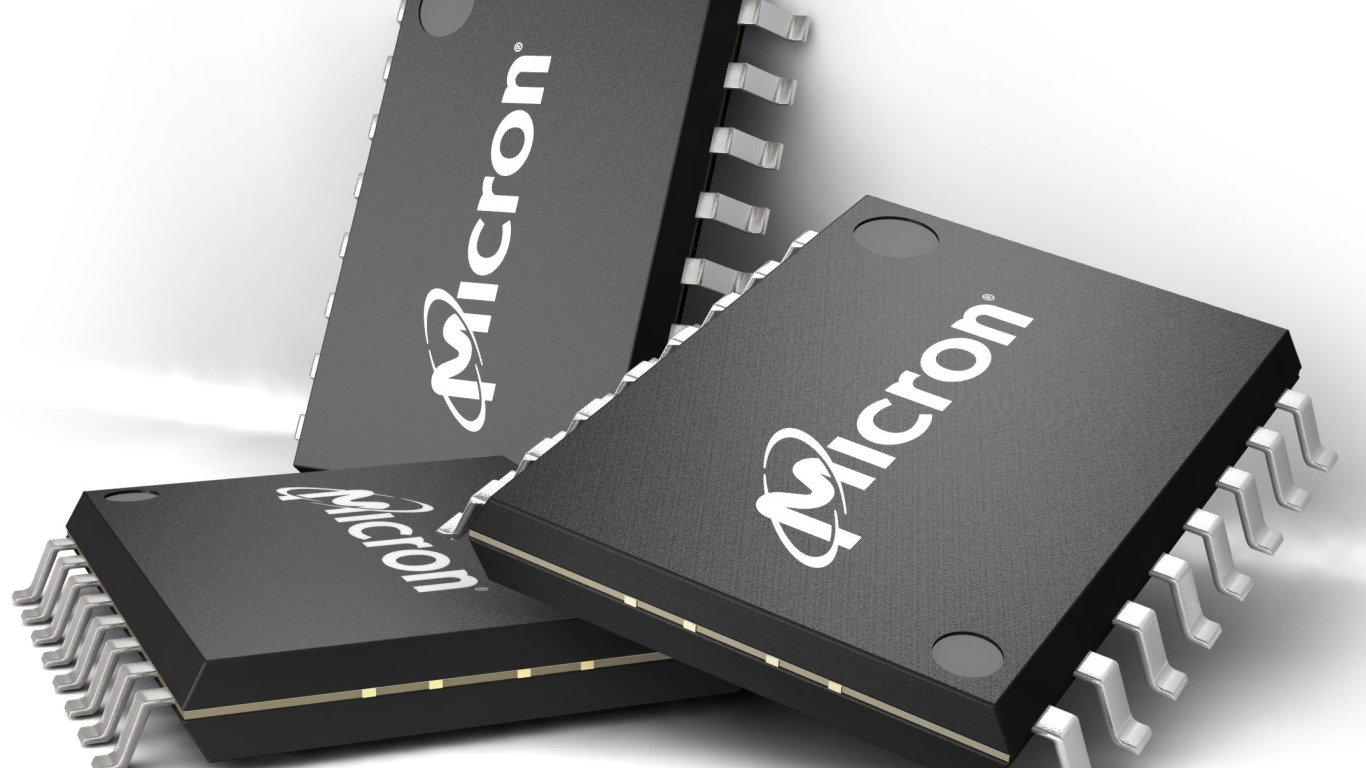
Micron Technology (NASDAQ:MU) has returned 708.26% over the past year and 235.19% year-to-date, powered by an unprecedented squeeze in high-bandwidth memory (HBM) supply.
CEO Sanjay Mehrotra summed up the shift on the June earnings call: “AI system performance is architecturally dependent on memory subsystem performance and capacity.” With shares at $942.31, the question is whether Micron can push through to $1,750 in 2027.

Wall Street Sees 60% Upside, But That Might Be Too Timid
Analysts are already firmly bullish. The consensus one-year price target sits at $1,513.41, with 92% of covering analysts rating shares Buy or Strong Buy and zero sell ratings. Fiscal 2027 EPS consensus has ratcheted higher fast, climbing from $102.72 ninety days ago to $155.03 today.
Revenue estimates for FY27 now sit at $240.3 billion. Micron has also beaten expectations for seven consecutive quarters, with the latest quarter clearing the top line by 17.6% and EPS by 23.79%.

Path to $1,750 Per Share
Here is where the math gets interesting. At $942.31, Micron trades at just 6x the FY27 EPS consensus of $155.03. Hitting $1,750 would require only an 11x multiple on those same earnings, still a discount to the S&P 500’s roughly 22x forward P/E. The move implies 86% upside from here.
What could get shares there:
- Estimates keep climbing. FY27 EPS has risen 5 times in the trailing 30 days against just one cut. The high estimate is $221.27, which at 11x implies over $2,400 per share.
- Locked-in demand. Micron has signed 16 Strategic Customer Agreements with take-or-pay terms, cumulative minimum revenue near $100 billion, and $22 billion in cash deposits and letters of credit. Mehrotra said floor prices deliver “a very robust gross margin for Micron, well above our peak quarterly margins in any past cycle.”
- HBM4 is ramping fast. Micron already booked over $1 billion in HBM4 revenue, and the 12-high ramp is tracking twice as fast as HBM3E. Management sees supply tight “beyond calendar 2027.”
- Guidance is climbing. Fiscal Q4 guidance calls for record revenue of $50 billion, non-GAAP EPS of $31, and gross margin near 86%.

Micron’s History Says $1,750 Is Within Reach
An 86% year is aggressive, but MU has done far more, far faster. Shares are up 1,228.57% over five years and 5,771.98% over ten.
Over the past 12 months alone, Micron gained more than 700%. The stock’s beta of 2.21 reflects that volatility cuts both ways, but it also means outsized moves are part of the DNA.

Bottom Line on $1,750
Reaching $1,750 requires roughly 86% upside, well above Wall Street’s already-bullish 60.6% implied return.
The bull case rests on rising FY27 estimates, take-or-pay contracts covering half of future revenue, structurally tight memory supply, and a valuation that still trades at a fraction of the market multiple.
Micron fits the profile of the early-stage tech winners we reverse-engineered in a free playbook on spotting the next Nvidia. Risks are real: capex is running near $27 billion annually, HBM concentration is high, and memory cycles historically turn. Returns at this level should not be expected every year, but we have outlined the blueprint for how Micron could see outsized returns in 2027.
Contact [email protected] for any questions or corrections.
Vandita Jadeja is a financial publisher with over a decade of experience writing about financial topics, including investment, savings, retirement, insurance and banking. Vandita is a Chartered Accountant who loves to debunk financial concepts for readers.
Her work has appeared on sites that include The Motley Fool, InvestorPlace, and Benzinga. She covers investing and focuses on stock picks and price prediction for 24/7 Wall St.
When not looking for the next stock investment opportunity, she can be found traveling, reading, chasing sunsets and enjoying her iced latte.