IonQ’s CEO Shares How Long It Will Take Quantum Computers To Hack Bitcoin’s Encryption. And Argues It Will Happen Sooner Than Expected
IonQ's CEO just put a specific year on Q-Day, the moment quantum computers could shatter the encryption protecting Bitcoin wallets, and the timeline is far closer than most investors realize. The twist: he's also selling the only product he claims…


Speaking on CNBC Wednesday morning, IonQ (NYSE:IONQ | IONQ Price Prediction) Chairman and CEO Niccolo de Masi put a countdown clock on the cryptography underpinning the world’s largest digital asset. He said IonQ has published a paper laying out how a 2,000-qubit machine could run an elliptic-curve encryption attack in under 26 days, and he reiterated 2028 as his expectation for “Q-Day,” the point at which quantum machines threaten today’s public-key standards. He was careful to add the capability “is not here yet.”
Why the Timeline Just Got Shorter
De Masi has been telegraphing this compression for months. On IonQ’s Q2 2026 call, he told investors: “As I foretold a year ago, the timeline for cryptographically relevant machines that threaten RSA encryption is rapidly compressing. Over the past 15 years, the estimated number of qubits needed to break encryption has dropped by four orders of magnitude.” He added: “A year ago, people thought that Q-Day was something happening in the 2030s. They now understand it’s something happening in the 2020s.”
CFO Inder Singh warned that “financial services is definitely waking up to the cold, hard reality that at some point, RSA 2048 and other encryption protocols, such as ECC 256, may all be broken.” ECC 256 secures Bitcoin wallet signatures.
Roadmap Behind the Warning
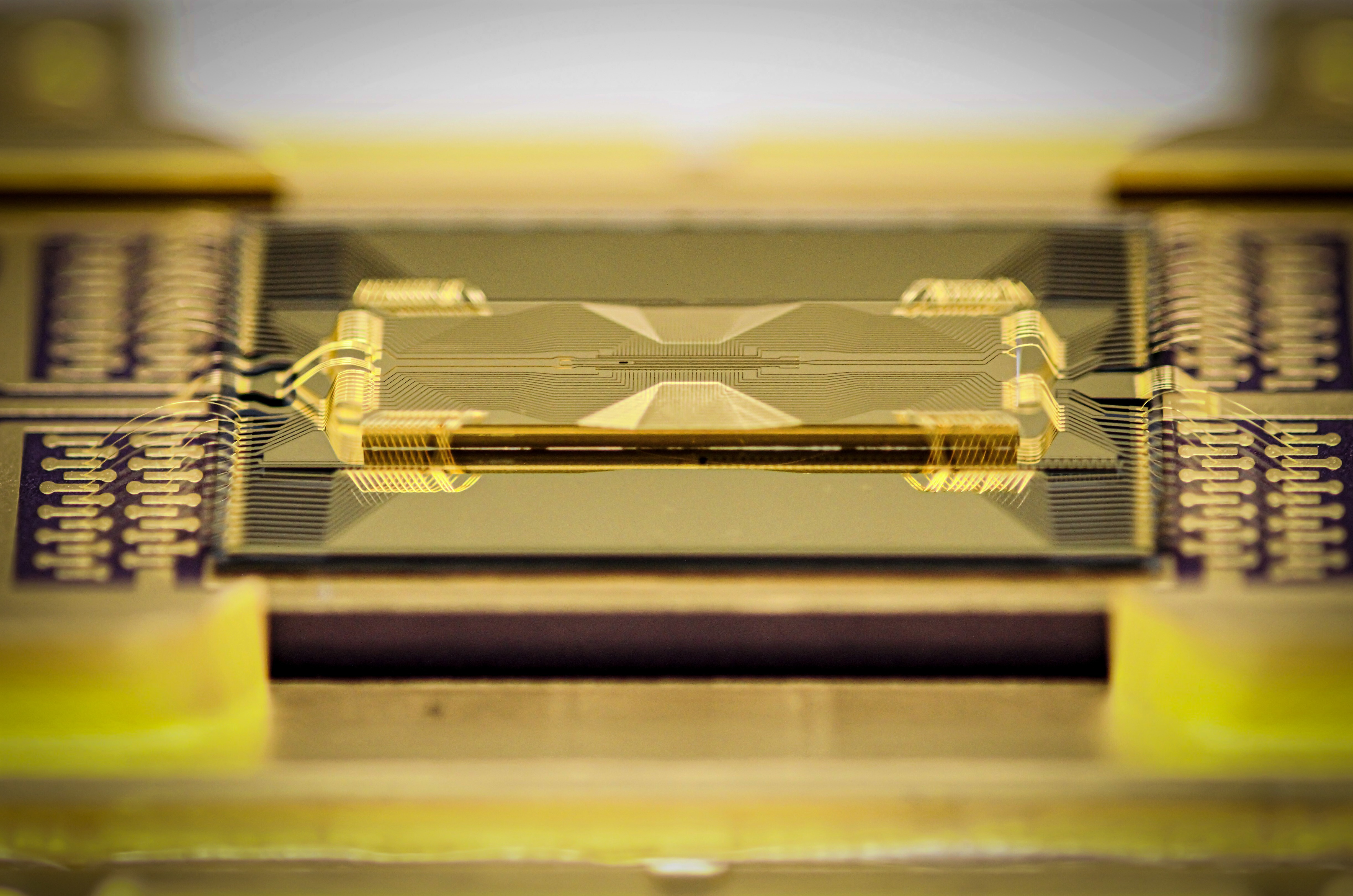
De Masi said the company is “accelerating our path to 10,000 qubits in 2027,” after having received first fully featured, fully integrated QPUs back from SkyWater and planning to begin commissioning 256-qubit systems in 2027. Q2 revenue landed at $80.1 million, up 287% year over year, with full-year 2026 guidance of $280M to $290M and remaining performance obligations of $485 million.

Self-Interest, in His Own Words
De Masi flagged the obvious tension himself, telling CNBC IonQ is “a huge participant, investor, and solution provider in the quantum security space.” The company just launched a QKD product, ClavisXG Multiplex, aimed at protecting existing fiber networks, and de Masi called quantum key distribution something “that requires a violation of laws of physics to hack and crack.” He is publishing the threat and selling the shield.
Collision With Crypto Flows
Bitcoin (CRYPTO:BTC) traded near $79,530 Wednesday, up 22.96% over the prior month. Michael Saylor’s Strategy resumed buying, disclosing a $370 million bitcoin purchase after a 10-week pause. The buyers most exposed to de Masi’s timeline are adding, not trimming.
IonQ shares last traded at $39.17, down 11.84% over the past month and 12.7% year to date, even after the SkyWater close and 256-qubit progress. If de Masi is right about 2028, the market is not yet pricing it in (we studied what the early signals of the biggest tech winners looked like and turned it into a free playbook here: The Next Nvidia Playbook).

Contact [email protected] for any questions or corrections.
AJ spent 10 years writing about financial markets at The Motley Fool. His coverage centers on technology stocks and the broader macroeconomic trends, from interest rates to geopolitics, that shape where markets are headed next. AJ is drawn to the stories where big-picture economics and individual companies collide.