3 Chip Equipment Stocks Set to Win the Memory Boom
Memory spending is accelerating faster than the broader chip equipment market, and three suppliers stand to capture an outsized share of that growth. But their exposure, risks, and upside potential differ in ways that matter before you buy any of…

- Global wafer-fabrication-equipment spending is projected to rise 16.9% to $135.2 billion in 2026.
- DRAM and NAND equipment spending is growing faster than the broader market as AI increases demand for HBM, advanced DRAM and enterprise storage.
- Lam Research offers the greatest memory exposure, while KLA benefits from increasing process-control intensity and ASML retains an unmatched lithography position.
Global wafer-fabrication-equipment spending is projected to reach a record $135.2 billion in 2026, up approximately 16.9% from $115.7 billion in 2025. The headline growth is impressive, but the composition of spending is more important for investors selecting individual semiconductor-equipment stocks.
The equipment cycle is no longer being driven primarily by Taiwan Semiconductor Manufacturing Company’s (NYSE: TSM) | TSM Price Prediction advanced logic capacity. Samsung Electronics (OTC: SSNLF), Micron Technology (NASDAQ: MU)and SK hynix (OTC: SKHYY) are simultaneously increasing investments in advanced DRAM, high-bandwidth memory, NAND, cleanrooms and advanced packaging. This expansion makes memory the fastest-growing major portion of the equipment market.
Three equipment suppliers are particularly well positioned: Lam Research (NASDAQ: LRCX), KLA Corporation (NASDAQ: KLAC) and ASML Holding (NASDAQ: ASML). Each benefits from the same capital-spending expansion, but their exposure, competitive positions and investment risks differ significantly.
Memory Is Accelerating the Equipment Cycle
According to Table 1, global WFE spending is projected to increase from $115.7 billion in 2025 to $135.2 billion in 2026. Within that total, 300mm DRAM equipment spending is projected to rise 29% to $37 billion, while 300mm 3D NAND equipment spending is expected to increase 28% to $14 billion.
Logic, foundry and other equipment spending remains the largest category, reaching approximately $84.2 billion. However, its projected growth rate of 10.6% is substantially below the increases anticipated for DRAM and NAND.

The projected $51 billion of combined DRAM and NAND equipment spending represents more than a temporary response to HBM shortages. Memory manufacturers must add cleanroom infrastructure, convert existing production to more advanced processes and install additional etch, deposition, lithography, inspection and metrology tools.
HBM also consumes more wafer capacity than conventional DRAM because it requires larger die sizes, additional processing and multiple stacked memory dies. Consequently, an increase in HBM shipments produces a disproportionately large requirement for manufacturing equipment.
Lam Research: The Strongest Memory Exposure
Lam Research is the most direct beneficiary of accelerating memory spending among the three companies. Its etch and deposition systems are used extensively in DRAM and NAND manufacturing, and their importance increases as memory structures become more complex.
Advanced NAND devices require manufacturers to etch extremely deep, narrow channels through hundreds of material layers. Adding more layers increases storage density, but it also makes the etch process more difficult. Lam has built a strong competitive position in these high-aspect-ratio applications.
Advanced DRAM and HBM create another source of growth. Manufacturers must introduce increasingly complex deposition, etch and cleaning processes while controlling extremely small structures across the wafer. These requirements increase the amount of Lam equipment needed for each unit of productive capacity.
Lam reported record June-quarter revenue of $6.72 billion, exceeding the company’s previous quarterly performance. Fiscal 2026 revenue reached approximately $23.23 billion, up from $18.44 billion in fiscal 2025. The company also recently increased its quarterly dividend by 27%, from $0.26 to $0.33 per share.
The principal risk is that Lam’s memory leverage works in both directions. If manufacturers eventually add too much DRAM or NAND capacity, memory pricing would weaken and capital spending could decline sharply. For now, however, a significant portion of customer investment is supporting cleanrooms, advanced processes and technology conversions rather than indiscriminate additions of commodity capacity.
Lam ranks first because it combines strong current financial performance with the greatest direct exposure to the fastest-growing WFE categories.
KLA: More Complexity Requires More Process Control
KLA occupies a different position in the equipment cycle. It does not depend as heavily on the number of memory wafers produced. Instead, it benefits from the increasing difficulty of manufacturing each wafer at an acceptable yield.
KLA’s inspection and metrology systems identify defects and measure critical dimensions throughout the manufacturing process. These capabilities become more valuable as semiconductor structures shrink, memory stacks become taller and advanced packages combine increasingly expensive logic and HBM components.
A small defect that might have destroyed a relatively inexpensive conventional chip can now ruin an AI package containing a leading-edge processor, multiple HBM stacks and advanced interconnects. As the value of the completed package rises, manufacturers have a stronger financial incentive to inspect earlier and more frequently.
KLA reported fiscal fourth-quarter revenue of $3.66 billion, representing growth of approximately 15% from the previous year and 7% sequentially. Fiscal 2026 revenue reached $13.58 billion, while GAAP net income totaled $4.83 billion. Its profitability reflects the high value customers place on yield improvement and defect reduction.
KLA also has a more balanced exposure across advanced logic, memory and advanced packaging. This reduces its dependence on any single equipment category. The tradeoff is that its stock may not provide the same immediate upside as Lam when memory capital spending accelerates sharply.
KLA ranks second because process-control intensity is increasing across nearly every advanced semiconductor application. Its growth is tied not only to the number of fabs under construction but also to the rising cost of manufacturing errors.
ASML: The Lithography Monopoly Remains Intact
ASML remains the semiconductor industry’s most strategically important equipment supplier. It is the only company capable of producing extreme-ultraviolet lithography systems in commercial volumes, giving it a position that competitors cannot easily reproduce.
ASML reported second-quarter 2026 net sales of €9.3 billion, a 54% gross margin and net income of €2.9 billion. The company increased its expected 2026 net sales range to between €43 billion and €45 billion, with a projected gross margin between 54% and 56%.
Memory manufacturers use EUV lithography selectively in advanced DRAM production, while leading-edge logic manufacturers depend on it for multiple critical layers. ASML therefore benefits from both sides of the current equipment cycle.
Its deep-ultraviolet systems also remain essential for less-advanced layers and mature semiconductor technologies. Recent announcements regarding Chinese immersion DUV development do not eliminate ASML’s technological lead, particularly in EUV, system productivity, installed-base support and manufacturing scale.
ASML ranks third for this specific memory-focused comparison because its revenue exposure is broader and less directly tied to DRAM and NAND spending than Lam’s. Nevertheless, it offers the strongest technological moat and the clearest long-term competitive position of the three companies.
Which Semiconductor-Equipment Stock Is the Best Buy?
Lam Research provides the greatest leverage to the current memory-equipment acceleration. The projected 29% increase in DRAM equipment spending and 28% increase in NAND equipment spending directly support demand for its etch, deposition and cleaning systems.
KLA offers a more balanced way to participate. Its process-control business benefits from increasing semiconductor complexity regardless of whether the next dollar of capital spending is directed toward HBM, advanced logic, NAND or advanced packaging.
ASML provides the strongest structural moat. Its lithography position, raised 2026 guidance and lack of a credible EUV competitor support a long-term investment thesis extending well beyond the present memory cycle.
For investors seeking the greatest near-term exposure to rising memory capital spending, Lam Research is the strongest selection. KLA ranks second based on increasing inspection and metrology intensity, while ASML ranks third for this particular cycle despite possessing the strongest long-term competitive position.
The principal industry risk remains eventual memory overinvestment. Samsung, Micron and SK hynix have historically continued adding capacity after demand began to moderate, eventually producing oversupply and reductions in equipment spending. Current investment remains concentrated on advanced products, cleanrooms and process migrations, suggesting that the cycle has not yet reached that stage.
The 2026 WFE expansion is broader than the AI-logic investment cycle that originally drove equipment stocks. Memory has become the accelerator, and investors should select equipment companies based on how directly their technologies participate in that growth.
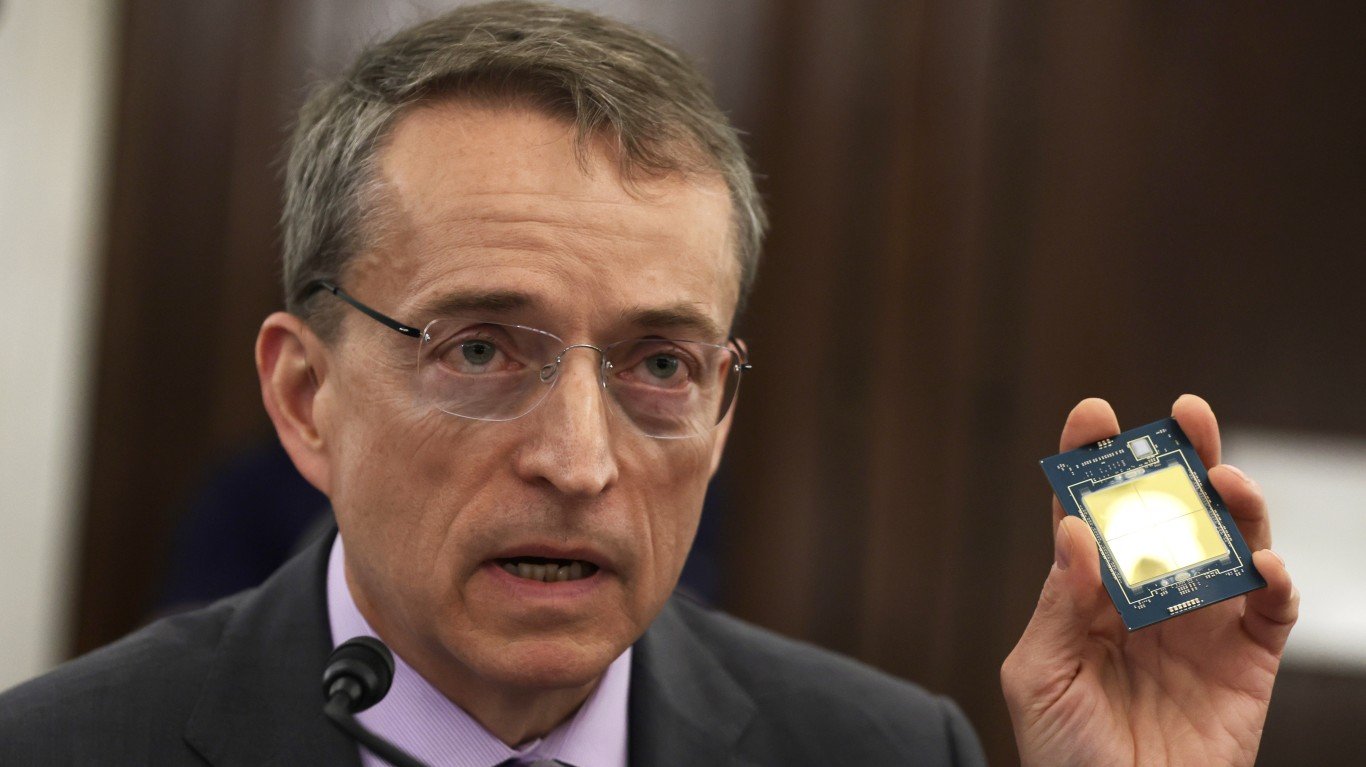
Note: The photo on this article is Intel’s ex-CEO Pat Gelsinger. I will be interviewing him on-stage where he will be Keynote Speaker at the COSM Technology Conference, November 18-20, 2026 in Scottsdale, AZ, along with my colleague George Gilder. Please stop by.
Contact [email protected] for any questions or corrections.
Dr. Robert Castellano has over 40 years of experience analyzing the high-tech industries. He is president of The Information Network (www.theinformationnet.com). He earned a PhD degree in Chemistry from Oxford University (UK). His PhD thesis advisor, John Goodenough, won the Nobel Prize in Chemistry in 2019 for the invention of the Lithium Ion Battery. He writes with George Gilder, novelist, futurist, and economist, and his team for Eagle Financial Publishing.