Why Some Traders Are Ditching Meta for Cleaner AI Plays
Meta has surged 33% in a month while analysts debate whether its cash flow turns negative for the next two years. Before you hold, hear the case for rotating into a rival trading at a steep discount with cleaner AI…


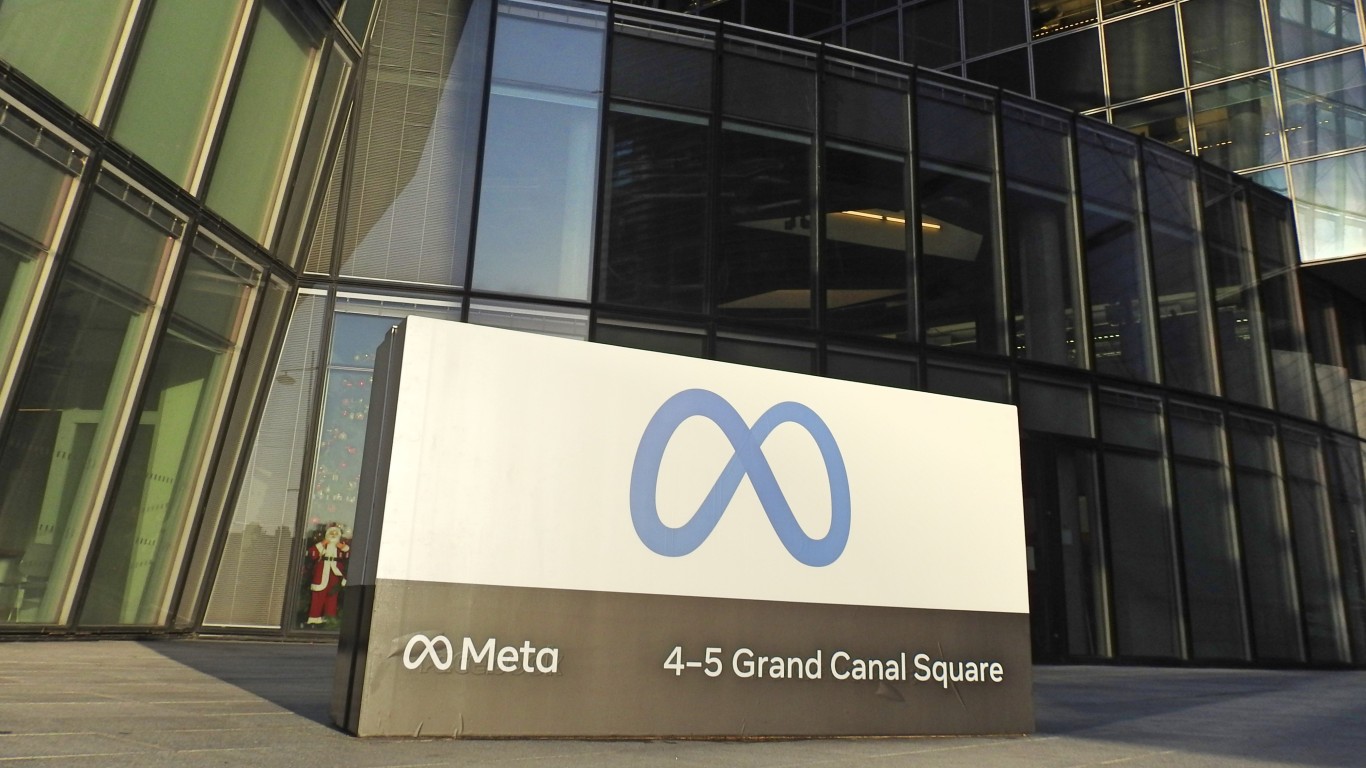
Meta Platforms (NASDAQ:META | META Price Prediction) closed Wednesday at $744.10 a share and was up about 1% in Thursday’s premarket. Shares have surged 33.1% over the past month, yet trade 2.2% below year-ago levels. Wednesday night, financial programs debated Meta as two different companies.
Bear Case: A Cash Flow Desert Until 2030
According to The Investor’s Podcast host Daniel Mahncke, “In my updated base case, Meta produces basically no free cash flow between 2026 and 2028. Slightly negative in 2026, massively negative in 2027, roughly break even in 2028. Only in 2030 do we see close to $90 billion of free cash flow again.” Q2 2026 showed free cash flow of $784 million against capex of $31.1 billion.
In the same episode from The Investor’s Podcast, host Shawn O’Malley flagged off-balance-sheet liabilities: “Alphabet has about a trillion dollars in off-balance-sheet liabilities alone through leases and purchase commitments. Meta itself is close to $700 billion. Compared to a year ago, those liabilities have grown about 800% for both companies.” These are multi-year rental contracts and signed agreements for chips and servers that are real obligations but not yet recorded as debt.
Skeptic’s Version: You Are Paying for Ads
CNBC Fast Money panelist Steven Grasso made the skeptical case: “98% of Meta’s revenue comes from ad dollars growing at 27%. That’s what you’re paying for. Muse is a sideshow hobby, until it really pays. Reality Labs lost $4.6 billion on revenue of $430 million.” Markets bid Meta up on a shopping agent while the profit engine remains ads.
Bull Case: A Second Revenue Line That Does Not Exist Yet
The bull rebuttal from Jefferies analyst Brent Thill focuses on distribution: “There are 200 million small businesses on Meta. There should be billions. Why are not small businesses using this as an agent to run their business? Why can’t they have a broader subscription offering?” Meta reported over 1 million businesses using its agents weekly on WhatsApp and Messenger. Converting even a fraction of the small and medium-sized business base into paid subscribers would create a second monetization curve that does not yet exist.
Alternative Trade: Rotate Into Alphabet
On Fast Money, Nathan argued that Alphabet (NASDAQ:GOOGL) is the cleaner AI expression. “The trade is Google. Meta’s gains over the last couple of weeks have been really at the expense of Google. It’s down 17.5% from highs made in February. I would much rather have Google connected to Gmail, Android, Chrome,” he said. Shares are down 2.9% over the past month and up 36.7% over the past year. Alphabet trades at a P/E of 17 versus Meta’s 23. Google Cloud revenue grew 82% in Q2. Microsoft (NASDAQ:MSFT) generated fiscal Q4 free cash flow of $19.639 billion as Azure crossed $100 billion in annual revenue. Both companies are converting capital expenditure into visible cloud revenue. Meta is asking investors to wait.


Committed View
Meta is building the next platform and paying for it with the current one. The bear math on near-term cash checks out. So does the bull math on distribution. One event will settle the debate: whether Q3 2026 revenue lands within the $61 billion to $64 billion guidance range, with enterprise API and business-agent revenue broken out as a distinct line. The numbers will decide it.


Contact [email protected] for any questions or corrections.
Trey has been an editor and author at 24/7 Wall St. for more than a decade, where he has published thousands of articles analyzing corporate earnings, dividend stocks, short interest, insider buying, private equity, and market trends. His comprehensive coverage spans the full spectrum of financial markets, from blue-chip stalwarts to emerging growth companies.
Beyond 24/7 Wall St., Trey has created and edited financial content for Benzinga and AOL's BloggingStocks, contributing additional hundreds of articles to the investment community.
Trey's editorial expertise extends across multiple publishing environments. He served as production editor at Dearborn Financial Publishing and development editor at Kaplan, where he helped shape financial education materials. Earlier in his career, he worked as a writer-producer at SVE. His freelance editing portfolio includes work for prestigious clients such as Sage Publications, Rand McNally, the Institute for Supply Management, the American Library Association, Eggplant Literary Productions, and Spiegel.
Outside of financial journalism, Trey writes fiction and has been an active member of the writing community for years, moderating workshop sessions at regional conventions.