Eli Lilly Just Won FDA Approval for a Once Weekly Insulin and the Stock Is Knocking on $1,200
The FDA just handed Eli Lilly a new diabetes approval, but the real debate is whether a once-weekly insulin needle moves the needle on a stock already up 60% and closing in on record highs.

On September 24, 2026, the U.S. Food and Drug Administration approved Eli Lilly‘s (NYSE:LLY | LLY Price Prediction) Onswik (insulin efsitora alfa-gobe), a once-weekly basal insulin injection treatment for adults living with type 2 diabetes. Shares closed at $1,183.76, up 2.85% in the session, still short of the 52-week high of $1,292.65 but higher by 60.32% over the past year.
Onswik is a real approval and useful franchise extension. The question is whether a once-weekly injection significantly changes the investment case. Mostly, it does not.
What the FDA Actually Approved
The approved product is a once-weekly basal insulin for adults with type 2 diabetes. Lilly is second to the U.S. market: Novo’s comparable offering was approved in March and launched in the U.S. the month before.
Lilly did not provide a price or launch timing. The chief executive said in August that European approval was expected in the coming months.
The regulatory bar for basal insulin is non-inferiority. Lilly’s chief executive said: “Once-weekly insulin F-sator alpha achieved reductions in A1C comparable to those of once-daily basal insulin.”
The value proposition is convenience: fewer injections per year improve adherence, which improves outcomes on basal insulin. Payers care because better adherence lowers future medical spend.
Where This Sits Inside Lilly’s Business
Lilly’s second quarter delivered $22.974 billion in revenue, up 47.67% year over year, with Mounjaro at $9.943 billion and Zepbound at $4.928 billion. The company raised full-year 2026 guidance to $85 billion to $87 billion in revenue and non-GAAP EPS of $35.50 to $36.50.

Against a franchise like that, a once-weekly basal insulin is minor. It supports Lilly’s diabetes presence but does not reset the growth rate.
Volume drove the growth last quarter. Volume grew 60% while realized prices declined 13%. In the U.S., realized prices fell approximately 9%, excluding rebate adjustments.
A company can grow revenue sharply while being paid less per unit. Onswik will face the same net-pricing pressure. The undisclosed launch price is the most important unknown.
Bull and Bear Case for LLY Stock

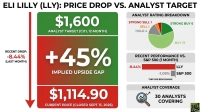
The bull case rests on incretins and the pipeline behind them. Retatrutide, Lilly’s triple-acting next-generation weight-loss candidate, is on track for a BLA submission in the first quarter of 2027, and the analyst consensus price target sits at $1,325.39, with a forward P/E of 25x against 2027 EPS estimates averaging $47.3443.

Skeptics argue the stock already prices in continued incretin growth while U.S. net prices decline and product concentration in tirzepatide remains the dominant risk. A mega-cap set up this way cannot absorb much bad news from payers.
The variable that decides between them is the direction of U.S. net prices, incretin volume trends into the third-quarter earnings report, and provide payer coverage once Lilly names an Onswik price. Until Lilly puts a number on the pen, treat the approval as a franchise extension rather than a re-rating catalyst.
Contact [email protected] for any questions or corrections.
Omor Ibne Ehsan is a writer at 24/7 Wall St. He is a self-taught investor with a focus on growth, cyclical, and dividend equities that have strong fundamentals, value, and long-term potential. He also has an interest in high-risk, high-reward investments such as penny stocks.