Cramer Called the September Open Unholy and Then Named the One Stock He Would Still Buy
Jim Cramer called the September market open unholy, rattled off geopolitical chaos, and then named exactly one stock worth buying above $200. Whether the fundamentals behind that call survive the noise is a harder question than it looks.


Jim Cramer opened Squawk on the Street on the first trading day of September with a market backdrop he described in blunt terms. Two ships had been fired on in the Strait of Hormuz, Treasury yields were pushing higher across the curve, and diesel prices were climbing amid a supply picture already strained by Ukrainian strikes on Russian refining capacity and U.S. refiners operating near full utilization. Cramer called the combination “unholy” and said the AI trade had gone nowhere for about a year. Then he offered a single actionable idea.
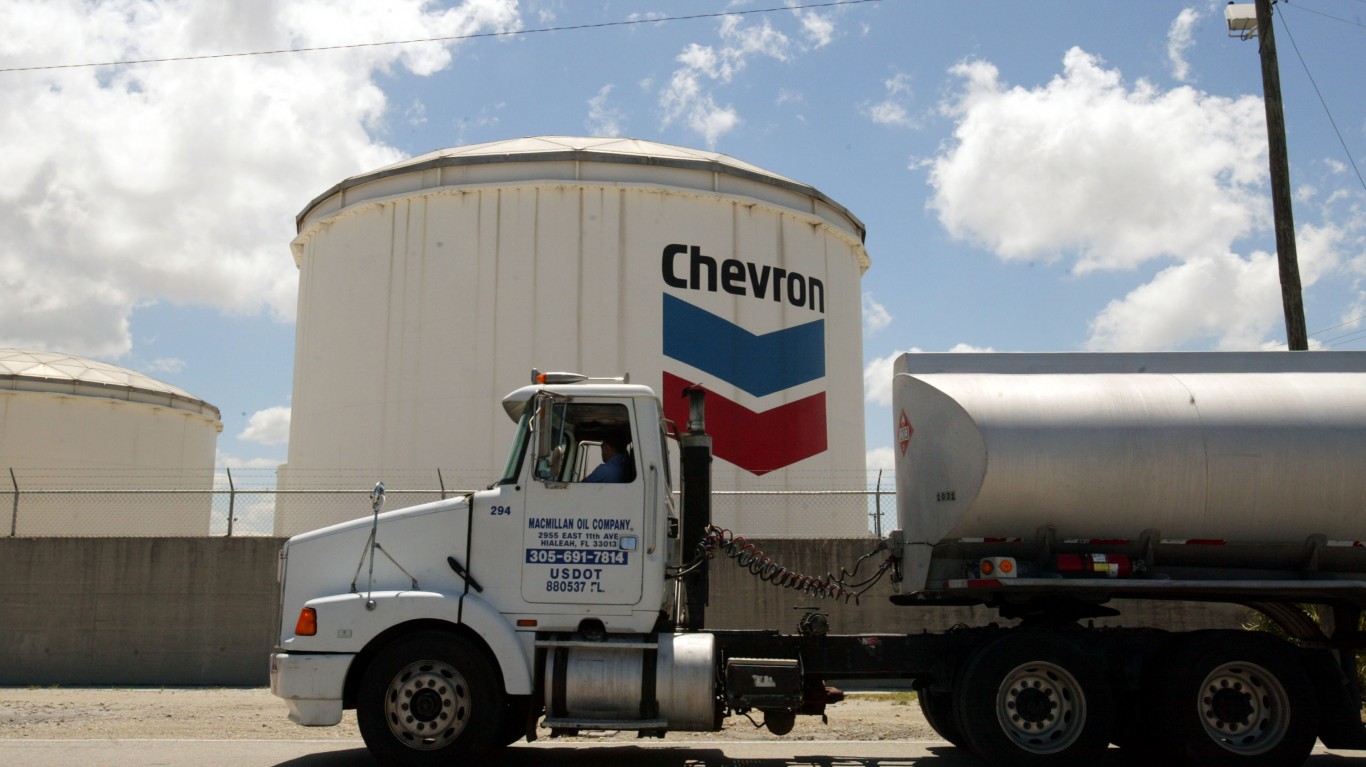
“Chevron over 200 is just it’s a steal here david,” he told David Faber, framing it around a distinction worth holding onto: “We are in a situation where the prism is negative, the noise is negative, the signal is positive.” That is the analytical spine of this piece. The question for an investor is whether Chevron (NYSE:CVX | CVX Price Prediction) deserves a bid because refining margins are widening on a disruption, or because the underlying business generates cash regardless of where crude settles next week.
What Actually Happened at Chevron Last Quarter

Chevron’s Q2 earnings report was the strongest the company has delivered in years. Adjusted EPS came in at $6.06 on revenue of $67.20 billion, with net income up 384.82% year over year and free cash flow of $18.095 billion. Worldwide production climbed 20% year over year to 4,070 MBOED.
Downstream is where the disruption thesis intersects the fundamentals. U.S. refinery utilization hit 97%, and downstream earnings jumped to $4.87 billion from $737 million a year earlier. Chevron booked $1.4 billion in favorable timing effects and cut total debt by $8.41 billion in the quarter alone.
The Hess integration is running ahead of plan. Management reached its $3 billion structural cost reduction target six months ahead of schedule and captured $1.5 billion in Hess-related synergies, roughly 50% above the initial target. CFO Eimear Bonner said the savings are durable because they are “built into the business.”
Mike Wirth’s read on refining aligns with what Faber flagged on air. He said “Products are tighter than crude around the world, and that’s why cracks have widened out,” and expected “upward pressure on product pricing here into the third quarter and perhaps beyond that.” Full detail sits in Chevron’s 8-K filing with the SEC.
The 20-year, 2.67-gigawatt power purchase agreement with Microsoft (NASDAQ:MSFT) for a West Texas data center reframes Chevron as more than a pure crude call, because contracted power cash flows are insulated from Brent curve swings.
Where the Disruption Case Gets Uncomfortable
Cramer’s positive signal rests partly on refined-product tightness that could reverse quickly. WTI has been swinging hard: from $114.58 on April 7 to $83.90 on August 25, down 8.5% in a month. Geopolitical crack spreads unwind the moment shipping lanes clear.
September seasonality is real but overrated as a standalone reason to avoid energy. Refinery turnaround season can tighten distillate further, and EIA data show refinery utilization near 0.92-0.95 in recent months, leaving little slack.
The stock has already moved. CVX is up 42.32% year-to-date and 8.15% over the past month, closing at $211.05. Buying above $200 means paying up for a quarter that has already been rewarded.
The dividend is what makes the wait tolerable. The next payment is $1.78 on September 10, with an annualized forward of $7.12. Chevron has raised the quarterly payout every year since 2024.
Cramer’s own hedge, that “the AI trade… has not been a good one for quite some time”, is why an integrated major with a Microsoft power contract is a rotation candidate rather than a defensive parking spot.
Is CVX Stock a Buy?


Chevron trades at a market cap of around $414 billion with a P/E near 34x, richer than Exxon Mobil (NYSE:XOM), which trades at a P/E of roughly 23x and a market cap of $676.62 billion. Exxon’s Guyana ramp and 43 consecutive years of dividend growth arguably make it the cleaner compounder.
ConocoPhillips (NYSE:COP) is the higher-beta upstream play, up 48.63% YTD, targeting a $7 billion free cash flow inflection by 2029. It offers more torque to crude and less downstream ballast.
Shell (NYSE:SHEL) missed Q2 EPS badly at $1.92 due to Qatar disruption, even as refinery utilization ran at 102%. Its LNG optionality is real; its earnings volatility is, too.
Chevron sits in the middle: less commodity-beta than Conoco, richer than Exxon, and more integrated than Shell right now. The Hess synergies, contracted Microsoft cash flows, and cost program give it a signal that outlasts any tanker headline. Cramer’s framing that the noise is negative and the signal positive holds up under scrutiny, but the entry price matters and CVX has already run hard.
The setup looks constructive, with the understanding that the near-term catalyst is disruption-driven and the long-term case rests on Hess, cost discipline, and power. Those seeking pure crude beta may find more torque in Conoco.
Contact [email protected] for any questions or corrections.
Omor Ibne Ehsan is a writer at 24/7 Wall St. He is a self-taught investor with a focus on growth, cyclical, and dividend equities that have strong fundamentals, value, and long-term potential. He also has an interest in high-risk, high-reward investments such as penny stocks.