Micron Has Evolved Into a Next Gen Player So I Keep Adding
Every time Micron dips, one investor keeps buying more shares, and the reasoning has nothing to do with short-term momentum. The structural case building behind this memory giant may be one of the quieter conviction plays unfolding in AI right…

This post may contain links from our sponsors and affiliates, and Flywheel Publishing may receive compensation for actions taken through them.
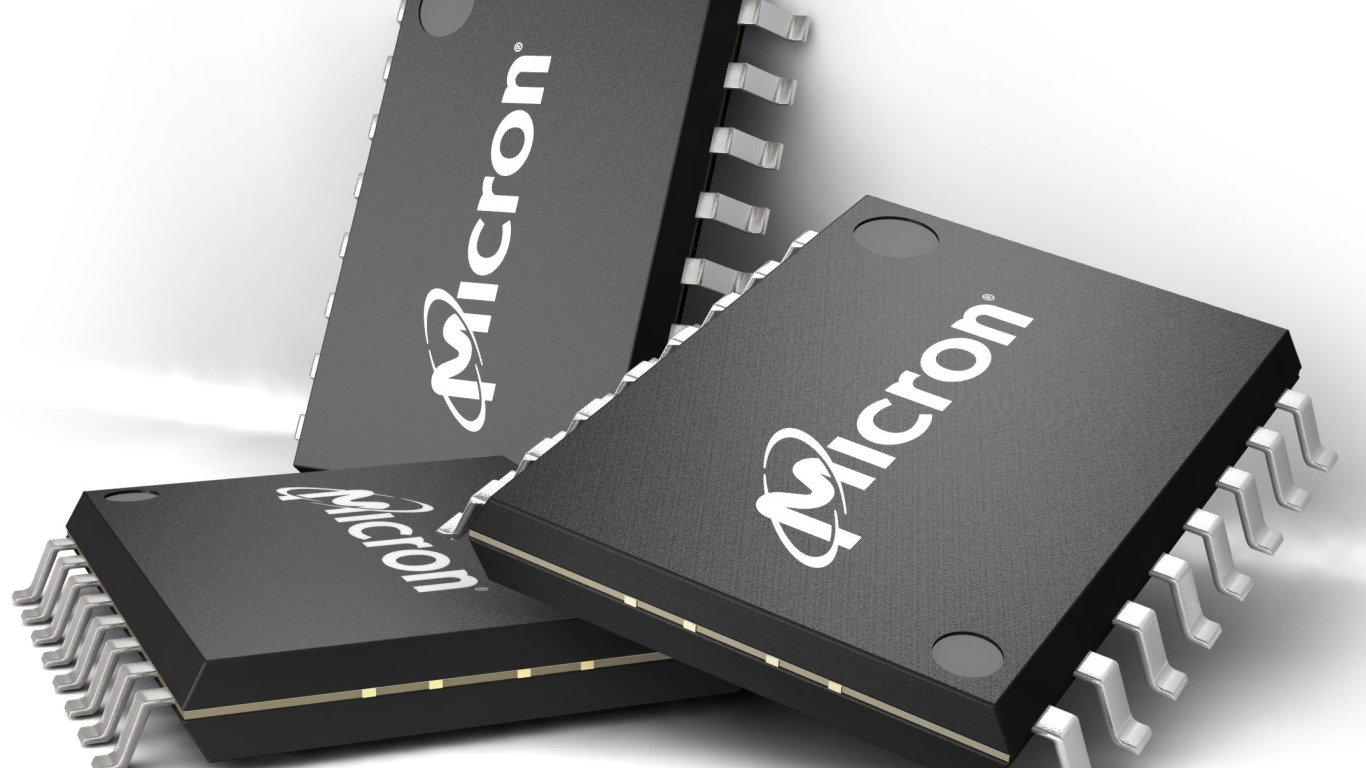
My position in Micron Technology (NASDAQ:MU | MU Price Prediction) grew again this week, and I already know I’ll repeat the move. Shares fell 4.79% on Thursday to $1,035.84 after a report on OpenAI’s revenue rattled AI chip stocks. I treated that dip the way I treat every dip in this name: as another entry point.
Here is what keeps pulling me back. Memory used to be a commodity that boomed and busted. AI changed that math. Every model with longer context and more users needs more memory, and Micron makes the HBM, DRAM, and data center SSDs those systems run on. Management says it has “no line of sight to when supply and demand will return to balance.” I want to own the bottleneck.
Three Receipts Behind Every Purchase
First, the earnings engine. Fiscal 2026 revenue reached $133.19 billion, up 256.3%, with non-GAAP EPS of $75.52. Fourth-quarter gross margin hit 87.0% versus 45.7% a year earlier, marking the 8th consecutive EPS beat. Guidance for fiscal Q1 2027 calls for $61.5 billion in revenue and EPS of $38.15.
Second, visibility. Micron has signed 26 strategic customer agreements, all with take-or-pay volumes. Remaining performance obligations sit near $150 billion, customer commitments total $32 billion, and more than 75% of 2027 output is already committed. Management expects margins even at floor prices to sit significantly above any prior cycle peak.
The balance sheet stands out too. Micron ended the quarter with $68.3 billion in net cash, earned BBB+ ratings from all three agencies, and produced $33.20 billion in quarterly free cash flow. Starting December 9, 2026, management plans to step up capital returns, aiming over time to return 100% of excess cash, mostly through buybacks. The $0.15 quarterly dividend followed a 30% raise. I own this for compounding and share count reduction, with income as a bonus.
Why My Money Goes Here Instead of NVIDIA
The AI name everyone reaches for first is NVIDIA (NASDAQ:NVDA). I pass on it for valuation. NVIDIA trades at 30 times trailing earnings and 25 times forward earnings, with a price-to-sales ratio of 18.93. Micron trades at 14 times trailing, 7 times forward, and 9.23 times sales. I still get NVIDIA’s roadmap through Micron, which is building “the industry’s first custom HBM4E implementation, NVHBM” with it.
Risks That Keep Me Disciplined
Memory remains cyclical. Capex ran $30.71 billion in fiscal 2026, and first-half fiscal 2027 spending should reach about $25 billion. HBM4 volume leans on a lead customer, a Taiwan union won approval to strike, and a beta of 2.226 guarantees violent swings. If AI spending slows or rivals add capacity faster than expected, pricing breaks.
I accept that. Floor-priced, take-or-pay contracts and a large cash pile give Micron room to weather a downturn that would have crushed the old Micron.
What Keeps My Buy Button Active
Idaho’s ID1 fab should begin wafer output in mid-calendar 2027, HBM4E volume production arrives in calendar 2027, and Level 4 autonomous vehicles need more than 200 gigabytes of memory each. CEO Sanjay Mehrotra put it simply: “As strong as fiscal 2026 was, we expect fiscal 2027 to be even better.” (The signs that show up years before a monster tech run are the ones we cataloged in a free playbook here: The Next Nvidia Playbook.)
While the world keeps running short of memory, I will keep buying the company that makes it.
Contact [email protected] for any questions or corrections.
Alex Sirois is a financial writer with experience spanning both retail and institutional investing. He has written for InvestorPlace and held roles at BNY Mellon and Bernstein, giving him a perspective that bridges Main Street portfolios and Wall Street analysis.
Alex holds an MBA from George Washington University and has built his career across multiple industries, including e-commerce, education, and translation — a breadth of experience that informs how he breaks down complex financial topics for everyday investors. His writing is conversational, actionable, and grounded in long-term, buy-and-hold investing principles.
At 247 Wall St., Alex focuses on delivering analysis that is both accessible and useful, with a clear emphasis on helping readers make more informed decisions with their money.