American Airlines Sinks 4% as Fuel Costs Push Outlook to Full-Year Loss; Delta and United Airlines Drop 3%
American Airlines just posted record revenue and still managed to forecast a full-year loss, leaving investors scrambling to understand how a carrier can grow so fast while falling so far behind on its own bottom line.


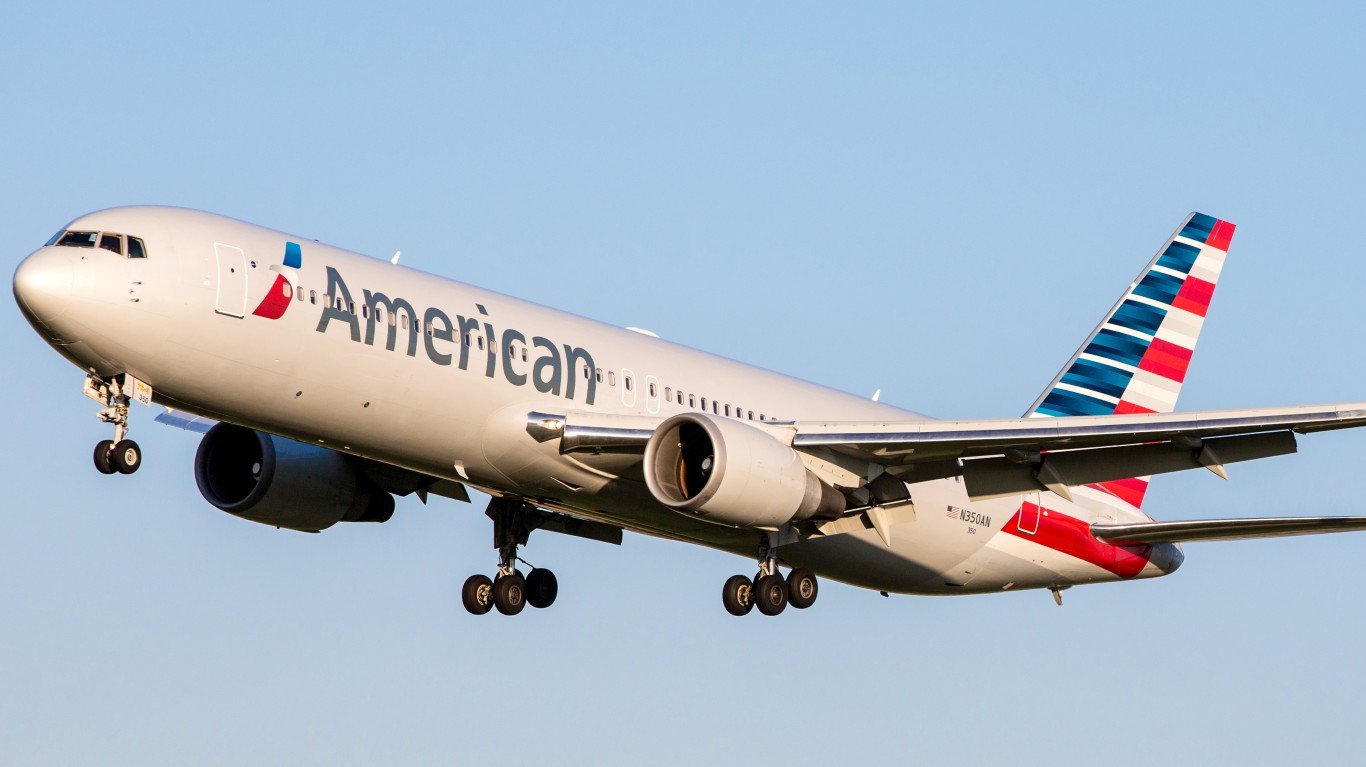
A record quarter wasn’t enough to offset a fuel bill that has now pushed a major U.S. network carrier toward a full-year loss. American Airlines Group (NASDAQ:AAL | AAL Price Prediction) stock is at $11.72, down 4%, as the market prices in a 2026 outlook that has shifted from a possible profit to a forecast loss.
Airline stocks are falling harder than the rest of the equity market. The U.S. Global Jets ETF (NYSEARCA:JETS) is down 1.23%, tracking the carriers lower. Losses in the SPDR S&P 500 ETF Trust (NYSEARCA:SPY) are lighter, with the benchmark fund down 0.77%.
Meanwhile, Delta Air Lines (NYSE:DAL) stock is at $75.60, down 3%, a smaller decline than the one in American Airlines shares. United Airlines Holdings (NASDAQ:UAL) stock is at $98.70, also down 3% and trailing the drop in American Airlines shares.
Fuel Costs Push American Airlines Toward a Full-Year Loss
American Airlines reported record Q3 2026 revenue of $16.34 billion on October 22, exceeding analyst estimates as premium cabins and corporate travel led the gains. On a per-share basis, its adjusted loss of $0.28 came in smaller than the $0.33 loss analysts expected. CEO Robert Isom addressed the results. He stated in the release that “American delivered record third-quarter revenue and the strongest year-over-year revenue growth in my career, with premium performance leading the way.”
The outlook is where American Airlines stock ran into trouble. The airline guided to a Q4 2026 adjusted loss of $0.50 to $1.10 per share, wider than expected. Its full-year forecast now calls for an adjusted loss of $1 to $1.60 per share, replacing July guidance that ranged from a $0.65 loss to a $0.65 profit. Management’s Q4 plan assumes jet fuel at $4.70 a gallon, a cost level that leaves little room for record revenue to reach the bottom line.

Shared Fuel Exposure Puts American Airlines’ Guidance in Focus
Because Delta and United Airlines face the same fuel market, the deeper selling in American Airlines stock isolates the reaction to its own guidance. Notably, American Airlines stock has lost 24% year to date (YTD), while Delta stock has gained 10% YTD.
United Airlines stock is down 12% YTD. American Airlines carries debt and finance leases of $29.6 billion against a stockholders’ equity deficit of $4.2 billion. Its balance sheet can’t absorb a prolonged fuel shock.
Jet fuel expenses at American Airlines jumped 67.5% to $4.63 billion in Q3, with its average price rising to $3.85 a gallon from $2.37 a year earlier. Those costs swamped the revenue gains and left the airline with a net loss for the quarter under generally accepted accounting principles.
On the demand side, American Airlines’ premium revenue rose 22.9%, and managed corporate sales climbed 27.6% in a sixth consecutive quarter of double-digit growth. AAdvantage loyalty registrations rose 27.4%, adding another source of durable revenue.
American Airlines’ Fuel Bill Sets the Next Move
American Airlines now faces the question of whether fuel prices ease from the level built into its Q4 guidance. Management expects a $2.8 billion year-over-year jump in Q4 fuel costs and roughly $7 billion in annual drags. Slower network growth in 2027 is also part of the plan, according to the company’s outlook.
American Airlines’ Q4 report will show whether premium and corporate demand holds up against a fuel price assumption nearly double year-ago levels. A plan to reach nearly $1 billion in annual run-rate savings by year-end offers partial support on the cost side. Given record revenue offset by a widening loss while fuel stays elevated, investors should adjust their AAL stock holdings carefully.
Contact [email protected] for any questions or corrections.
David Moadel is financial writer specializing in stocks, ETFs, options, precious metals, and Bitcoin. David has written well over 1,000 articles for leading online publications, helping investors understand markets, income strategies, and risk.His work has appeared in The Motley Fool, InvestorPlace, U.S. News & World Report, TipRanks, ValueWalk, Benzinga, Market Realist, TalkMarkets, Finmasters, 24/7 Wall St., and others.With a master’s degree in education, David has taught at the elementary, high school, and college levels. That teaching background shapes his writing style: clear, educational, and practical. David has also built a loyal social-media audience by providing trustworthy financial content on YouTube, X/Twitter, and StockTwits.