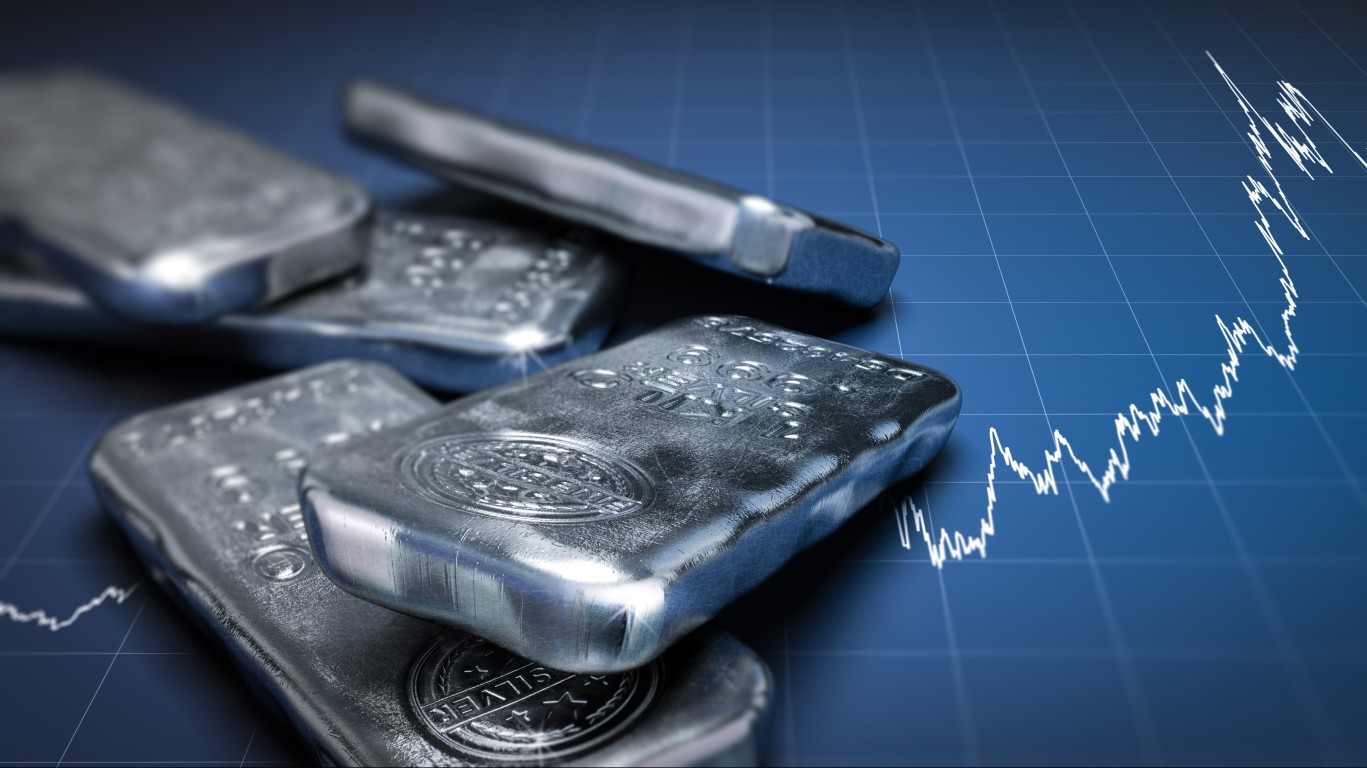
Gold Just Fell Below $4,000 After Its Worst Week in Five Months
Gold cracked a key psychological level for the second time this year as margin calls, soaring oil prices, and rising rate-hike odds turned the classic safe haven into a liability. Now two events in the next week will decide whether…


Spot gold traded at $3,998.49 an ounce at 2:27 p.m. New York time on Friday, October 23, 2026. That was a three-month low and its first move below $4,000 since mid-July. By late U.S. trading, it sat at $3,995.81, down 0.70%, while December futures settled 1.3% lower at $4,007.90, just above the line.
The break came as the S&P 500 and Nasdaq touched five-week lows. Gold is supposed to hold up when stocks fall, and that is why many people own SPDR Gold Shares (NYSEARCA:GLD).
Higher oil prices are driving rate-hike odds up, and margin calls are pressuring investors to sell whatever they can. Those forces are testing whether gold still works as a shelter when investors need cash.
Gold Has Now Broken $4,000 Twice in 2026
Gold also fell through that level on June 24, so buyers are holding it for the second time. December futures dropped about 4.1% from their October 16 settlement of $4,181.10. That was the steepest weekly decline since June, and most of the selling came on Thursday.
Gold now sits roughly 29% below its late-January record. That peak was near $5,600.
Oil and Rate-Hike Odds Did the Damage
Brent crude traded above $117 intraday and was near $117.23 late in the session. WTI was near $103.07 as tensions in the Strait of Hormuz intensified.
Expensive oil feeds inflation. Year-ahead inflation expectations rose to 4.7% in the University of Michigan’s final October survey.
Traders see a 92% chance the Fed holds rates at its October 27-28 meeting and a 78% chance of a December hike. Gold pays no income, so a 10-year Treasury yield of 4.96% and rising odds of a hike make the metal more expensive to hold.
Why the Haven Trade Failed
Tech losses triggered margin calls. Investors sold gold and silver because both turn into cash quickly.
Ole Hansen heads commodity strategy at Saxo Bank. “Clearly, we are still witnessing a battle between short-term, technically driven traders,” he said.
Roukaya Ibrahim, chief commodities strategist at BCA Research, sees a turn coming. “My technical indicators suggest that we’re ripe for a rebound.”
Hedge funds are approaching a net short position in gold. A net short means they have more positions that profit from falling prices than from rising ones, so these sellers will eventually have to buy back, although nothing tells you when.
GLD, Silver and Newmont All Gave Ground
GLD fell 0.65% to $366.61 and lost about 4.0% for the week. The fund holds $138.72 billion in assets and now trades close to its 52-week low of $360.12.
Silver fell to $53.97, its lowest since November 2025, after losing more than half its value from a late-January peak above $120. iShares Silver Trust (NYSEARCA:SLV) dropped 1.26% to $48.72 and lost about 5.4% for the week.
Platinum slid 0.9% to $1,555.84. Palladium fell to $1,048.31.
Newmont (NYSE:NEM | NEM Price Prediction) fell 4.59% to $108.87 and lost about 8.2% for the week. It had posted record third-quarter adjusted EPS of $2.20 on October 22.
What GLD Investors Need to Watch Before the Fed Decision
GLD faces two events that could set its next move. The Fed announces its decision at 2 p.m. EDT on Wednesday, October 28, and September PCE inflation data comes at 8:30 a.m. EDT on Thursday, October 29.
Brent is above $117, and December hike odds hit 78%. Both events are more likely to push yields up than down.
Treasuries compete with gold for investor money because the 10-year pays near 4.96% while gold looks for a floor. Newmont posted record earnings even as its share price fell, although miners tend to fall harder than bullion.
This view is wrong if December futures settle back above $4,181.10 after the Fed meeting. It is confirmed if GLD closes below $360.12.
Contact [email protected] for any questions or corrections.
Omor Ibne Ehsan is a writer at 24/7 Wall St. He is a self-taught investor with a focus on growth, cyclical, and dividend equities that have strong fundamentals, value, and long-term potential. He also has an interest in high-risk, high-reward investments such as penny stocks.