The Second Year in a Big 55+ Community Is When Most Retirees Decide to Leave. Here’s What Tips It
The first year in a big 55+ community almost always feels manageable, but the second year is when the real bills arrive, and thousands of retirees discover their budget was built on costs that belonged to someone else.

This post may contain links from our sponsors and affiliates, and Flywheel Publishing may receive compensation for actions taken through them.
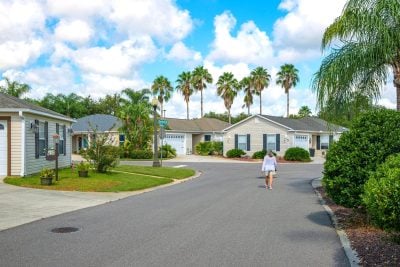
The first year in a large 55+ community usually goes well, so in the second year many couples review their budgets again, and some decide to sell. That happens because the first year’s costs were partly someone else’s. The second year brings an updated tax bill, an insurance renewal priced on the open market, and the first anniversary adjustment to community fees.
Costs Year One Hides in a Big 55+ Community
The Villages in Florida is a useful example because its cost structure is common across large 55+ developments. New buyers pay a $204 monthly amenity fee, which works out to $2,448 a year. Existing owners keep their purchase-year rate, which adjusts on their anniversary based on year-over-year CPI. Community development district charges appear on the property tax bill and commonly run from about $1,600 to over $6,000 per year.
Taxes are where most second-year surprises start. Under Florida’s Save Our Homes rule, a homestead’s assessed value is capped, and the assessment resets when the home sells. If you close after January 1, your first bill reflects the seller’s capped value, but as soon as the calendar turns to January 1 the following year, the home is reassessed at market value. The homestead exemption, worth up to $50,000 of taxable value, requires filing Form DR-501 by March 1 of the tax year. Effective tax rates in The Villages range from 0.97% to 1.35% depending on ZIP code.
Insurance tends to arrive at the same time. Citizens Property Insurance’s approved rates average $3,202 for its HO-3 policies. One national survey has put Florida’s average at $6,408 per year for $300,000 in dwelling coverage.
Running the Second-Year Numbers
Start with a working budget. Average annual household spending was $78,535, a reasonable baseline for a couple who wants an active life without luxury. A typical retired couple receiving Social Security will collect $3,355 a month after the 3.6% COLA, or $40,260 a year, leaving a difference of $38,275. A 4% withdrawal rate puts the portfolio target at $956,875. At 3.5%, a better fit for a couple whose plan has to last 30 years, the target is about $1.09 million. The budget should include Medicare Part B at $202.90 per person per month, or about $4,870 for two. Surcharges begin above $218,000 of joint income.
Now apply the year-two adjustment to a $400,000 home. If insurance moves from the Citizens average to the statewide survey figure, the premium jumps $3,206. If the updated tax bill moves from the low end of the effective-rate range to the high end, it adds $1,520. Together, the budget is $4,726 higher. Funding that at 4% takes another $118,150 of portfolio. That increase has the largest effect on a couple who planned with no margin.
Inflation added nothing extra this cycle. The research price index for Americans 62 and older rose 3.6% from a year ago, the same as the COLA. However, this index weights housing and medical care more heavily. So a year in which insurance jumps can push it ahead of the COLA again.
Why Leaving Costs More Than Staying Put
Leaving the community also carries its own costs. Selling after two years means paying buying and selling costs on a house held briefly. Prices may not cover those costs. Home values in Wildwood-The Villages rose 2.61% over the past year, while Cape Coral-Fort Myers fell 0.9% and North Port-Bradenton-Sarasota slid 0.46%. Moving to a smaller home inside the same community resets the fees at the current new-buyer rate, which rose about 5.1% per year from 2021 to 2025. It also triggers another tax assessment, though Florida’s portability rules can carry over part of the benefit.
What It Takes to Make Year Two Stick
For a couple spending about $78,500, the plan works with roughly $1.1 million invested at a 3.5% withdrawal rate, and a separate reserve of around $120,000 would cover the second-year adjustment. A balanced mix of stock and bond index funds needs to return a few points above inflation to support the main portfolio. Waiting to claim Social Security brings down both numbers, while delayed retirement credits raise the benefit to the $4,188 maximum at full retirement age and beyond.
The second-year costs are expected, so before you sign, get an insurance quote on the specific house and estimate taxes at full market value minus your own homestead exemption. Ask for the district bond schedule. If the plan still works at those figures, the second year confirms the move.
Contact [email protected] for any questions or corrections.
David Beren has been a Flywheel Publishing contributor since 2022. Writing for 24/7 Wall St. since 2023, David loves to write about topics of all shapes and sizes. As a technology expert, David focuses heavily on consumer electronics brands, automobiles, and general technology. He has previously written for LifeWire, formerly About.com. As a part-time freelance writer, David’s “day job” has been working on and leading social media for multiple Fortune 100 brands. David loves the flexibility of this field and its ability to reach customers exactly where they like to spend their time. Additionally, David previously published his own blog, TmoNews.com, which reached 3 million readers in its first year. In addition to freelance and social media work, David loves to spend time with his family and children and relive the glory days of video game consoles by playing any retro game console he can get his hands on.