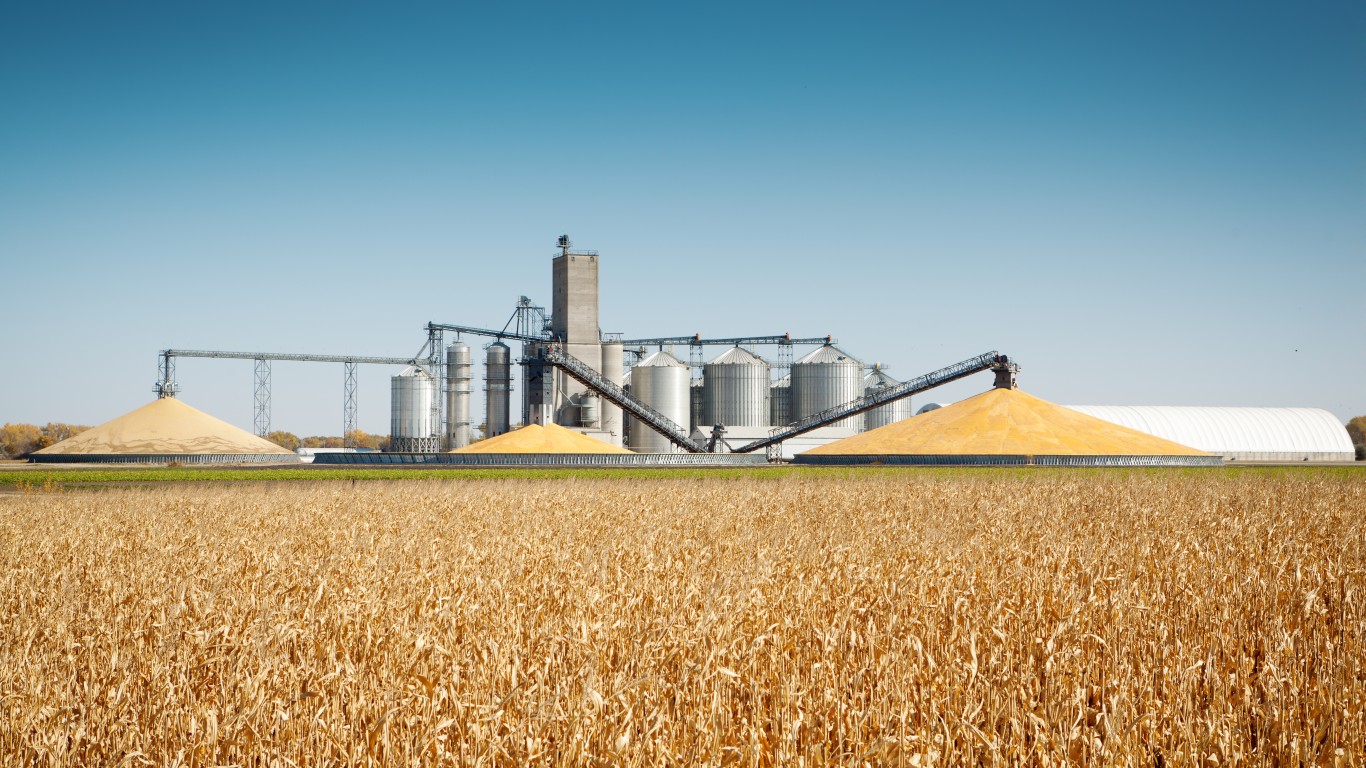
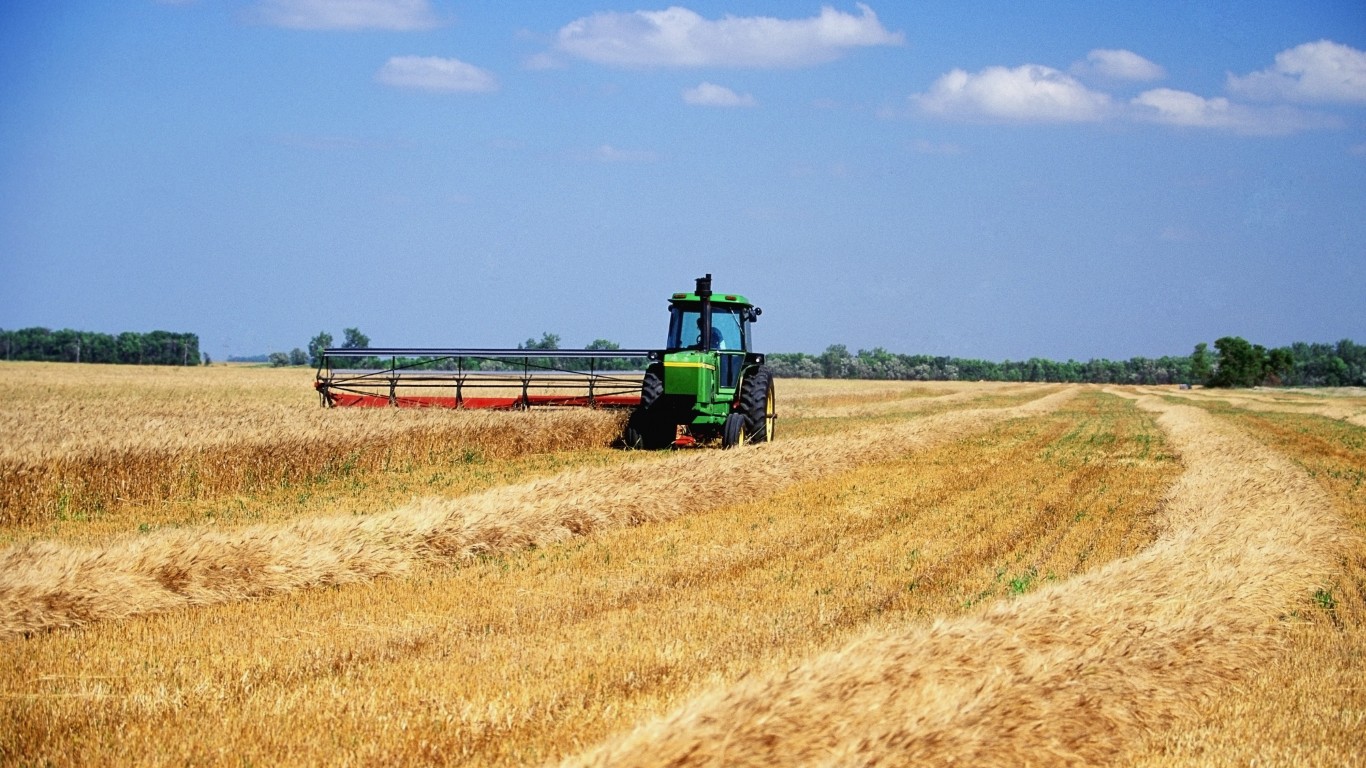
Farmers Are Getting Crushed as Wheat Slides for a Record Stretch
Wheat has logged its longest losing streak in nearly three decades, and the pain for growers goes well beyond the price chart. Here is what the collapse in the fields means for anyone watching the grain markets, farm balance sheets,…


December Chicago wheat has fallen $1.80 a bushel since the week of Aug. 24, 2026. That is the longest losing streak since 1997. On Oct. 28, the December soft red winter contract dropped another 11 1/4 cents to a four-month low of $5.99.
The most active contract fell 4.7% in the week through Oct. 23. That was its eighth straight weekly loss, and it is on track for a ninth.
Teucrium Wheat Fund (NYSEARCA:WEAT), the most direct listed proxy for wheat, closed Oct. 28 at $22.12. That leaves it 21% below its $28.00 close on Aug. 28 and Sept. 1.
Growers bear the cost as prices fall while diesel and fertilizer rise. Deere (NYSE:DE | DE Price Prediction) edged up to $640.67 that day, and Archer-Daniels-Midland (NYSE:ADM) fell 1.24% to $77.23. Neither move links clearly to wheat.
For WEAT holders, the open question is whether nine weeks of selling already prices in the bad news.
What Nine Weeks of Selling Covers
The slide gives back a September rally that took wheat to its highest level since 2023. WEAT is still up 10.77% year to date.
Several causes explain the drop. One cause stands out. The Black Sea risk premium has faded, more Russian grain is moving through Baltic ports, importer demand is subdued, and harvests are running faster in Australia and Argentina. U.S. exports are also running roughly 35% below a year ago.
Speculative funds hold a managed money net short position of about 65,000 contracts, which means they are positioned for lower prices. When they buy those contracts back, the price can rally sharply.
Why Wheat Growers Are Losing Money
USDA forecast 2026 net farm income at $158.4 billion, down 5.5% after inflation. That total is supported by $47.4 billion in direct government payments, which are up nearly 70%.
Fertilizer expenses are forecast to rise 15.3%, and fuel and oil expenses 28.8%. Diesel averaged $6.3499 a gallon on Oct. 28, up 72.8% from a year earlier.
Farm-group economists project wheat losses of $114 per acre in 2026 and $145 in 2027. They also wrote that “meaningful expense relief remains limited.” Chapter 12 farm bankruptcy filings hit 62 in April 2026, the most since February 2020.
What It Means for Deere and ADM
In August, Deere described North American demand. The company called it stable “albeit at very low levels.” It expects U.S. and Canada large ag sales to fall 15% to 20% in fiscal 2026.
A squeeze on wheat can push back equipment purchases. But government payments offset some of the losses for farmers, and Deere’s Construction & Forestry sales rose 18% last quarter. Its next report is expected Nov. 25, though the company hasn’t confirmed the date.
ADM, expected to report Nov. 3 (also unconfirmed), benefits from conditions that hurt farmers, because big crops and cheap grain support a merchant’s volumes. Its raised adjusted EPS guidance of $5.15 to $5.60 depends mainly on crush and biofuel margins.
Reality Check for WEAT Holders
WEAT holds futures across several contract months. It replaces them as they expire, a process called rolling, so its return can drift away from spot wheat. When later contracts cost more than the ones expiring, each roll loses value. That helps explain WEAT’s 41.25% five-year decline.
One analyst noted on Oct. 27 that December wheat “retreated to a long-term weekly trendline established in late 2025 after nine consecutive weeks of losses.” With shorts crowded, that support could set off a quick bounce.
What Could Turn Wheat Around for WEAT
So could a weather or Black Sea shock. Still, near-record global supply, weak exports and the cost of rolling leave WEAT without a near-term catalyst.
ADM’s position differs from WEAT’s, because cheap grain supports its volumes and its earnings come from crushing, ethanol and nutrition.
Keep an eye on Friday, Oct. 30’s settlement. If December Chicago wheat ends a week back above its $6.25 Oct. 23 close, that would show funds buying back their shorts. The bearish case would weaken.
Contact [email protected] for any questions or corrections.
Omor Ibne Ehsan is a writer at 24/7 Wall St. He is a self-taught investor with a focus on growth, cyclical, and dividend equities that have strong fundamentals, value, and long-term potential. He also has an interest in high-risk, high-reward investments such as penny stocks.