First F5, Now Fortinet: Wall Street Has Stopped Paying Security Stocks for Beating Earnings
Fortinet beat earnings, raised guidance, and watched its stock crater 26% overnight. The same thing just happened to F5, and Palo Alto is next in line to report.


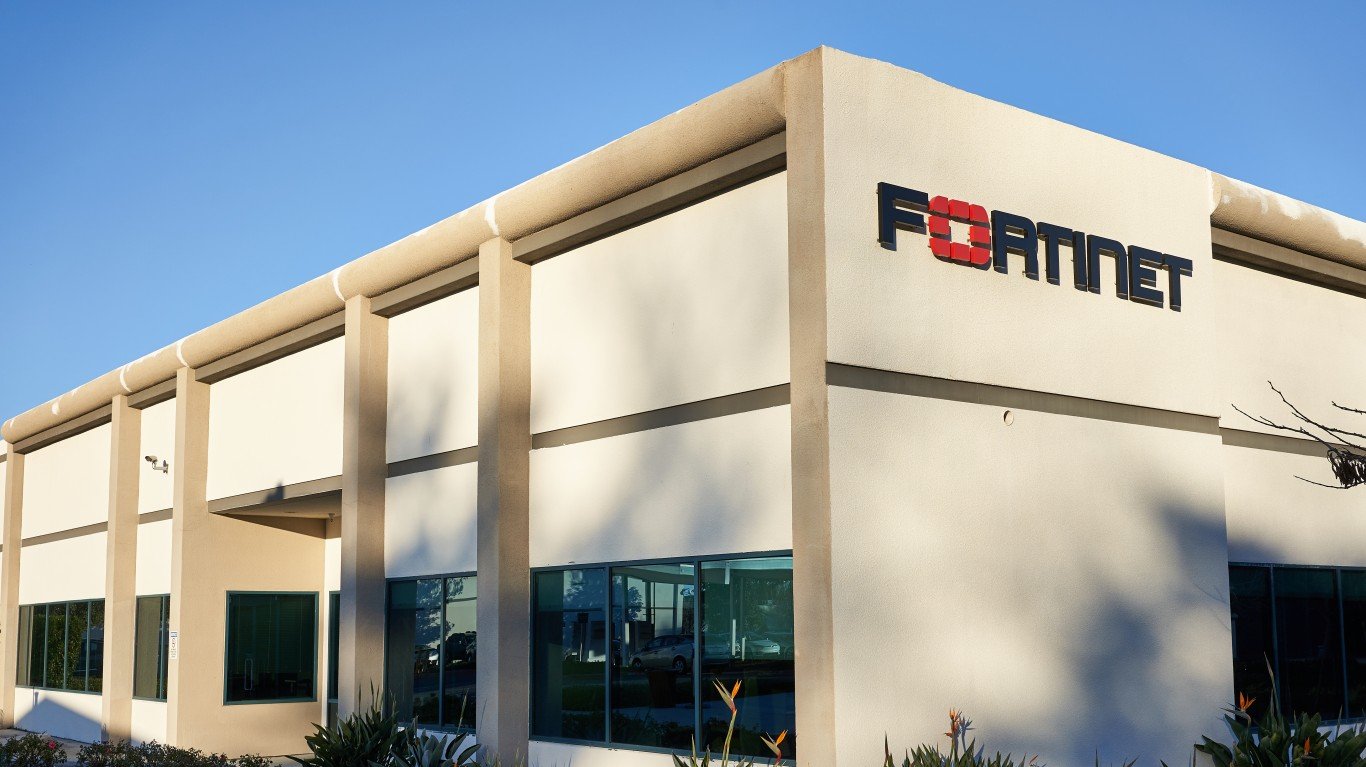
Fortinet (NASDAQ:FTNT | FTNT Price Prediction) beat Wall Street on earnings and revenue after the close on October 28, 2026 and raised its full-year revenue outlook. Shares then fell 26% in premarket trading on October 29, 2026. Palo Alto Networks (NASDAQ:PANW) slid 7% and Zscaler (NASDAQ:ZS) dropped 7% in sympathy, even though neither company reported anything new.
The same pattern held for the second straight session. F5 (NASDAQ:FFIV) beat on its fiscal fourth quarter on October 27, 2026, then fell 20% the next day.
What Fortinet Delivered, and What Spooked Investors
Adjusted EPS came in at 91 cents, while Wall Street analysts (consensus) expected 86 cents. Revenue was $2.08 billion, and Wall Street analysts (consensus) had expected $2.06 billion. Fortinet raised full-year revenue guidance to $8.125 billion to $8.215 billion, up from $8.02 billion to $8.18 billion. Founder and CEO Ken Xie said demand allowed the company “to raise our 2026 billings guidance for the third time this year.”
Two things scared investors. Revenue growth slowed to 20% from 26% in the prior quarter. And Fortinet cut its full-year service revenue forecast to $5.15 billion to $5.17 billion, down from $5.18 billion to $5.22 billion. CFO Christiane Ohlgart called it “really a timing issue.” Her outlook for 2027 is only a stated forecast, and she hedged it herself: “I haven’t used the word acceleration. I’ve used the word improved growth rates.”

Who Takes the Hit From Fortinet’s Reset
Fortinet: The board added $1.2B to the buyback, leaving $2B authorized. That’s small next to a $127.72B market cap. Even after the drop, the stock is still up 61% year to date, so the bar was set very high going in.
F5: Shares are close to flat in Thursday premarket trading, down just 0.2%, which suggests the reset already happened. Fiscal 2027 revenue guidance of 8% to 9% growth trails the 11% it just posted.
Palo Alto: Palo Alto’s own beat on September 1, 2026 got the same treatment. The stock went from $354.50 an hour after the report to $331.94 a day later.
Zscaler: Zscaler had rose from $176.62 when it filed results to $255.80 before Thursday, which left plenty of gains to give back.
Why the Selloff Has a Case
About 10 percentage points of billings growth came from price increases. Xie said the advantage of cheaper inventory bought earlier is “starting to disappear,” and non-GAAP gross margin slipped to 79.6% from 81.6%. The revenue beat itself was just 0.7%.
I’ve been tracking Fortinet’s earnings reactions for years, and it has done this before. In Q2 2025 it beat estimates and fell 22% on the day. Thirty days later, the stock was up 6% from that report.
Is Beating Estimates Still Enough for Security Stocks?
Investors now pay for growth that speeds up and margins that hold. A plain beat earns a shrug at best. I don’t own any of these four stocks. Fortinet makes sense for you if you believe service billings will turn into revenue in 2027. If you think price increases were carrying the growth, it doesn’t.
The next test is Palo Alto’s fiscal first-quarter report. Its own guidance calls for revenue of $3.3 billion to $3.31 billion and NGS ARR (next-generation security annual recurring revenue) of $9.54 billion to $9.56 billion. If Palo Alto beats those estimates and still closes lower the next day, security stocks are priced for perfection (we wrote a free guide on riding a mania like this and knowing when to step off, here). After F5 and Fortinet, I expect exactly that.
Contact [email protected] for any questions or corrections.
I've been writing about stocks and personal finance for 20+ years. I believe all great companies are tech companies in the long run, and I invest accordingly.