A $17 Billion Hedge Fund Is Handing Back Cash After Its Worst Month Since 2020
When a hedge fund cuts its stock pickers on the same day AI chip shares crater, it's tempting to read a verdict on the businesses. The real story is about who owns Micron, AMD, and KLA, and what that means…

This post may contain links from our sponsors and affiliates, and Flywheel Publishing may receive compensation for actions taken through them.
Walleye Capital is a multi-strategy hedge fund. The fund, with about $17 billion, told investors in a letter on November 5, 2026, that it will restructure its internal stock-picking unit and return some capital. The fund lost 5.9% in October, its worst month since March 2020.
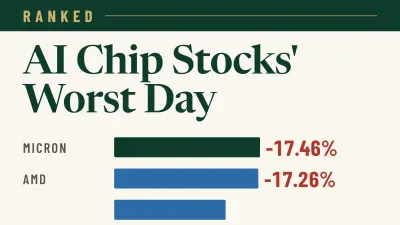
The letter arrived on a day of steep losses for AI chip stocks. Micron Technology (NASDAQ:MU | MU Price Prediction) fell 17.46% to close at $656.39. AMD (NASDAQ:AMD) dropped 17.26% to $404.40, and KLA (NASDAQ:KLAC) lost 13.35%.
The Nasdaq 100 sank 6.4%, its worst session since March 2020. News coverage set Walleye’s losses against that selloff, although the letter does not say the selloff caused them.
If you own these chipmakers, the useful question is whether a fund reshuffling its stock picks tells you anything about the businesses. Mostly, it shows who owns the shares, because forced selling by funds can move a stock regardless of business results.
What Walleye Committed To
Walleye will simplify its internal equity long-short business. Chief executive and chief investment officer Will England wrote that the firm will part ways with that unit’s leadership and a substantial portion of its investment teams, and return some capital. He called the unit the firm’s weakest strategy since 2023 and said earlier fixes, including new leadership, had not delivered.
The flagship Walleye Opportunities Fund was down in nine of 2026’s first 10 months. Multi-strategy firms give capital to internal teams and pull it back when results stay weak, so cutting a unit that has lagged since 2023 is the expected move.
Walleye will keep picking stocks through outside managers and its highest-conviction portfolio managers while it shifts resources to volatility and quantitative strategies. Its volatility business had its best month on record in October, because those strategies make money when price swings widen.
How the Selloff Lands on Each Chip Stock
Walleye’s 13F filing for the quarter ended June 30, 2026 listed KLA as its ninth-largest long equity position at $141.4 million, alongside Micron and AMD. Those holdings may have changed since then. When funds cut teams and return cash, they sell crowded positions no matter what the companies report.
KLA reported September-quarter revenue of $4.136 billion, up 28.86%, and guided to $4.7 billion for the December quarter. The drop lowered the share price, but that outlook still stands.

Micron guided to $61.5 billion of fiscal first-quarter revenue. It also paused work on a Taiwan plant after a labor dispute, which is a company-specific issue worth tracking.
AMD’s Data Center revenue rose 97% to $8.546 billion, and the company guided to about $17 billion for the fourth quarter. CEO Lisa Su also said “PC sell-through slowed late in the quarter as higher memory and component costs weighed on demand.”
Walleye was one of several funds with a weak October. Millennium’s flagship fund lost 2.3%, Marshall Wace’s Eureka strategy lost 5.4%, ExodusPoint lost 2.4%, and North Rock Capital lost 2.3%. Engineers Gate is reportedly parting ways with most of its stock team. The letter did not say how much capital Walleye will return or when, so there is no way to size any further selling.
Where AI Chip Stocks Go From Here
The bull case rests on demand that still exceeds supply. KLA expects “sequential growth for the next several quarters,”. Micron’s management said, “we really don’t have line of sight to when supply and demand balance.”
The bear case is crowding. If more funds cut their equity teams, these shares can keep falling on selling unrelated to earnings, and higher memory costs are already weighing on PC demand.
Our view is that the fundamentals behind AI chip stocks remain intact after this selloff. KLA is the steadiest of the three because its backlog gives the clearest view of future sales. That view is wrong if AMD’s next earnings report misses its about $17 billion guide or Micron cuts its $61.5 billion forecast.
Contact [email protected] for any questions or corrections.
Omor Ibne Ehsan is a writer at 24/7 Wall St. He is a self-taught investor with a focus on growth, cyclical, and dividend equities that have strong fundamentals, value, and long-term potential. He also has an interest in high-risk, high-reward investments such as penny stocks.