AST SpaceMobile Wants 45 Satellites in Orbit by Mid-2027 After Revenue Nearly Tripled

This post may contain links from our sponsors and affiliates, and Flywheel Publishing may receive compensation for actions taken through them.
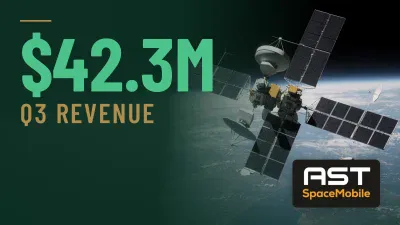
AST SpaceMobile (NASDAQ:ASTS) reported third-quarter revenue of $42.3 million after the close on November 9, 2026, up from $14.7 million a year earlier. That is 2.9 times as much, or about 187% growth.
The satellite schedule shifted in the other direction. AST now targets about 45 BlueBirds in orbit by mid-2027, the low end of the 45 to 60 it was still targeting for the end of 2026 as of March 2, 2026.
Shares rose 14.10% to $36.89 in the November 9 regular session. That gain came before the report, on the day AST and Rakuten announced Rakuten AST, a Japanese direct-to-device joint venture. After hours, the stock slipped 0.74% to $36.62.
The revenue growth is real, but carriers pay for coverage, and coverage depends on satellites that keep coming late.
Sequential Growth Shows the Revenue Ramp Is Real
Product revenue reached $20.6 million, up from $7.7 million. Services revenue came in at $21.8 million, up from $7.0 million, and it came from both commercial and U.S. government customers.

Growth off a tiny base makes any young company look good, so the quarter-over-quarter number tells you more. Q2 revenue was $31.5 million, and Q3 rose about 34% from there.
AST reaffirmed 2026 revenue of $150 million to $200 million. Q4 now has a heavy load, relying on uneven milestone payments.
Outside Rockets Set the Pace to 45 Satellites
BlueBirds 11-13 have extended and are operating. BlueBirds 14-16 have been at Cape Canaveral since September, still waiting for SpaceX to confirm a launch date.
BlueBirds 17-19 ship by the end of November for a Blue Origin launch expected in early Q1 2027. BlueBirds 20-25 ship in December and January for launches expected during Q1 2027, bringing the queue to 12 more satellites.
As a rough estimate, the August update numbered 13 spacecraft of all types in orbit, and if nothing is lost, the lined-up launches lift that to about 25. That would leave roughly 20 to add in Q2 2027.
The factories can keep up, because AST expects to build six ASIC satellites a month in December. The real constraint is space on rockets AST does not control.
Intermittent Coverage Delays the Bigger Paychecks
AST expects “initial, intermittent nationwide coverage” in key markets by the end of 2026, starting with partners in the U.S., Canada, Japan, Saudi Arabia and the U.K. It also confirmed beam handovers between satellites and ground networks with AT&T (NYSE:T | T Price Prediction) and won a commercial service authorization in Brazil.
Intermittent coverage falls short of full commercial service. Carriers pay for continuous coverage, and management ties continuous service in markets like the U.S. to 45 to 60 BlueBirds.
$3.2 Billion Cushion Absorbs a Slower Timeline
The net loss to common stockholders was $132.4 million, or $0.44 per share, compared with $122.9 million, or $0.45, a year earlier. GAAP operating expenses were $211.0 million, and adjusted operating expenses were $133.6 million.
AST held about $3.2 billion in cash, equivalents, and restricted cash as of September 30. That covers the current spending pace plus Q4 capital spending of $400 million to $500 million, but every quarter of delay adds another quarter of losses before service revenue shows up.
Mid-2027 Target Puts Pressure on the ASTS Valuation
A market value of $11,059,216,210 still assumes the full constellation gets built, even though the target date just moved from the end of 2026 to mid-2027 and 2026 revenue is guided at $150 million to $200 million.
The stock closed about 72% below its 52-week high of $133.86, a level that reflected the original schedule.
AT&T has less of this risk. It confirmed the handovers and benefits from satellite coverage without having launch risk on its own balance sheet.
The outlook would improve if BlueBirds 14-19 reach orbit by March 31, 2027, because that would show launch access catching up. Separately, the lead-plaintiff deadline in a securities class action falls on Friday, November 13, 2026.
Contact [email protected] for any questions or corrections.
Omor Ibne Ehsan is a writer at 24/7 Wall St. He is a self-taught investor with a focus on growth, cyclical, and dividend equities that have strong fundamentals, value, and long-term potential. He also has an interest in high-risk, high-reward investments such as penny stocks.