‘Bond King’ Jeffrey Gundlach Is “Not Interested in Buying Stocks.” His Warning Points to 10 Years of Losses

This post may contain links from our sponsors and affiliates, and Flywheel Publishing may receive compensation for actions taken through them.
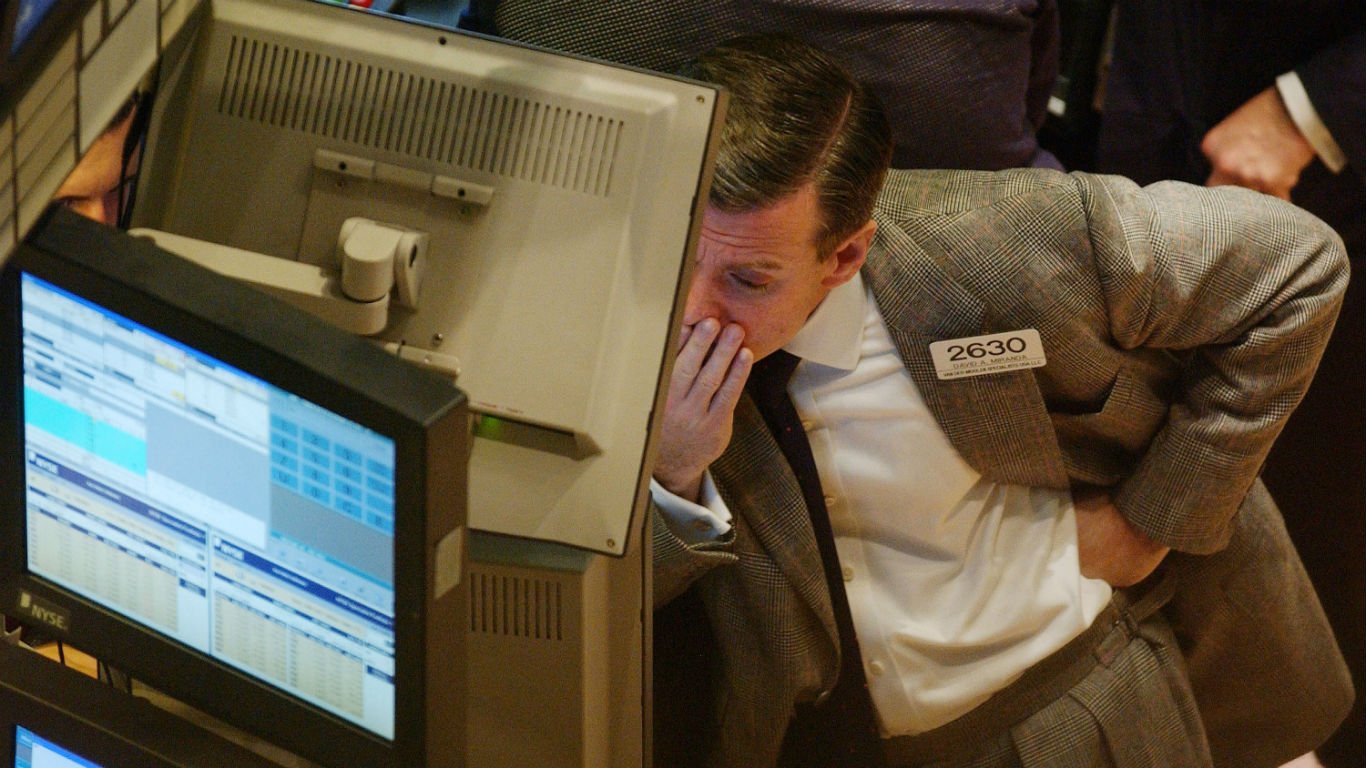
DoubleLine Capital founder and CEO Jeffrey Gundlach, the investor widely known as the “Bond King,” gave a frank view of U.S. equities at Yahoo Finance’s Invest 2026 conference on November 12, 2026: “I’m not interested in buying stocks when the forward-looking return is negative on a real basis.”
His warning comes after a strong run. The SPDR S&P 500 ETF Trust (NYSEARCA:SPY) has gained 10.62% year to date and 245.6% over the past 10 years. At the same time, the 10-year Treasury yield stood at 5.10%[1] on November 12, which gives bond investors a real alternative to stocks.
A 42 CAPE Reading Sets Off Gundlach’s Alarm
Gundlach cited a Shiller CAPE ratio of 42 for the S&P 500 around mid-2026. CAPE divides the index’s price by average inflation-adjusted earnings over the prior 10 years. That smooths out the single-year profit swings that can distort the conventional P/E.
Gundlach said CAPE levels above 35 have almost never been followed by positive inflation-adjusted S&P 500 returns over the next decade. He added that historical real returns around a CAPE of 42 were about negative 6% to negative 8%. Those figures describe what happened in the past. They serve as historical context for the next 10 years.
Why Real Returns Matter More Than Headline Gains
Real returns are measured after inflation, while nominal returns are not. Gundlach noted that if inflation averages 2%, real returns that are negative enough could mean losses in nominal dollars too. The latest CPI reading, for October, rose 0.4%[2] from the prior month.
“I just need things to be cheaper,” he said. He would reconsider the S&P 500 once its conventional P/E falls below 15. For now, he prefers a conservative allocation of about 30% equities.
Apple Shows How Thin the Cushion Can Get
Apple (NASDAQ:AAPL | AAPL Price Prediction) sells at a premium valuation. Its shares are up 31.51% year to date. The stock sells at a trailing P/E of 39 and a forward P/E of 37. Fiscal 2026 revenue reached $478.83 billion[3], up 15.06%, and fiscal fourth-quarter revenue of $114.5 billion[4] set a September-quarter record.
Still, new CEO John Ternus pointed to rising costs on his first earnings call on November 2[4]. He said, “These memory prices are unprecedented, and so that has put pressure on our prices.”[4] Apple guided December-quarter gross margin to between 45% and 46%, below the 47.9% it reported for the September quarter. At high valuations, margin pressure like this leaves investors little room for error.
What Long-Term Investors Can Take Away
Gundlach’s comments argue for expecting more modest returns, diversifying broadly, and being careful about piling into expensive stocks. CAPE also has limits as a timing tool. High valuations can last for years, and changes in profitability, interest rates, and the makeup of the index can all change the outcome.
Gundlach is focused on the next decade. He believes investors who pay today’s prices could spend years making disappointing returns. Riding an expensive market is still an option, as long as the exit is planned, which is the whole subject of our free bubble survivor’s handbook.
Contact [email protected] for any questions or corrections.
After two decades of patrolling the dark corners of suburbia as a police officer, Rich Duprey hung up his badge and gun to begin writing full time about stocks and investing. For the past 20 years, he’s been cruising the markets looking for companies to lock up as long-term holdings in a portfolio while writing extensively on the broad sectors of consumer goods, technology, and industrials. Because his experience isn’t from the typical financial analyst track, Rich is able to break down complex topics into understandable and useful action points for the average investor. His writings have appeared on The Motley Fool, InvestorPlace, Yahoo! Finance, Money Morning, and, of course, 24/7 Wall St. He has been featured in both U.S. and international publications, including MarketWatch, Financial Times, Forbes, Fast Company, and USA Today.