Jim Simons’ Fund Just Dumped 99.7% of Its Nvidia, Which Had Been Its No. 1 Holding

This post may contain links from our sponsors and affiliates, and Flywheel Publishing may receive compensation for actions taken through them.

Renaissance Technologies, the quantitative hedge fund started by the late Jim Simons, cut its stake in NVIDIA (NASDAQ:NVDA | NVDA Price Prediction) from 7,091,256 shares on June 30 to just 23,170 shares[1] on Sept. 30. That is a 99.7% reduction, disclosed in a 13F filed Nov. 12. On June 30, the position was worth $1.42 billion, making it the largest reported holding for the fund on that date. It placed ahead of a Meta Platforms (NASDAQ:META) stake valued at $1,139,611,745.
Even at a high-turnover shop like Renaissance, the near-total exit from a top holding in one quarter stands out. By Sept. 30, Micron Technology (NASDAQ:MU) had become the fund’s largest position at $1,619,650,963. Advanced Micro Devices (NASDAQ:AMD) was second at $1,205,536,416.
Five Mega-Cap Tech Stakes Nearly Vanished in One Quarter
Renaissance cut several other tech giants just as hard that quarter. Meta fell 99.9% to 1,577 shares. Apple fell 99.8% to 3,246 shares, and Amazon fell 99.5% to 11,128 shares. Broadcom fell 99.9% to 734 shares. The fund also took a fresh 4,113,200-share stake in SpaceX. Taken together, the moves show a sharp reduction in several mega-cap tech positions, although Renaissance increased holdings in other technology companies, including Micron and AMD.
Renaissance runs computer-driven strategies with rapid turnover. A 13F captures only quarter-end holdings and is released about 45 days after the quarter closes. This filing shows what the fund owned on June 30 and Sept. 30. It reveals nothing about when or why shares were sold, or what the fund holds today. All dollar figures are quarter-end market values.
Nvidia’s Business Kept Accelerating Through the Sale
Nvidia shares rose 15.72% during the July-to-September quarter and closed it at $228.38. The business grew even faster, and in fiscal second-quarter results reported Aug. 26[2], revenue reached $96.22 billion[2], up 105.8% year over year. Non-GAAP EPS of $2.22[2] beat the $2.09 consensus. Management forecast third-quarter revenue at $108.0 billion, plus or minus 2%[2]. The stock trades at about 19.5 times earnings.

The fund’s two new top holdings are also growing quickly. Micron’s fiscal fourth-quarter revenue jumped 379.3%[3] to $54.23 billion, with a non-GAAP gross margin of 87.0%, as demand for high-bandwidth memory used in AI accelerators increased. AMD’s Data Center revenue rose 97%[4] to $8.55 billion in its third quarter, and the company forecast fourth-quarter revenue to about $17 billion. AMD is far more expensive, though, at a P/E near 191.
Chip Stocks Have Reversed Since Quarter-End
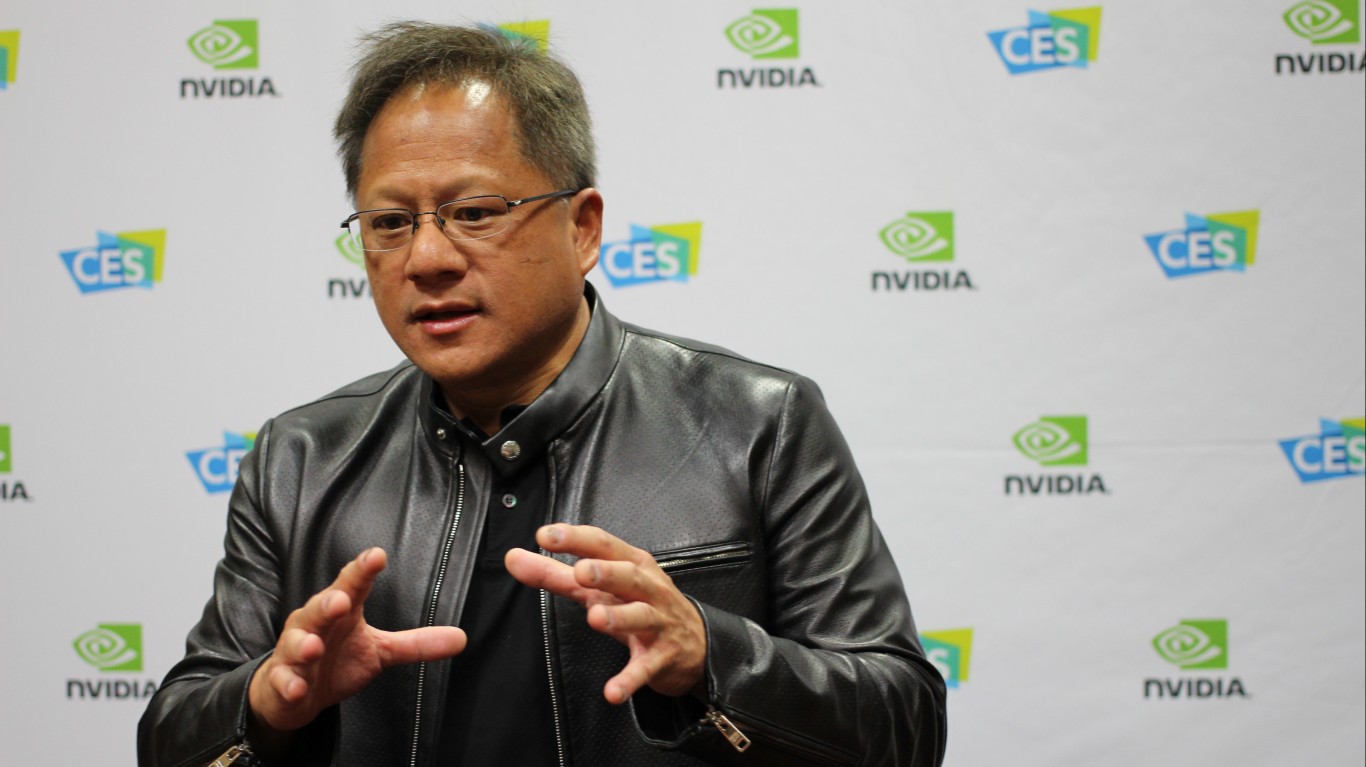
The AI chip trade has turned sharply lower since Sept. 30. Nvidia now trades at $153.88, down 28.14% over the past month. Micron has fallen 21.61% to $688.95, and AMD has fallen 7.25% to $490.42. Nvidia reports quarterly results today, its first report since Jensen Huang’s ouster as CEO, and Huang has said he is willing to return.

Should Retirement Investors Follow Renaissance’s Lead?
For retirement investors, Renaissance’s filing offers little worth copying. It is a quant fund’s quarter-end picture, released weeks after the fact, and it says more about model-driven rotation than about Nvidia’s long-term value. Micron, the fund’s new top holding, has also fallen sharply since that picture date. The businesses themselves are a better guide.
Nvidia trades near 19.5 times earnings with revenue up 105.8%, while AMD trades at a substantially higher multiple. For a long-term holder, today’s report and how Nvidia settles its leadership question matter far more than a 13F that is already weeks old. Our take: Nvidia’s own execution offers more insight than the Renaissance exit and is the story worth tracking.
Contact [email protected] for any questions or corrections.
David Beren has been a Flywheel Publishing contributor since 2022. Writing for 24/7 Wall St. since 2023, David loves to write about topics of all shapes and sizes. As a technology expert, David focuses heavily on consumer electronics brands, automobiles, and general technology. He has previously written for LifeWire, formerly About.com. As a part-time freelance writer, David’s “day job” has been working on and leading social media for multiple Fortune 100 brands. David loves the flexibility of this field and its ability to reach customers exactly where they like to spend their time. Additionally, David previously published his own blog, TmoNews.com, which reached 3 million readers in its first year. In addition to freelance and social media work, David loves to spend time with his family and children and relive the glory days of video game consoles by playing any retro game console he can get his hands on.