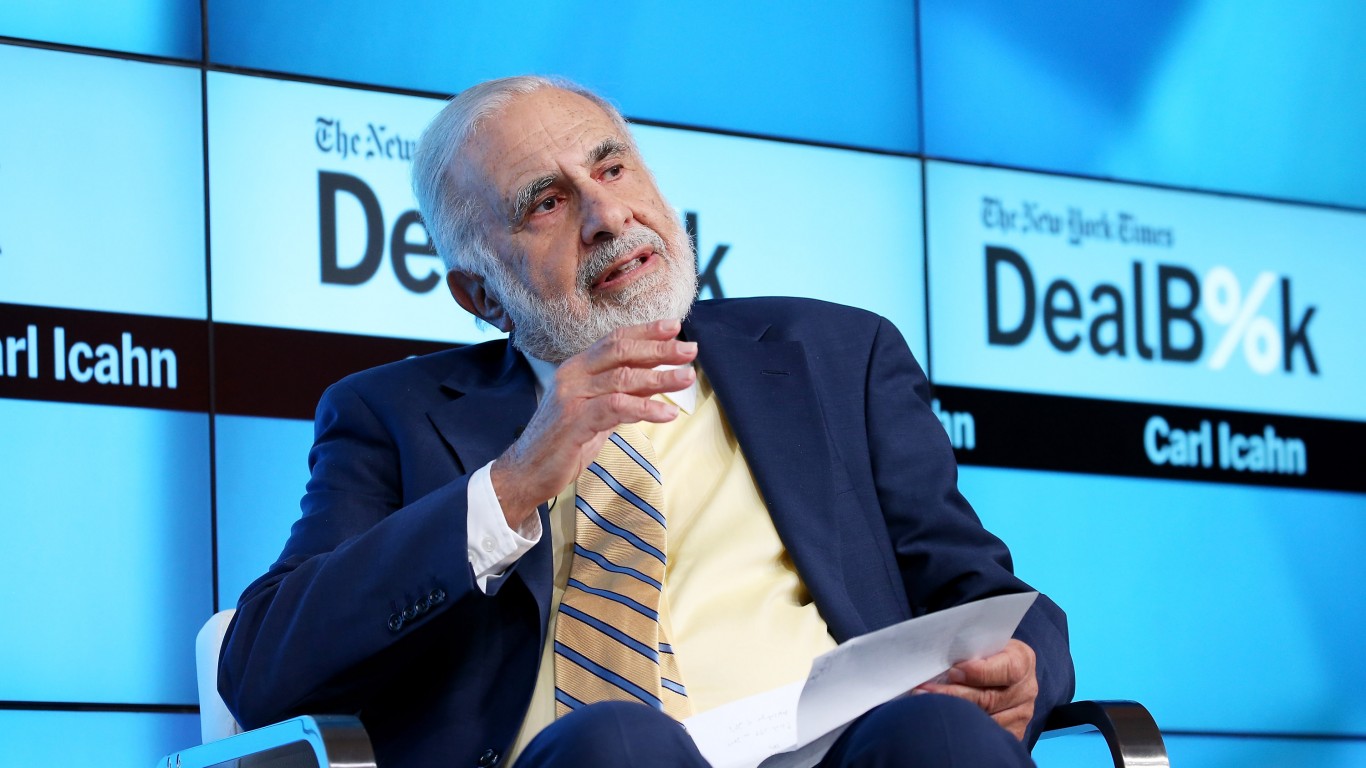
Billionaire Carl Icahn Has 86% of His $9.4 Billion Stock Portfolio in Just Two Companies

This post may contain links from our sponsors and affiliates, and Flywheel Publishing may receive compensation for actions taken through them.
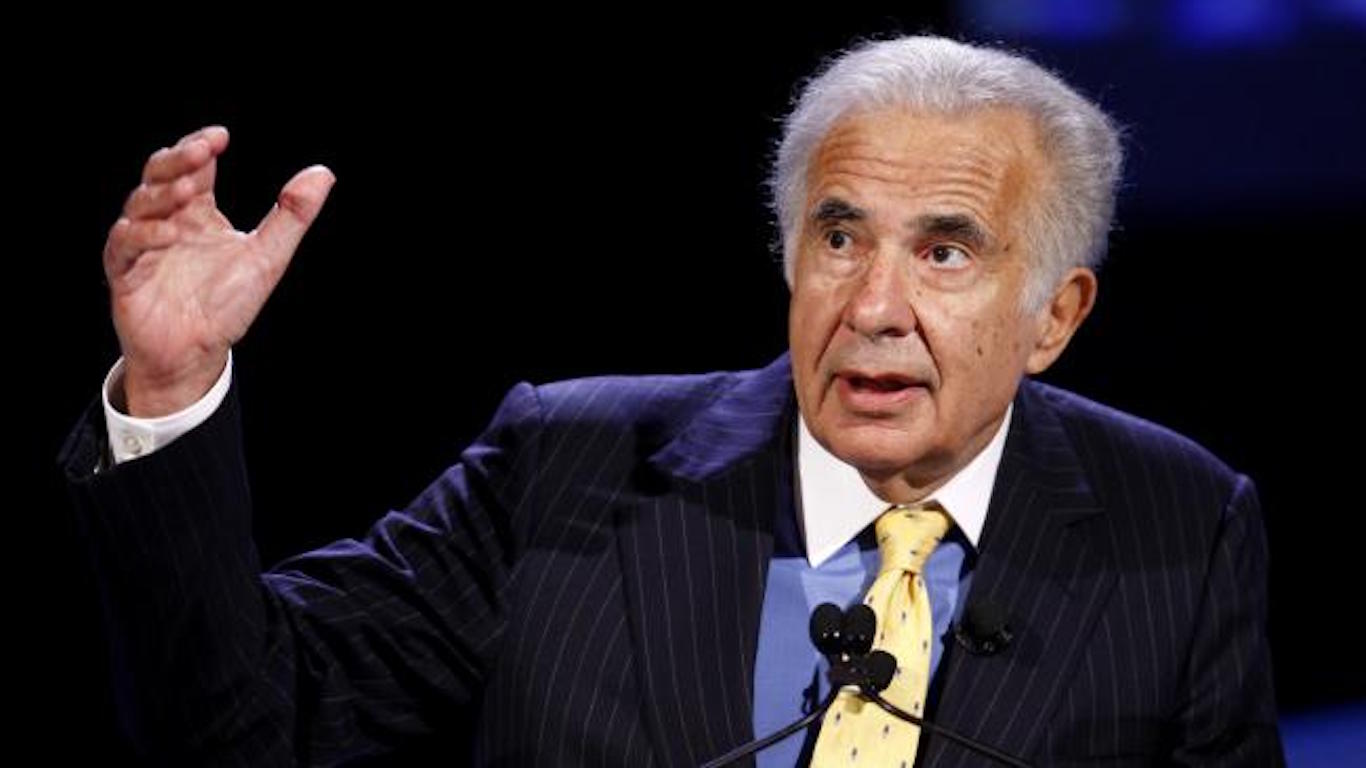
Carl Icahn’s Icahn Capital reported in a 13F filing on Nov. 13 that just two companies made up 86% of its $9.4 billion U.S. stock portfolio as of Sept. 30. The two are Icahn Enterprises (NASDAQ:IEP | IEP Price Prediction) and CVR Energy (NYSE:CVI), both of which Icahn controls.
At quarter-end, Icahn Enterprises made up 47.18% of the portfolio: 658.9 million units worth about $4.45 billion. CVR Energy accounted for 38.51%, with 71.2 million shares worth about $3.63 billion. Adding CVR Partners (NYSE:UAN) brings the top three holdings to 91.15% of a portfolio that held only 10 U.S. stocks.
Why Icahn’s Concentration Plays by Different Rules
Icahn is chairman of Icahn Enterprises. His 658.9 million units compare with about 756.96 million units outstanding. Icahn Enterprises owns a majority of CVR Energy, and Icahn raised his CVR stake to 70.82% after its fourth-quarter 2025 report.
So the filing reads like a map of his own empire. Most concentrated investors own businesses that other people run. Icahn runs these businesses himself, sets their strategy, and sits on both sides of the relationship.
A Refining Thesis Backed by a Record Quarter
Icahn has been clear about why he wants refining exposure. “I believe the current market environment is breeding extremely attractive opportunities for refineries such as CVR given the huge capital commitments and exceedingly long time necessary to build new refineries, as well as the threats to existing worldwide refining infrastructure resulting from the current geopolitical situation,” he said in his second-quarter comment.
CVR Energy’s third-quarter results supported that view. Adjusted EPS came in at $4.00[1], well ahead of the $2.91 estimate, on revenue of $3.28 billion. The NYMEX 2-1-1 crack spread, a common measure of refining profit, averaged $73.43 per barrel[1], up from $28.24 a year earlier.
CVR also agreed to buy two refineries from Marathon Petroleum (NYSE:MPC) for $4.2 billion, priced at less than 3.5x management’s 2026 EBITDA estimate. Management projects pro forma EPS of $7.80, compared with $3.73 on a stand-alone basis.
Where the Risk Sits for Income Investors
Icahn Enterprises has had a rougher year. It lost $225 million in the third quarter, including $522 million in refining hedge losses, even though its CVR stake made about $1.7 billion in value that never shows up in net income.
Equity attributable to Icahn Enterprises fell to $746 million from $1,942 million at the end of 2025. Its $0.50 quarterly distribution, the 86th in a row, is paid in new units unless holders choose cash. The quarterly payout was $2 per unit until August 2023, when it was cut to $1, and was reduced again to $0.50 in November 2024.
Prices have also moved a long way since quarter-end. Icahn Enterprises closed at $2.79 on Nov. 20, down 56.6% from its October 20 closing price of $6.41. CVR Energy fell 45.77% over the same period to $32.85, and its dividend is now $0.10 per share, down from $0.50 in 2024.
Shrinking payouts at both names are the kind of setup we flagged in a free report on seven warning signs a big yield is about to be cut.


Is Icahn’s Two-Stock Portfolio Worth Following?
For retirement investors, the 86% figure says more about Icahn’s control than about a conviction you can borrow. He can sit through steep drops in companies he runs. A retail holder can’t vote the board or change how the hedge book is managed.
The refining thesis has real numbers behind it, and CVR Energy is the cleaner way to study it.
Copying the whole portfolio is another matter. It would put most of your money into two closely linked, volatile energy stocks whose payouts have been shrinking. Few income portfolios can carry that much concentration.
Contact [email protected] for any questions or corrections.
David Beren has been a Flywheel Publishing contributor since 2022. Writing for 24/7 Wall St. since 2023, David loves to write about topics of all shapes and sizes. As a technology expert, David focuses heavily on consumer electronics brands, automobiles, and general technology. He has previously written for LifeWire, formerly About.com. As a part-time freelance writer, David’s “day job” has been working on and leading social media for multiple Fortune 100 brands. David loves the flexibility of this field and its ability to reach customers exactly where they like to spend their time. Additionally, David previously published his own blog, TmoNews.com, which reached 3 million readers in its first year. In addition to freelance and social media work, David loves to spend time with his family and children and relive the glory days of video game consoles by playing any retro game console he can get his hands on.