Billionaire Bill Ackman Just Warned the Fed Could Trigger a Recession on December 9. Here’s How

This post may contain links from our sponsors and affiliates, and Flywheel Publishing may receive compensation for actions taken through them.
The Federal Reserve is fighting an inflation battle that investors thought was largely behind them. After raising interest rates in September for the first time since July 2023, the central bank paused in October, but policymakers are already preparing for another increase.
With the Fed’s preferred inflation gauge, the personal consumption expenditures (PCE) price index, registering 3.6% in September, markets are assigning a 96% probability to a quarter-point rate hike on Dec. 9, according to Monday’s CME FedWatch data.
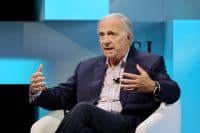
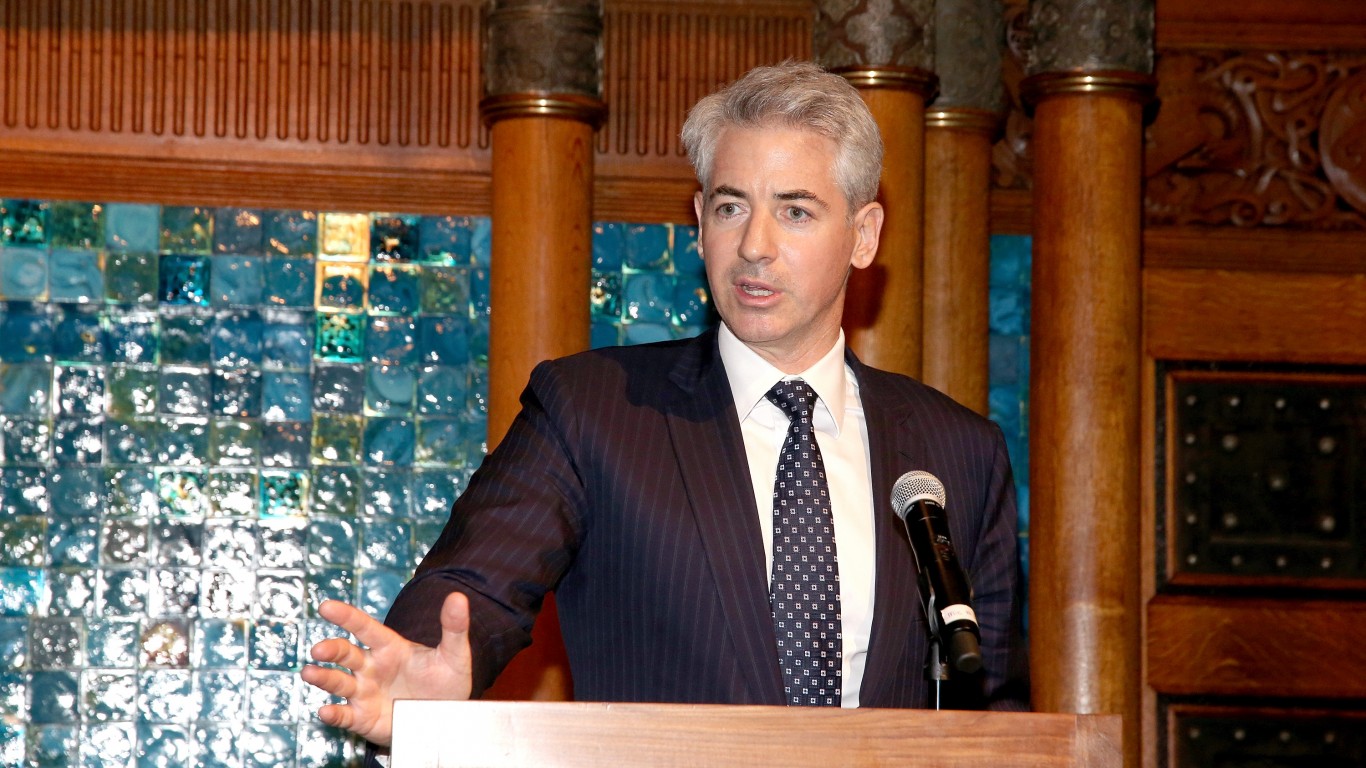
Yet billionaire investor Bill Ackman believes the Fed is preparing to solve one economic problem by creating a much bigger one. And he points to Elon Musk’s SpaceX (NASDAQ:SPCX | SPCX Price Prediction) as evidence that the damage may already be underway.
The $25 Billion Warning From SpaceX
In a Nov. 22 post on X, the Pershing Square Capital Management founder warned that the Fed was preparing to make another policy mistake.
Ackman noted that SpaceX, despite carrying an investment-grade credit rating, recently secured financing at an 8.259% interest rate, compared with less than 6% on unsecured bonds issued around its June initial public offering (IPO).
The Financial Times reported the $25.2 billion tranche of debt carried an interest rate 3.45 percentage points above comparable Treasury securities.
For perspective, borrowing $25.2 billion at 8.259% instead of 6% translates into approximately $569 million in additional annual interest costs, assuming otherwise identical financing terms.
Although the two bond offerings have different structures, the comparison illustrates how expensive financing has become.
The implications extend well beyond SpaceX. With AI companies carrying more than $3 trillion in off-balance-sheet financial obligations, higher borrowing costs could undermine the profitability of investments already underway.
Eventually, companies may respond by canceling expansion plans, reducing capital spending, and cutting jobs.
Is the Fed Fighting Yesterday’s Inflation?
Ackman’s argument, however, goes beyond corporate borrowing costs. He believes the Fed’s 2% inflation target no longer reflects economic reality.
The central bank formally adopted that target in 2012. Since then, geopolitical conflicts, tariffs, the reversal of globalization, rising military expenditures, and the enormous energy requirements of AI have reshaped the global economy.
Ackman believes a 3% inflation target would be more realistic.
“The Fed will put the U.S. and world in recession if it continues to raise rates in a failed attempt to drive inflation to 2%,” he warned.
Higher interest rates can discourage families from buying houses and cars, but they cannot directly increase oil production, eliminate tariffs, or manufacture additional semiconductors. Ironically, the Fed could end up suppressing demand across the broader economy to offset inflationary pressures originating in a handful of industries.
Fed Chair Kevin Warsh has already acknowledged how extensively interest rates reach into the economy, including industries dependent on borrowed money.
Why December 9 Matters
There is little evidence the U.S. is currently heading into a recession. Third-quarter gross domestic product (GDP) expanded at a 3.4% annualized rate, while October unemployment stood at 4.1%, according to federal government data.
Yet December’s anticipated rate increase would push the federal funds rate to between 4% and 4.25%. Minutes from the Fed’s October meeting also revealed financial markets were anticipating two additional quarter-point increases by summer 2027, potentially bringing rates to between 4.5% and 4.75%.
That’s where Ackman’s warning deserves particular attention. The cumulative burden of rising borrowing costs could gradually weaken consumer spending and business investment. If expensive financing also causes companies to scale back AI spending, investors could encounter one of the more damaging economic scenarios.
Key Takeaway
Ackman’s recession warning isn’t a reason to abandon stocks. Nor would accepting permanently higher inflation come without consequences for American families. Investors should instead examine how much debt their portfolio companies carry, when that debt matures, and whether internally generated cash can finance future growth.
Dec. 9 may not mark the beginning of a recession. But if Ackman is right, history could remember it as the day the Fed took another step toward creating one.
Contact [email protected] for any questions or corrections.
After two decades of patrolling the dark corners of suburbia as a police officer, Rich Duprey hung up his badge and gun to begin writing full time about stocks and investing. For the past 20 years, he’s been cruising the markets looking for companies to lock up as long-term holdings in a portfolio while writing extensively on the broad sectors of consumer goods, technology, and industrials. Because his experience isn’t from the typical financial analyst track, Rich is able to break down complex topics into understandable and useful action points for the average investor. His writings have appeared on The Motley Fool, InvestorPlace, Yahoo! Finance, Money Morning, and, of course, 24/7 Wall St. He has been featured in both U.S. and international publications, including MarketWatch, Financial Times, Forbes, Fast Company, and USA Today.