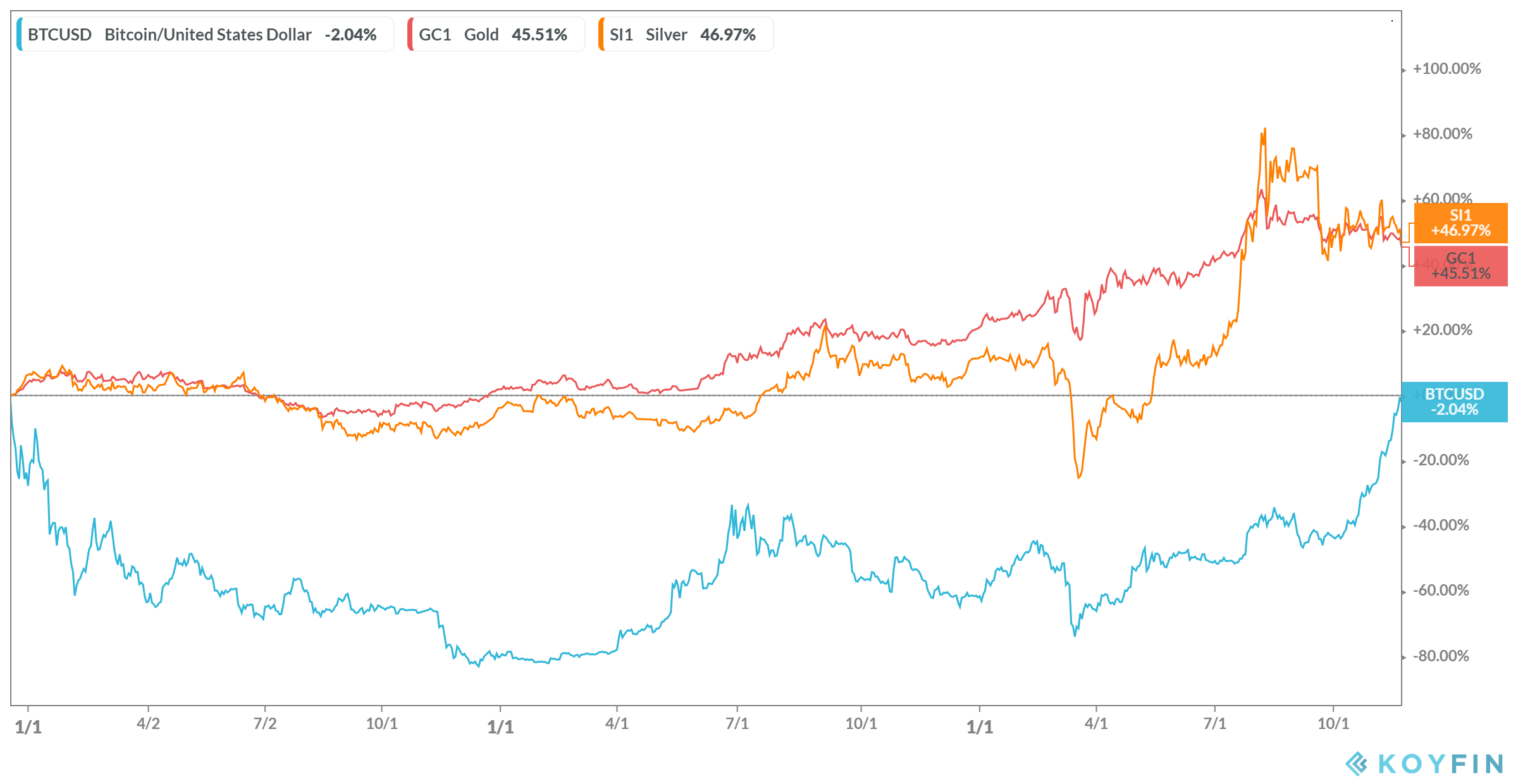
Bitcoin Hit an Eight-Month High Above $87,000 on September 21 and Is Back Under $85,000. Was That the Week’s Top or the Quarter’s?
Bitcoin surged to an eight-month high in a single explosive trading session, then gave back much of those gains within days as bond markets and quarter-end pressures closed in. Whether that peak holds through September 30 depends on forces that…

This post may contain links from our sponsors and affiliates, and Flywheel Publishing may receive compensation for actions taken through them.

Bitcoin (CRYPTO:BTC) surged to $87,397 on September 21, 2026, marking the highest Bitcoin price since January and its best performance in the third quarter. However, the momentum didn’t last long. By September 25, Bitcoin had retreated to around $84,700, even though it still showed a 4.7% increase for the week.
Despite this spike, Bitcoin remained below its previous closing price of $87,498 from December 31, 2025. As a result, it is still down about 3% for 2026. Traders are now questioning whether the high reached on September 21 marks the week’s peak in this upward trend or the highest point of the quarter, which began with Bitcoin priced around $57,700 on July 1.
ETF Buyers and Short Sellers Pushed Bitcoin to an Eight-Month High

Achieving a price above $86,000 required buyers to absorb significant selling pressure. Investors who purchased Bitcoin near that level earlier in the year endured a lengthy period of losses and often sell once they reach break-even. Bitcoin opened on September 21 at approximately $81,160 and closed at $86,595, with trading volume soaring nearly four times higher than the previous session.
Spot Bitcoin ETFs drove much of the buying activity, which hold Bitcoin and buy more when new shares are purchased. In a single day, these funds attracted $715 million, extending a four-day influx of over $2.3 billion. Since August 19, roughly $4.6 billion has flowed into these funds, marking a significant recovery after the outflows experienced in the first half of the year.
Short sellers also contributed to the price increase. As Bitcoin surpassed $86,000, exchanges forced about $750 million in short positions to close. These traders, who typically profit when prices drop, had to buy back Bitcoin to exit their positions, driving the price even higher.
However, not all ETF buyers are optimistic about Bitcoin’s price trajectory. Some hedge funds purchase ETF shares while shorting Bitcoin futures to benefit from the price difference between the two. They can quickly unwind these positions, adding to market volatility.
Treasury Yields at Their Highest Since 2007 Pulled Bitcoin Back Below $85,000
Bitcoin rallied despite two significant setbacks the week before. On September 15, the Senate did not advance the Clarity Act, and the Federal Reserve raised interest rates the following day to a range of 3.75% to 4%, marking its first increase in over three years.
The bond market subsequently reversed Bitcoin’s gains on September 23. The 10-year Treasury yield, which reflects the annual return the U.S. government pays for borrowing over ten years, rose from about 5% to 5.1%, the highest level since 2007. Bitcoin reached $87,283 that day but closed at $84,378.
Higher yields negatively impact Bitcoin because it doesn’t accrue interest. Every dollar invested in Bitcoin forfeits the potential 5.1% return from a 10-year Treasury bond. Therefore, Bitcoin must appreciate faster to remain an attractive investment.
Despite this, current holders have remained steady and haven’t rushed to sell. Trading volume fell each day during the pullback from September 22 to September 24, with Bitcoin dipping as low as $82,709 before recovering to around $84,700.
Quarter-End Rebalancing Could Keep Bitcoin Below $87,397 Through September 30
With the third quarter ending on September 30, many funds rebalance at that time. Funds with fixed target allocations may sell off assets that have grown past their target share, and Bitcoin has surged as much as 51% from its July 1 low around $57,700. This means funds may sell Bitcoin in the final days of the quarter, regardless of weekly trends.
Moreover, some traders employed leverage, borrowing money to increase their positions as Bitcoin approached $90,000. If prices dip, exchanges may involuntarily liquidate these leveraged positions, causing further downward pressure on the price.
Will $87,397 Remain the Bitcoin Price High for the Third Quarter?
It’s uncertain whether Bitcoin can reach or exceed $87,397 again before the quarter concludes on September 30. With the 10-year yield at its highest since 2007 and funds rebalancing soon, the window is narrowing for buyers. However, Bitcoin may be in a temporary pause in the uptrend that began in July, as trading volume fell while prices declined and ETF buyers continued to invest.
If Bitcoin closes above $87,397, September 21 will only represent the week’s peak. Conversely, if it closes below $80,837, the level where the climb began on September 21, it will have given back all those gains. The key will be whether the 10-year yield eases back from 5.1% and whether ETF buyers continue their enthusiasm, as that could lead Bitcoin to challenge $90,000 once October arrives.
Contact [email protected] for any questions or corrections.
Sam Daodu is a crypto analyst who's spent nearly a decade making blockchain understandable—no easy task when most whitepapers read like fever dreams. He writes for 24/7 Wall St., covering Bitcoin, altcoins, and crypto market analysis for investors. Before crypto, he was a tech writer (back when explaining "the cloud" was peak innovation). Since 2018, he's written for CoinTelegraph, Yahoo Finance, The Block, Cryptonews, Zypto, Rain, and more—basically anywhere people want crypto news without the headache. Sam runs MacLabs Marketing, a content agency for crypto brands tired of sounding like AI wrote their website. He also publishes free crypto education on his site for Web3 enthusiasts who think "gas fees" is a typo. When he's not writing or staring at charts, Sam's either: - Watching anime (currently convinced One Piece has better tokenomics than most altcoins) - At the gym sculpting himself into a Greek god - Listening to the music your mum warned you only bad boys listen to Connect: LinkedIn | Email | MacLabs Marketing