Apple, Nvidia, and Tesla Shares Now Trade on Solana: Why Did Securitize Choose Solana Over Ethereum?
Securitize just put Apple, Nvidia, and Tesla shares on a blockchain, and the network they chose surprised a lot of people. The reasoning behind that choice reveals something important about what tokenized stocks actually need to succeed.


Securitize (NYSE:SECZ) made waves by launching tokenized stocks on Solana (CRYPTO:SOL), starting with 12 U.S. companies. Among these are well-known names like Apple (NASDAQ:AAPL | AAPL Price Prediction), Nvidia (NASDAQ:NVDA), and Tesla (NASDAQ:TSLA), along with Microsoft, Amazon, Strategy, and SpaceX. Each token is backed 1:1 by one share, and after the announcement, Securitize’s stock surged over 10%.
Securitize also tokenizes assets on Ethereum (CRYPTO:ETH), so choosing a network was a significant decision. Interestingly, despite the buzz around the launch, SOL did not see a surge; the token was trading at $110 on October 9, reflecting a 4% drop in 24 hours and a 9.6% drop over the week. This raises the question: why did Securitize choose Solana, and what does this mean for SOL holders?
Each Securitize Token Is a Legal Claim on a Broker-Held Share

Securitize Markets, a FINRA-registered broker, holds each share through its custody partner. The Solana token represents the buyer’s legal claim to that share, like a coat-check ticket: the broker holds the share, and the token proves which share is yours.
Owning a token comes with the economic rights tied to the share, meaning that holders can receive dividends and vote, depending on the rights associated with that share class. However, unless token holders convert their tokens, they won’t appear on Apple’s or Tesla’s shareholder lists.
The security of these tokens relies on Securitize Markets holding the shares and honoring the terms, without any Solana code enforcing them. Buyers must also pass identity verification, and Securitize has not yet disclosed its fees or minimum trade amounts.
Securitize Chose Solana for Fast and Affordable Trading

Trading stocks often involves many small orders, and each blockchain transaction incurs a network fee. Solana is known for quick transaction confirmations—taking just a few seconds—and typically charges only a fraction of a cent per transfer. In contrast, Ethereum has historically charged higher fees per transaction, which is more suited for less frequent transactions.
Securitize capitalized on existing activity on Solana, with around $465 million in tokenized stocks present on the platform as of September. Additionally, Securitize began tokenizing its own SECZ shares on Solana in July, further embedding itself within the ecosystem. Jump Trading is now quoting prices for the new tokens during extended U.S. market hours, and Securitize plans to enable round-the-clock trading soon.
Despite this move, Securitize has not abandoned Ethereum. The company helped launch BlackRock’s BUIDL fund on Ethereum in 2024 before subsequently adding Solana and other networks in 2025. This strategy reflects an effort to match each product with the most suitable network.
Stock Trades Settle in USDC, So SOL Holders Gain Little Directly
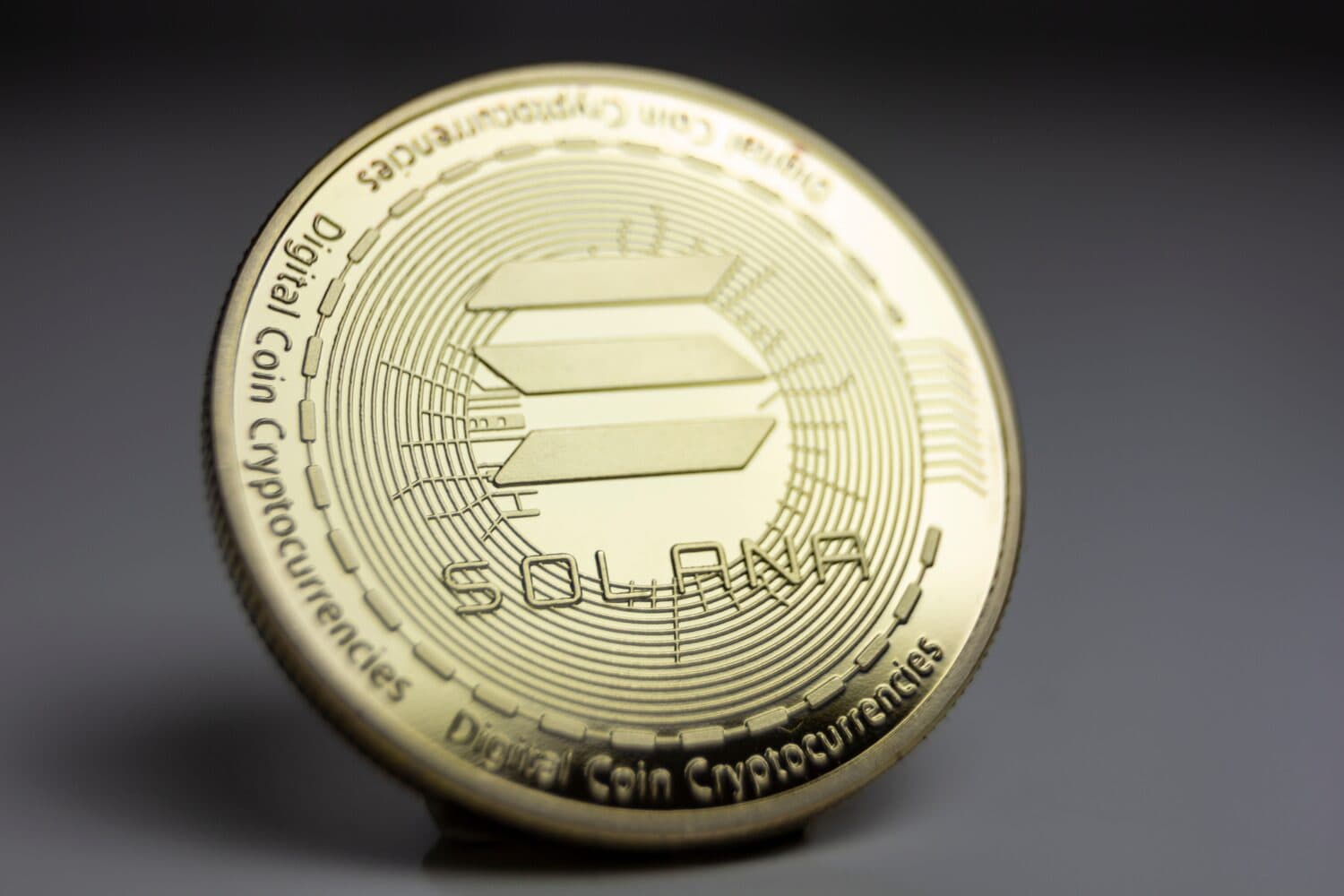
When buying these tokens, buyers use USDC, a stablecoin pegged to the U.S. dollar. Therefore, a buyer acquiring tokenized Nvidia shares does not need to convert funds into SOL. The only direct connection to Solana comes from small network fees paid in tiny amounts of SOL. These fees across all 12 stocks are minimal compared with SOL’s overall market value of about $65 billion.
Ethereum also saw little impact from this launch. Securitize did not move any funds off the Ethereum network, and ETH has declined 9.1% over the week, landing around $2,495—close to SOL’s 9.6% decrease. This shared downturn suggests broader selling trends across the crypto market rather than a specific issue with either network.
Why Did Securitize Launch Tokenized Stocks on Solana?
Securitize chose to launch tokenized stocks on Solana because the network’s speed and low fees meet the needs of stock trading. Additionally, Solana already accommodates hundreds of millions of dollars in tokenized shares. While Securitize continues to operate on Ethereum, choosing Solana for this offering aligns with this product’s specific requirements, not a departure from Ethereum.
As a result, SOL holders are more likely to see a reputation boost than an immediate price increase, since the USDC settlement circumvents direct trading benefits for SOL. If Securitize releases trading volume and fee data that rank these stocks among Solana’s top fee-generating assets, SOL holders may see more tangible benefits in the future. Until then, broader crypto market movements will likely play a larger role in determining SOL’s trajectory.
Contact [email protected] for any questions or corrections.
Sam Daodu is a crypto analyst and the editor of 24/7 Wall St.'s Crypto Desk, where he covers Bitcoin, XRP, Ethereum, Solana and the altcoins investors search for most. His work focuses on price levels, spot ETF flows, on-chain data and the regulatory decisions that move crypto markets, written so a first-time buyer and a seasoned trader can both use it.
Sam has written about crypto professionally since 2019 and has published more than 2,000 articles. Before joining 24/7 Wall St., he wrote for crypto media outlets and Web3 companies and ghostwrote for crypto founders and token launches. His analysis is syndicated on Yahoo Finance, MSN and AOL and has been cited by other crypto news sites. He also founded MacLabs Marketing, a content and personal branding agency for crypto founders and executives.
When he isn't reading charts, Sam is usually at the gym or watching One Piece, a series he maintains has better tokenomics than most altcoins.