Toothpaste, Soda, and Groceries: 3 Consumer Staples ETFs Paying Up to 2.48% From Brands People Keep Buying in Downturns
When shoppers cut back, they stop buying sofas before they stop buying toothpaste, and three low-cost funds bet their entire strategy on that habit. But not all consumer staples ETFs make the same bets, and the differences between them could…

This post may contain links from our sponsors and affiliates, and Flywheel Publishing may receive compensation for actions taken through them.

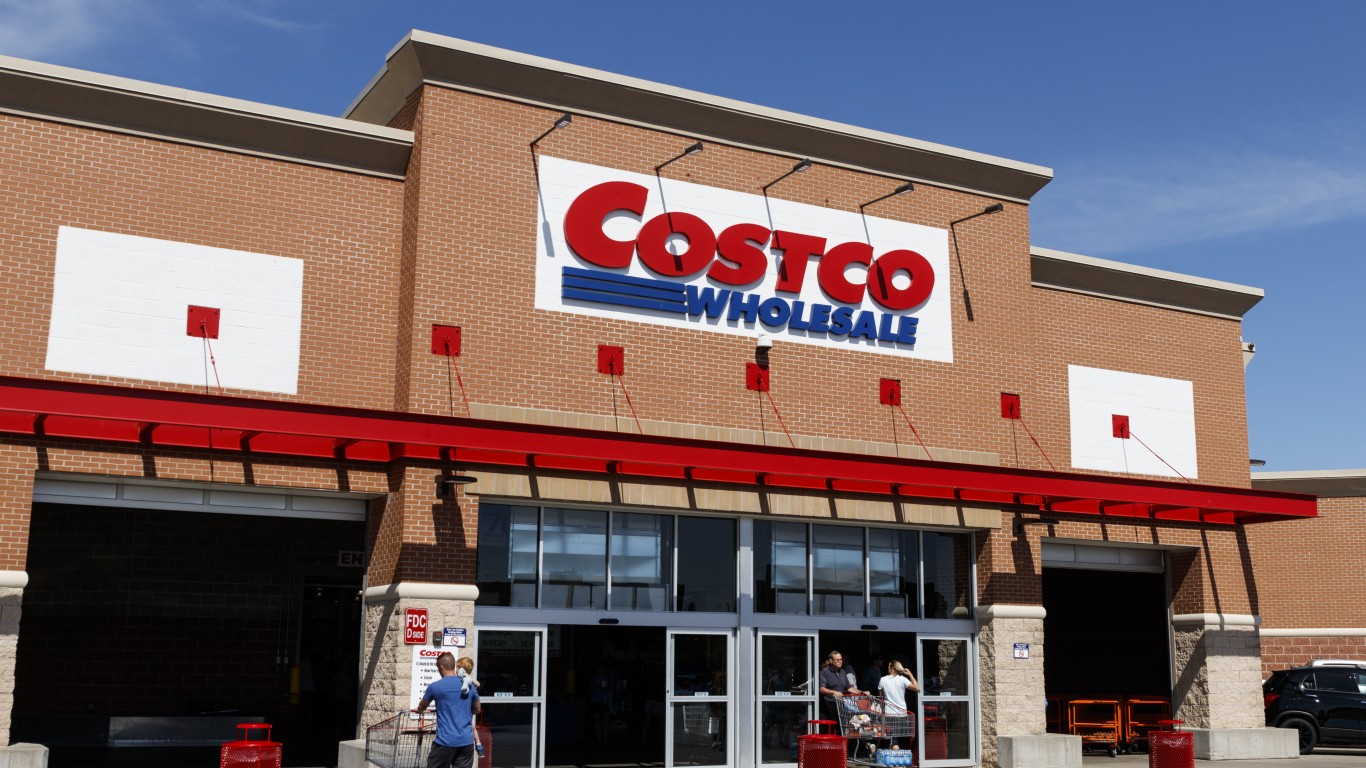
Crest toothpaste, Coca-Cola, and a weekly Costco run are spending habits that tend to last in a weak economy. Three low-cost funds own the companies behind them. Based on prices on October 29, 2026, the State Street Consumer Staples Select Sector SPDR ETF (NYSEARCA:XLP) has a trailing 12-month distribution yield of 2.5%. The Fidelity MSCI Consumer Staples Index ETF (NYSEARCA:FSTA) yields 2.1%, and the Vanguard Consumer Staples ETF (NYSEARCA:VDC) yields 2.05%.
Why Spending on Groceries Holds Up Better Than Spending on Cars and Couches
When money gets tight, families put off buying a new car, a trip, or a sofa. That said, they keep buying detergent, diapers, and groceries. People need these things more urgently. That means companies that sell everyday consumables usually see steadier revenue than companies that sell big-ticket items. Even steadier sales, however, do not eliminate the risk of losses.
Right now, consumers are gloomy. The University of Michigan consumer sentiment index fell to 48 in September 2026, down from 52 in August. That puts it below the 60 mark that the survey’s guide links to recessionary readings. Sentiment usually shows up in actual spending 1-3 months later.
The top holdings reflect that steadiness. Walmart (NASDAQ:WMT | WMT Price Prediction) serves about 280 million customers a week, and its U.S. comparable sales rose 3% on more transactions. Procter & Gamble (NYSE:PG), the company behind Crest, Tide and Charmin, grew organic volume 2%.
XLP: 34 Large Caps and the Highest Yield of the Three
XLP picks its stocks only from the S&P 500. State Street’s latest fact sheet lists 34 holdings, so investors get the biggest staple brands and no smaller companies.
Among the three funds, the least top-heavy is the one with the fewest stocks. In its N-PORT filing dated June 30, 2026, Walmart made up 11% of assets, Costco 9% and P&G 7%.
That leaves more room for dividend-heavy brands. Colgate-Palmolive was 5% of XLP and PepsiCo 4%.
This mix explains most of the yield edge. Walmart and Costco pay small dividends compared with their share prices, and XLP holds less of both. Tobacco makes up 11% of the fund, which also raises its payout.
XLP returned 16% over the past year and 42% over five years, with distributions reinvested. That is the weakest five-year return of the group.
It made four distributions in the trailing year and charges a gross expense ratio of 0.08%. With about $13.6 billion in net assets, it is the largest and easiest of the three to trade.
FSTA: The Overlooked Fidelity Fund That Matches Vanguard for Less
FSTA follows the MSCI USA IMI Consumer Staples 25/50 Index. Vanguard’s documents show that VDC tracks that same benchmark. The IMI label means the index includes large, mid-size, and small companies, and the 25/50 rule keeps any one company under 25% and limits all companies above 5% to half the index combined. That cap is looser than XLP’s, so Walmart and Costco end up with bigger weights.
FSTA’s July 31, 2026 N-PORT filing shows Walmart at 13%, Costco at 11% and P&G at 8%.
PepsiCo was 4%, while Colgate dropped to 2%. Further down the list are companies XLP cannot own, including Sprouts Farmers Market, BJ’s Wholesale, US Foods, and Vita Coco.
FSTA returned 14% over one year and 45% over five years, trailing XLP recently but beating it long term.
It paid four times in the trailing year and has a net expense ratio of 0.08%, just under Vanguard’s fee. It gets overlooked because of its size. Its roughly $1.4 billion in net assets can mean slightly wider bid/ask spreads.
VDC: Vanguard’s 103 Stocks, With the Most Riding on Walmart and Costco
VDC held 103 stocks as of September 30, 2026, with about $9 billion in total assets.
Walmart made up 14%, Costco 12%, P&G 10%, and Coca-Cola 10%, the heaviest top weights of the three funds.
It tied FSTA for the best five-year return of the group at 45%, and 14% over the past year. It made four distributions, and its prospectus lists a 0.09% expense ratio. VDC’s returns depend most on how its two largest retailers perform.
Slow Growth, Cost Pressure and Two Retailers Doing Most of the Work
Staples tend to fall behind when markets are rising. Over the past five years, the S&P 500 ETF’s share price alone rose 68%, ahead of all three funds’ total returns. Costs can also eat into profits. P&G expects about $1.4 billion in after-tax commodity headwinds in fiscal 2027. It guides core EPS growth from flat to +3%.
Store brands are a threat too. Walmart’s Member’s Mark label competes with the branded products these same funds own. Concentration adds to the risk in VDC and FSTA. There, Walmart and Costco together carry more weight than any other pair of holdings. A bad quarter from either one would weigh on both funds.
Which Staples Fund Fits Your Portfolio
Among the three, XLP leans most toward income. It pays the highest yield, held up best in 2022, and is the easiest to trade, though it skips smaller companies. If you want the full staples market for the lowest fee, FSTA gives you the same index as VDC for less, and it is especially convenient for Fidelity customers. VDC suits those already holding Vanguard funds and comfortable with its heavy Walmart and Costco weighting.
Contact [email protected] for any questions or corrections.
Ryne Mauck is an investment writer covering exchange-traded funds, retirement planning, and portfolio strategy. Through his work at 24/7 Wall St. and other investment platforms, including Seeking Alpha, he aims to provide clear, research-driven insights that help investors make more informed decisions while maintaining a long-term approach to investing.
Ryne holds a B.Sc. in Finance and an M.A. in Political Science. He is a formerly registered Municipal Advisor Representative and has passed the Series 50, Series 63, and Series 65 exams. His articles are not intended to be, nor should they be interpreted as, financial advice.