How $300,000 in EWT Ends Up With $60,924 in a Single Chipmaker

This post may contain links from our sponsors and affiliates, and Flywheel Publishing may receive compensation for actions taken through them.

Picture a retiree who puts $300,000 into the iShares MSCI Taiwan ETF (NYSEARCA:EWT) to spread money beyond U.S. stocks. In EWT’s SEC portfolio holdings filing as of August 31, 2026, Taiwan Semiconductor Manufacturing (NYSE:TSM | TSM Price Prediction) made up 20.31% of the fund’s net assets. On a hypothetical $300,000 stake, that weight puts $60,924 in one chipmaker. The $300,000 is a made-up example used to show the dollar effect. Many holders think they bought a broad piece of Taiwan’s market. Much of what they actually own rides on one company.
One Chipmaker Holds More Than 20% of the Fund
EWT’s filing listed 83 positions as of August 31, 2026. That count makes the fund sound diversified. Yet TSMC alone carried 20.31% of net assets.
The next-largest stock holdings sat far lower on the same date:
- MediaTek: 6.05%
- Delta Electronics: 3.97%
- Hon Hai Precision Industry: 3.35%
For a retirement saver, that gap matters. The fund’s top position outweighs its next three largest stocks by a wide margin, so one company’s results can move your whole Taiwan allocation.
Why Country Funds Tilt Toward Their Biggest Companies
EWT seeks to track the MSCI Taiwan 25/50 Index. Country indexes like this usually weight holdings by market capitalization, meaning each company’s total stock market value. The biggest companies get the most room. In a market where one company towers over its peers, that company dominates the fund.
The “25/50” label signals diversification limits. MSCI’s factsheet for another index in the same 25/50 family says it applies investment limits that are imposed on regulated investment companies under the U.S. Internal Revenue Code. That tax code test bars a fund from holding more than 25% of total assets in any one issuer at each quarter’s close. It also requires at least 50% of assets to sit in cash, government securities, or holdings each worth no more than 5% of the fund (26 U.S.C. § 851(b)(3)). Those rules prevent the most extreme concentration. They still leave room for a single company above 20%.
What Heavy Concentration Means Near Retirement
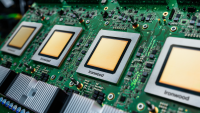
When one company carries this much weight, its earnings report, its customers’ orders, and its industry cycle can swing the entire fund. TSMC is a dedicated semiconductor foundry, a contract manufacturer that makes chips for other designers. EWT holders therefore own a large stake in global chip demand, whether they meant to or not.
Recent trading shows how closely the two can move. EWT fell 16.32% over the month ended November 9, 2026. TSMC’s U.S.-listed shares fell 14.04% over about the same stretch. For someone drawing income, a sharp drop right before withdrawals could force sales at lower prices (that early-retirement decline problem is exactly what our free guide on defending the first five years is built around).
Concentration Has Also Paid Off
Concentration cuts both ways. When the dominant company booms, the fund benefits. EWT returned 50.56% year to date through November 9, 2026, and 427.37% over the past ten years. TSMC’s U.S. shares rose 1530.15% over a similar ten-year window. Investors who held through that run collected a large reward for the concentration.

The weight also sits in plain view. It appears in the fund’s public SEC holdings filing, and iShares releases the fund’s holdings. Holders who never check, assume a country fund spreads money equally, and then discover how much one stock drives their results are the ones truly at risk.
Check This Number Before You Buy a Country Fund
Look up any single-country fund’s largest holding and that holding’s weight before you buy it. Ask yourself whether you want that much of your money in one company. Look across every account you own. A global stock fund, an emerging markets fund, or a direct position in TSMC’s U.S. shares could already give you exposure, and those positions stack on top of EWT’s weight.
The useful question goes beyond whether EWT is a good fund. Ask this: if one chipmaker had a bad year, how much of my retirement money would move with it? For the hypothetical $300,000 holder, the answer as of August 31, 2026 was $60,924.
Contact [email protected] for any questions or corrections.
Ryne Mauck is an investment writer covering exchange-traded funds, retirement planning, and portfolio strategy. Through his work at 24/7 Wall St. and other investment platforms, including Seeking Alpha, he aims to provide clear, research-driven insights that help investors make more informed decisions while maintaining a long-term approach to investing.
Ryne holds a B.Sc. in Finance and an M.A. in Political Science. He is a formerly registered Municipal Advisor Representative and has passed the Series 50, Series 63, and Series 65 exams. His articles are not intended to be, nor should they be interpreted as, financial advice.