I’ve been pouring money into my 401(k) and it’s nearly $1 million – but is it actually too much?
He is 38 years old. His wife is 37, on maternity leave with their one-month-old, their third child under three. Between them they have $960,000 in retirement accounts, a $1.7 million home, and a question he could not stop turning…

This post may contain links from our sponsors and affiliates, and Flywheel Publishing may receive compensation for actions taken through them.

He posted it to Reddit, on a forum built for people targeting roughly $2.5 to $5 million in investable assets. The replies sent him somewhere he was not expecting. If you have ever caught yourself optimizing one corner of your financial life while a louder problem sits in the next room, his story is worth ten minutes.
His real problem is not the 401(k).
The author’s spouse is currently on maternity leave but will soon be working one day per week to earn $45,000 per year. She serves as the primary caregiver to their children. The family lives in a VHCOL (very high cost of living) area, has family nearby to help with childcare, and carries a $1.7 million home with a $1.2 million mortgage at 5%.
The author maxes his 401(k) every February. The open question is what to do about his wife’s retirement savings, given that her employer offers no 401(k) match. Specifically, the couple is debating whether to direct 50% of her income into her 403(b). For 2025, the IRS employee contribution limit for both 401(k) and 403(b) plans is $23,500, rising to $24,500 in 2026.
Traditional vs. Roth: The ChubbyFIRE Crossroads
| Feature | Traditional 401(k) / 403(b) | Designated Roth 401(k) / 403(b) |
|---|---|---|
| Upfront Tax Break | Yes (Deducts from current W-2 income) | No (Contributions made with after-tax dollars) |
| Growth Potential | Tax-deferred | Tax-free |
| Modern RMD Rules | Mandatory starting at Age 73 | No RMDs required for original account owner |
| Withdrawal Taxation | Taxed as ordinary income | 100% Tax-Free (if qualified) |
Observations

The author’s post carries an undercurrent of anxiety, and a newborn tends to sharpen financial stress. The frantic tone here likely reflects the weight of suddenly having three children under three rather than a genuine crisis in the retirement plan. In the comments, he returns repeatedly to the point that his wife can return to full-time work if income needs to rise. That flexibility is a meaningful backstop he seems to undervalue.
Even counting all accounts combined, this couple is putting away roughly 10% of their income toward retirement. The widely cited benchmark is 15%, a figure Fidelity has long recommended and that the broader retirement-planning community has adopted as a rule of thumb. Reaching that target requires doing more than just maxing the one employer-sponsored 401(k): IRAs, HSAs, and the wife’s 403(b) are all sitting available and underused.
Much of the r/ChubbyFIRE thread focuses on Required Minimum Distributions, the mandatory annual withdrawals the federal government requires from tax-deferred accounts once the owner reaches age 73. Miss a deadline and the IRS can assess an excise tax of 25% on the shortfall. That penalty drops to 10% if the missed distribution is corrected within a two-year window, per IRS rules under SECURE 2.0. The commenters warning him about RMDs are pointing out that a large pre-tax balance can push retirees into higher brackets decades from now. Worth noting: under SECURE 2.0, the RMD age is scheduled to rise from 73 to 75 for anyone born in 1960 or later, providing an even longer runway for couples who front-load tax-deferred savings today.
One structural answer the thread raises is routing contributions through a Roth 403(b) for the wife. Designated Roth workplace accounts carry no lifetime RMD requirement for the original owner, a rule that was extended to Roth 401(k) and 403(b) accounts starting in 2024 under SECURE 2.0, bringing them in line with Roth IRAs. Directing contributions to the Roth side of the 403(b) means the future distribution problem simply disappears for that portion of their savings, without sacrificing the higher contribution limits that workplace plans offer over a standard Roth IRA.
Key Takeaways
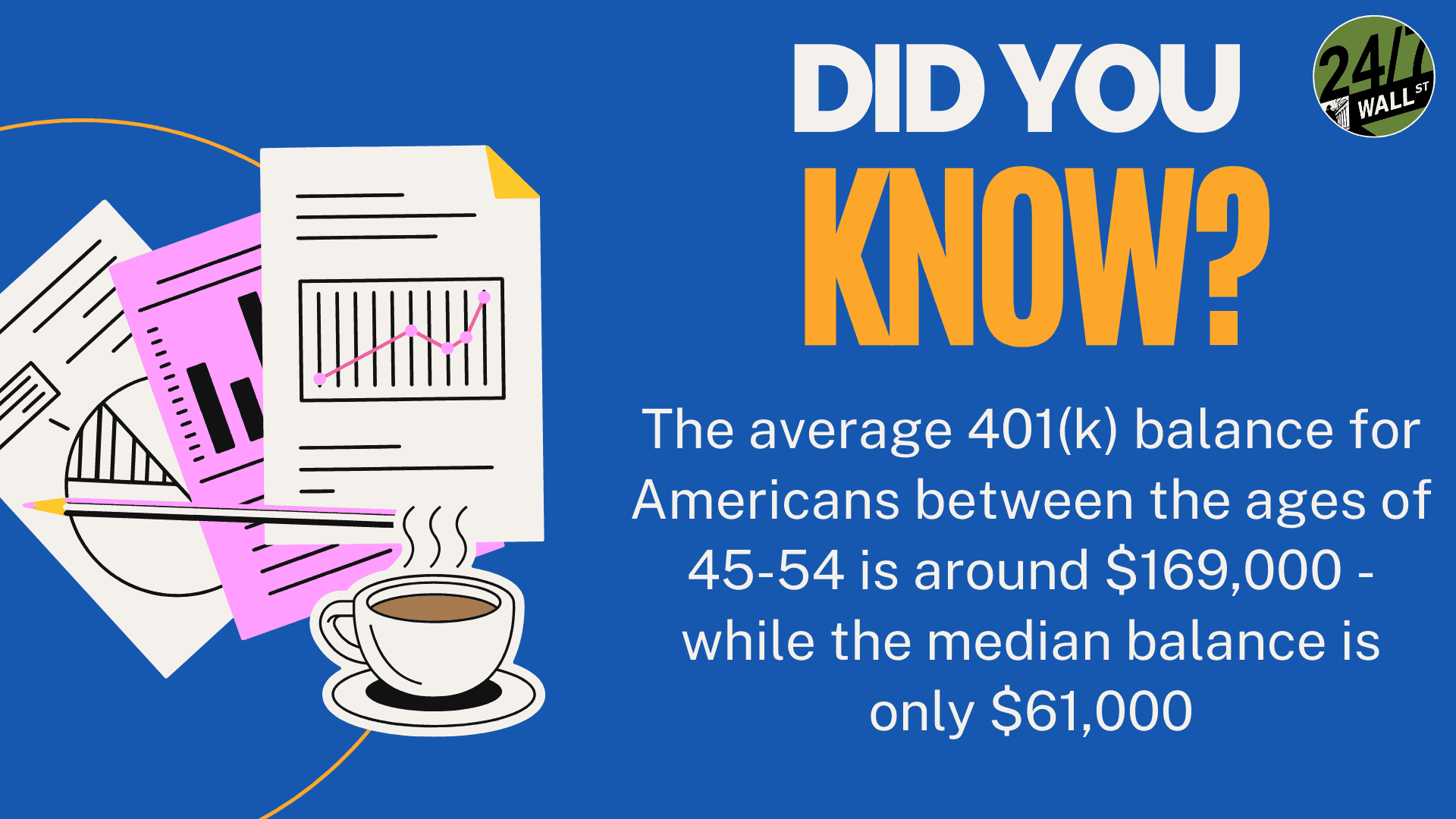
To appreciate how far ahead this couple sits, consider the broader landscape. According to Vanguard’s “How America Saves 2025” report, which draws on data from nearly 5 million defined contribution plan participants, the average 401(k) balance across all age groups was $148,153 at year-end 2024 while the median balance was just $38,176. At nearly $1 million combined across both accounts at ages 37 and 38, this couple occupies a category most workers never reach.
One point on which the r/ChubbyFIRE community converges is that maxing out available retirement accounts is almost always the right call regardless of income level. The author never states a retirement spending target, which makes it difficult to assess whether the current trajectory is actually sufficient. Without anchoring the plan to a specific number and lifestyle, optimizing account types in a vacuum produces limited insight.
For early-retirement seekers building a large nest egg, accessing those funds before age 59.5 is more achievable than most people assume. The Rule of 55 allows penalty-free withdrawals from a workplace plan if the employee separates from service during or after the calendar year in which they turn 55. Substantially Equal Periodic Payments under IRS Section 72(t) provide a separate bridge option at any age, structured as a series of distributions calculated to run at least five years or until age 59.5, whichever is longer. Both mechanisms exist precisely to address the concern about over-funding tax-advantaged vehicles.
The deeper issue this post surfaces is one of priorities rather than portfolio construction. Managing three children under three while one parent serves as the primary caregiver is genuinely demanding, and the anxiety visible in the original post reads more like a response to that stress than a true financial emergency. A certified financial planner could model the specific numbers, run projections on the Roth versus traditional split, and quantify the RMD exposure decades out. That conversation would almost certainly be more productive than threading through forum comments, and it would free up mental bandwidth for what is actually demanding attention right now.
Editor’s note: This update added context from SECURE 2.0 that Roth 401(k) and 403(b) accounts have been exempt from required minimum distributions since 2024, and noted that the RMD starting age is scheduled to rise to 75 for those born in 1960 or later under the same legislation.
Contact [email protected] for any questions or corrections.
Aaron Webber is a veteran of the marketing, advertising, and publishing worlds. With over 15 years as a professional writer and editor, he has led branding and marketing initiatives for hundreds of companies ranging from local Chicago restaurants to international microchip manufacturers and banks. Aaron has launched new brands, managed corporate rebranding campaigns, and managed teams of writers in the education and branding agency industries. His experience extends to radio spots, mailers, websites, keynote presentations, TED talks, financial prospecti, launch decks, social media, and much more.
He is now a full-time freelance writer, editor, and branding consultant. Most of his work is spent ghost-writing for corporate executives, long-form articles, and advising smaller agencies on client projects.
Aaron’s work has been featured on INC.com and The Huffington Post. He has written for Fortune 100 companies and world-class brands. His extensive experience in C-suite ghostwriting has launched the personal branding initiatives of dozens of executives. He is a published fiction writer with publishing credits in science fiction, horror, and historical fiction.
Aaron graduated from Brigham Young University with a bachelor’s degree in macroeconomics, and is the owner and primary contributor of The Lost Explorers Club on www.lostexplorersclub.com. He spends his free time teaching breathwork and hosting healing ceremonies in his home.