The Big 55+ Community With the Lowest Monthly Fee Will Be the One Residents Say Costs the Most
A lower monthly fee feels like a win until the special assessment bill arrives and the moving truck is already gone. What the sales sheet never shows can quietly add tens of thousands to what a 55+ community actually costs…

This post may contain links from our sponsors and affiliates, and Flywheel Publishing may receive compensation for actions taken through them.
If you’ve visited 55+ communities, you know the drill. The sales office hands you a sheet, and one community’s monthly fee is half of what the place down the road charges. It feels like found money, but fast-forward a couple of years, and residents of the cheapest communities can face the biggest surprise bills because the fee covers only the portion of the cost the developer chose to print. Here’s what retiring into a big 55+ community really costs, and why the lowest number deserves the closest look.
What a Low-Fee Community Really Costs a Couple Each Year
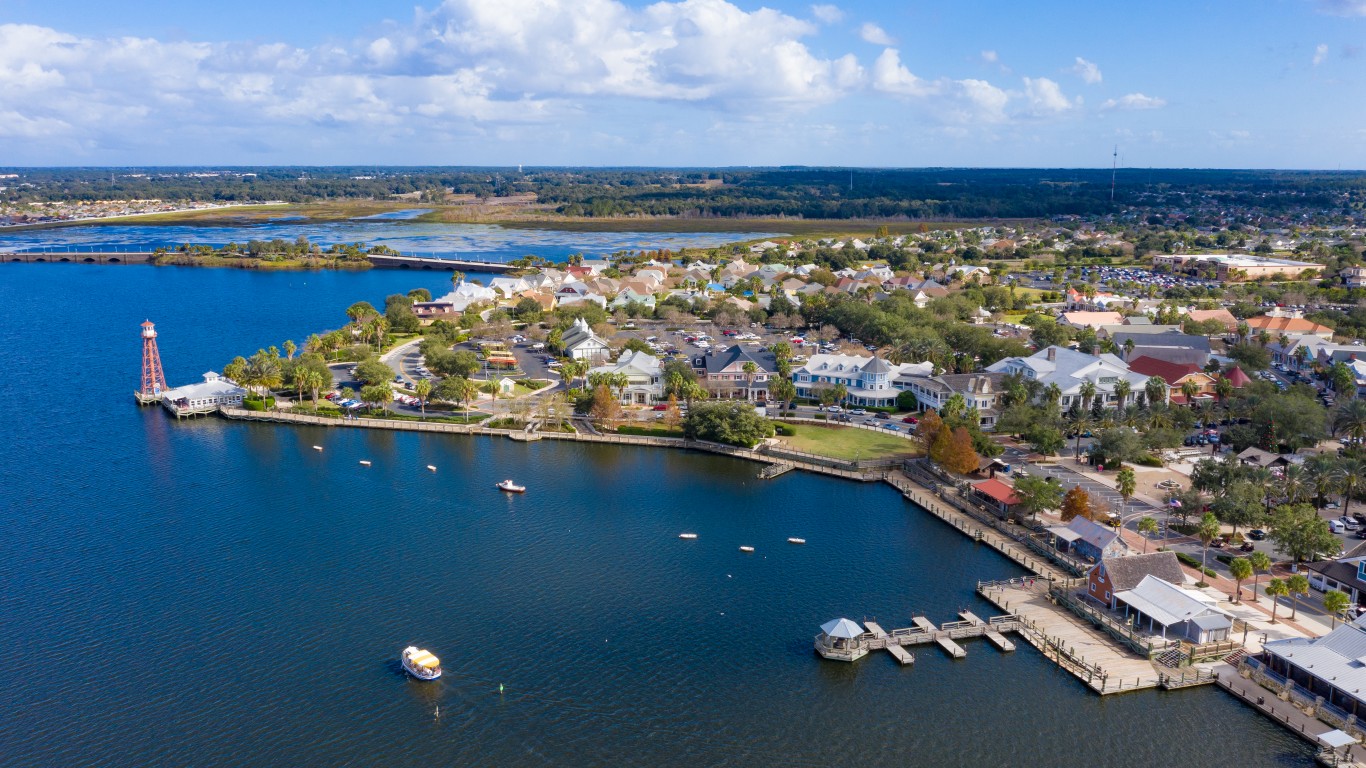
Picture a couple in a large Florida community. Florida has more of these developments than anywhere else and no state income tax, but it isn’t cheap: the BEA puts its living costs at 103.414, above the national average of 100. The Villages is a good model for how the fees are built. New buyers pay about $204 per month in amenity fees, plus a bond and CDD assessment of $800 to $4,000+ per year, charged with property taxes. Owners there also pay for their own roof, siding, stucco, and lawn care, so costs can quickly add up, well beyond what a homeowner believes is possible.
| Annual item (assumed) | Estimate |
|---|---|
| Amenity fee | $2,448 |
| Bond and CDD assessment | $2,000 |
| Property tax and insurance (about $400,000 home, assumed) | $8,000 |
| Exterior maintenance and replacement reserve | $4,000 |
| Medicare Part B, two people at $202.90 monthly | $4,870 |
| Medigap, Part D, and out-of-pocket care | $9,000 |
| Food, USDA moderate plan | $9,600 |
| Utilities, phone, internet | $4,800 |
| Car, golf cart, replacement fund | $7,000 |
| Travel, clubs, gifts, personal | $10,000 |
| Special assessment buffer | $2,500 |
| Federal tax on withdrawals | $3,000 |
| Total | $67,218 |
The food line is based on the USDA moderate plan, which runs roughly $770 to $850 a month for two adults. The whole budget comes in under the $78,535 that the average U.S. household spent in 2024. That’s comfortable, but you’re still writing your own checks for the roof.
Turning $67,000 Into a Portfolio Target
After the 3.6% COLA, the SSA estimates that a senior couple with both spouses collecting will average $3,355 a month. That’s $40,260 a year, leaving a gap of about $27,000. Closing that gap at a 4% withdrawal rate takes about $674,000. If you move in at 62 and need 30-plus years of income, a 3.5% rate is safer, which pushes the target to roughly $770,000. Delaying the higher earner’s claim to 70 increases the survivor benefit and the couple’s check, so it lowers both numbers. Keep joint MAGI at or below $218,000, and Part B stays at the standard rate.
Why the Cheapest Fee Ends Up Costing the Most
Most buyers miss that Florida law does not require HOAs to perform reserve studies, and members can vote to waive or reduce reserves with a majority of the total voting interests. A low fee often means reserves are thin. When the clubhouse roof, pools, or private roads wear out, owners pay the bill through a special assessment. Say a $1.2 million repaving project is split across 400 homes. Each owner owes $3,000, usually due within months.
Now compare a community charging $450 a month that covers exterior maintenance and fully funds its reserves. On paper, it costs $2,952 more per year. But the low-fee budget above already sets aside $6,500 a year for exterior work and assessments. At 4%, that $6,500 adds about $162,500 to the portfolio you need. Leaving is harder, too. Existing-home sales are running at 3.99M annualized, which is soft-market territory, and buyers back away from a resale certificate that shows a pending assessment. Costs are also rising: with CPI up 3.7% over the past year, any reserve shortfall left alone gets bigger every year.
What It Takes to Make This Retirement Work
Plan on about $67,000 a year, a $27,000 gap after Social Security, and a portfolio of $674,000 to $770,000, depending on whether you withdraw 4% or 3.5%. A balanced mix of broad index funds and dividend ETFs, with a Treasury ladder covering the first five years of withdrawals, needs to beat inflation to hold up over 30 years. Keep $10,000 to $15,000 in cash, separate from the portfolio, for assessments so a surprise bill never forces you to sell in a down market.
Before you sign, ask for the community’s reserve study, its funded ratio, every vote to waive reserves, and five years of assessment history. Judge each community by its fee plus the cost of its reserves. The one with the lowest fee may very well be the one that costs the most over time.
Contact [email protected] for any questions or corrections.
David Beren has been a Flywheel Publishing contributor since 2022. Writing for 24/7 Wall St. since 2023, David loves to write about topics of all shapes and sizes. As a technology expert, David focuses heavily on consumer electronics brands, automobiles, and general technology. He has previously written for LifeWire, formerly About.com. As a part-time freelance writer, David’s “day job” has been working on and leading social media for multiple Fortune 100 brands. David loves the flexibility of this field and its ability to reach customers exactly where they like to spend their time. Additionally, David previously published his own blog, TmoNews.com, which reached 3 million readers in its first year. In addition to freelance and social media work, David loves to spend time with his family and children and relive the glory days of video game consoles by playing any retro game console he can get his hands on.