What It Takes to Retire in America’s Largest Active-Adult Community on $500,000
The Villages sells a dream of golf carts and sunshine, but Florida-specific costs compound quietly in ways a standard retirement calculator never captures, and by your late seventies they can unravel a budget that looked solid on day one.

This post may contain links from our sponsors and affiliates, and Flywheel Publishing may receive compensation for actions taken through them.

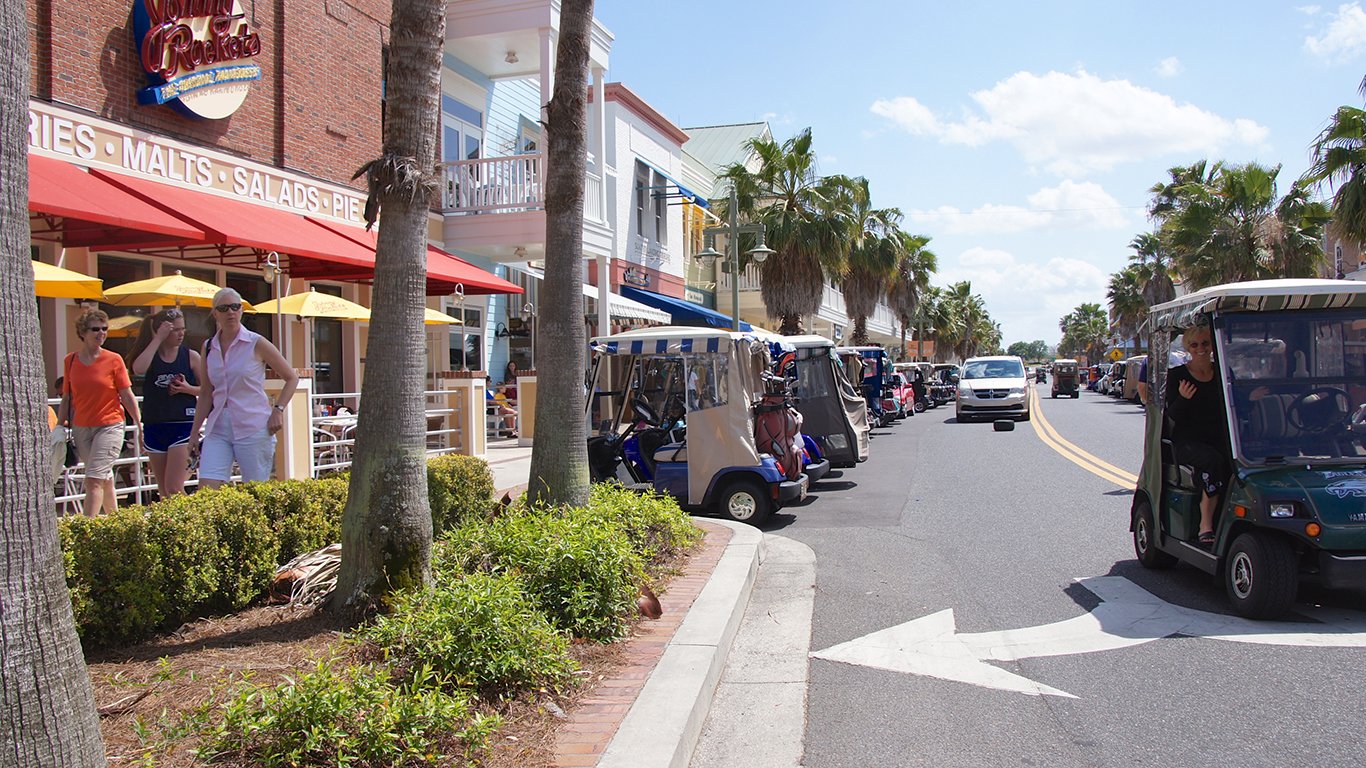
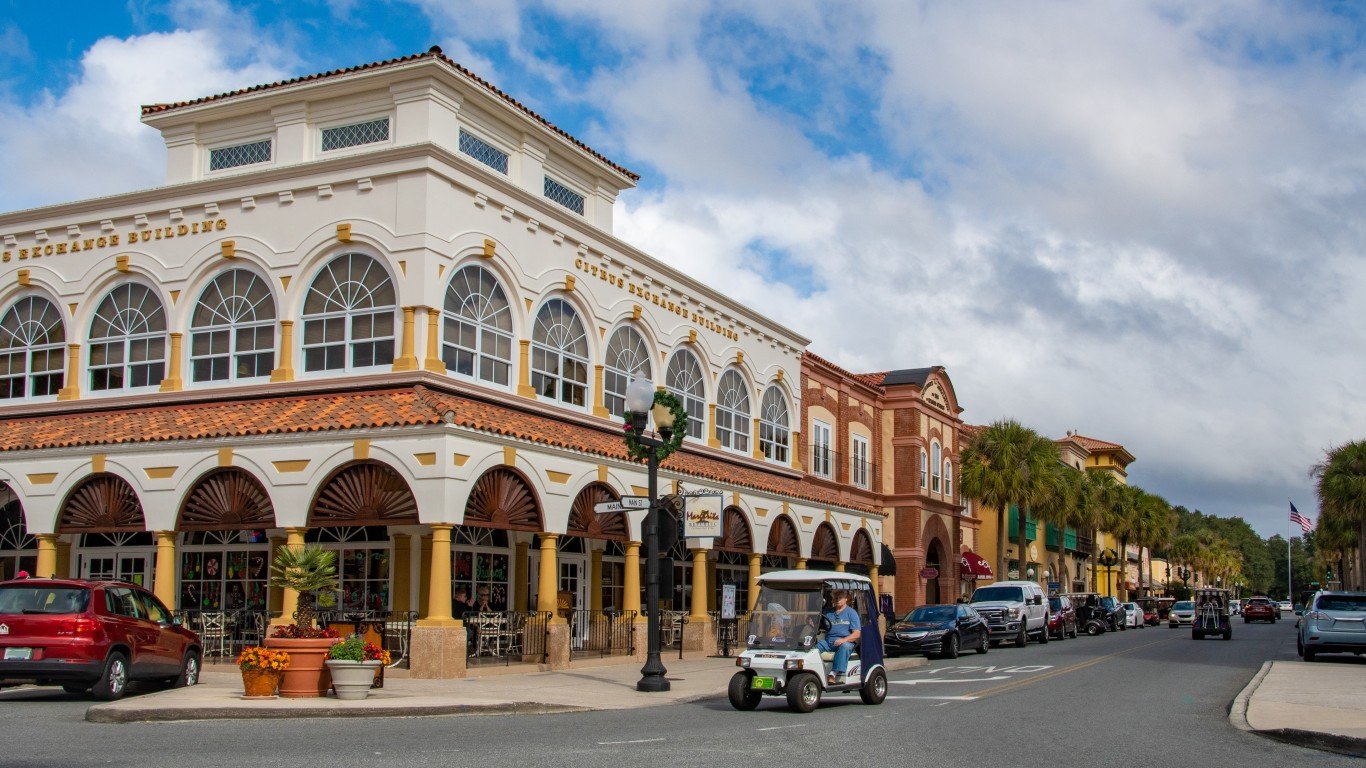
Everybody knows somebody who wants to retire to The Villages. With more than 130,000 residents spread across three Florida counties, it is the largest active-adult community in the world, running like a small city complete with golf-cart paths, pickleball courts, and themed town squares. It ranked as the nation’s top master-planned community in 2025, recording roughly 3,400 projected home sales, up 6% from the prior year, according to Zonda Economics. The 250-acre Eastport district has been opening in phases since late 2025 and into 2026: Hotel Eastport welcomed guests in January 2026, Prime + Embers Steakhouse followed shortly after, and two new executive golf courses opened in February 2026, making it easier for residents to stay inside the community for everyday needs and nightlife. The practical question from readers approaching sixty is a simple one: can I retire here on $500,000? A generic 4% withdrawal calculator will mislead you in ways that compound quietly but matter enormously.
The Real Price Beyond the Sticker
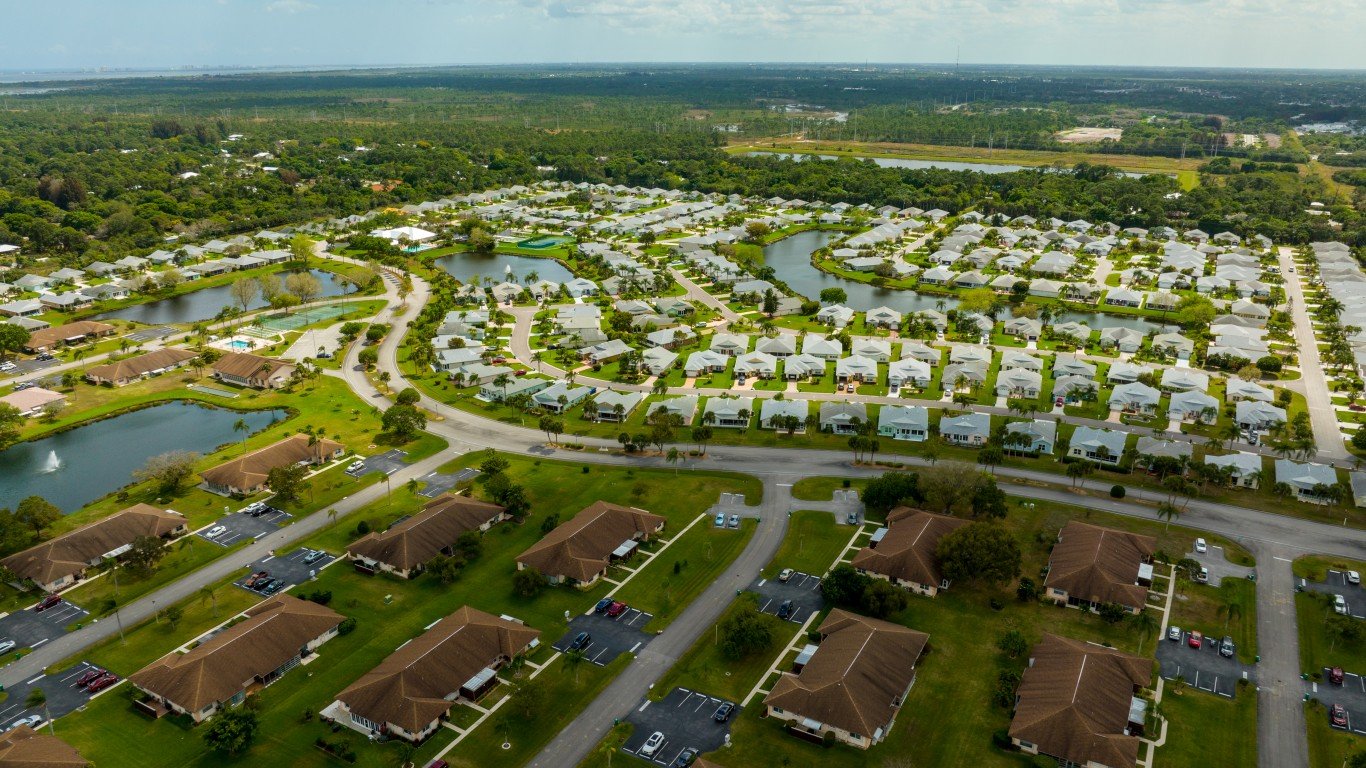
Housing in The Villages ranges considerably by age and location. Real estate spans patio villas, cottage homes, designer homes, and luxury premier homes, priced from $250,000 to $2 million. A realistic entry point for a modest two-bedroom in an established section sits in the mid-$300,000s, leaving roughly $150,000 in liquid capital after an all-cash purchase.
New-construction homes carry a CDD bond, infrastructure debt that typically runs $10,000 to $30,000, paid either annually or in a lump sum at closing. Monthly amenity fees are $189 per The Villages’ official pricing, and they are contractually indexed to CPI, so every inflation spike ratchets them higher permanently. Florida property taxes on a $350,000 homestead run roughly $3,500 a year after the standard homestead exemption.
On homeowners insurance, The Villages’ location works in a buyer’s favor. The community sits primarily in Sumter County, well inland and well away from the coast. Sumter County averaged approximately $1,620 a year on a $300,000 dwelling in 2026, far below the frightening statewide averages that dominate Florida headlines. Florida’s insurance market is softening for the first time in over a decade, with numerous carriers filing 5% to 10% rate reductions following landmark tort reform legislation. Still, as a home ages and rebuild costs climb, budget $2,500 to $3,500 a year for a well-maintained villa in Sumter County.
The Working Budget for One Person at 65
A defensible annual budget for a single retiree in a paid-off Villages home, in current dollars:
- Property tax, insurance, amenity fee, bond payment, fire assessment: about $9,500
- Utilities, internet, phone: $3,600
- Food at home and modest dining out: $6,000
- Medicare Part B, Medigap plan, Part D, dental: about $6,200
- Golf cart, gas, one modest car and insurance, replacement reserve: $6,500
- Home maintenance and appliance reserve: $4,500
- Recreation, travel, gifts, personal: $6,000
- Federal income tax on withdrawals: about $2,500
That totals around $44,800 a year, a lean but livable single-person retirement in a state with no income tax. The Medicare line deserves close attention. The standard monthly Part B premium rose to $202.90 in 2026, up $17.90 from $185 in 2025, a nearly 10% jump that consumes a meaningful slice of any Social Security raise before a retiree sees a single extra dollar. Looking ahead, the 2026 Medicare Trustees Report projects Part B premiums will climb to approximately $209.50 a month in 2027, though private forecasters who track the Trustees’ historical accuracy put the real number closer to $215 to $219. Either way, the $6,200 Medicare line in the budget above will need to expand in the coming years.
Does $500,000 Actually Do It
Assume you buy a $340,000 villa outright, pay off the bond at closing for $18,000, and start retirement with about $142,000 invested. Social Security is the load-bearing wall of this budget. The 2026 COLA of 2.8% lifted the average retired worker’s monthly benefit to $2,086 as of August 2026, or roughly $25,000 a year, according to SSA monthly benefit data. A retiree who worked a full career and claims at full retirement age typically lands in the $23,000 to $28,000 range depending on earnings history.
Take the $44,800 budget, subtract $26,000 in Social Security, and the portfolio must cover roughly $18,800 a year. At a 4% withdrawal on $142,000, you get about $5,700. The gap is around $13,100 a year. That shortfall is precisely why $500,000 stretches only under specific conditions: claiming Social Security at 70 and bridging the gap with part-time work, or buying a smaller patio villa in the $220,000 range and keeping $250,000 invested. At 4%, that larger portfolio throws off $10,000 and closes most of the difference.
The Line Item Most Buyers Miss
Three Florida-specific costs act like a stealth withdrawal rate on your home equity. Insurance, even at the more favorable Sumter County rates, is not fixed: carriers reprice annually and a single damaging hurricane season can reverse every reform-era gain overnight. The amenity fee is contractually indexed to CPI, so a 2.8% bump in costs recurs every year without end. The CDD bond, if left unpaid, accrues interest at rates that now feel genuinely painful: the 10-year Treasury yield surged to 5.28% as of early October 2026, its highest level since 2007, driven by sticky inflation, heavy government bond issuance, and expectations that the Federal Reserve’s hiking cycle may not yet be finished.
Together, these three items can grow from roughly $7,000 a year at age 65 to well over $13,000 by age 80 in real dollars, even before accounting for medical inflation. That is the crack in the foundation of a $500,000 retirement plan, and it rarely appears in the spreadsheets buyers bring to closing. On the income side, the Senior Citizens League projects the 2027 COLA at 3.5%, its most recent estimate after the August CPI-W data came in. That figure is still the largest projected annual adjustment since 2023, which helps, but it does nothing to slow the structural cost escalators built into life at The Villages. The Social Security Administration is scheduled to announce the official 2027 COLA on October 14, 2026.
What It Actually Takes
To retire in The Villages on $500,000 and stay comfortably through your eighties, three things must align. First, buy on the resale market in an older section where the CDD bond is already paid off, targeting around $260,000 all in. Second, keep at least $200,000 invested in a total-market index fund and a short Treasury ladder, holding your withdrawal rate to 3.5% given the insurance and fee escalators. Third, claim Social Security at full retirement age or later so the inflation-protected check carries the heaviest load. Do those three things and the math works. Skip any one and the golf cart goes up for sale well before you planned.
Editor’s note: This pass updated the community resident count to reflect current sources showing more than 130,000 residents, corrected the average Social Security benefit for retired workers to $2,086 based on SSA August 2026 monthly data, revised the 2027 COLA projection to 3.5% per the Senior Citizens League’s most recent September 2026 estimate (down from 3.6%), refreshed the 10-year Treasury yield reference to 5.28% as of early October 2026 (its highest since 2007), added detail on what has actually opened in Eastport (Hotel Eastport, Prime + Embers Steakhouse, two new executive golf courses), and cited the 2026 Medicare Trustees Report as the source for the $209.50 projected 2027 Part B premium while noting that private forecasters put the figure at $215 to $219.
Contact [email protected] for any questions or corrections.
I am a long time investor and student of business, and believe finding good companies that can become great investments is the best game on earth. After 20 years of writing and researching the public markets it is clear that individuals have never had more tools and information to take control of their financial lives. From ETFs and $0 commissions to cryptos and prediction markets there has never been a greater democratization of access to investing.
I write to help people understand the investments available to them so they can make the best choice for their portfolio, whether they're starting out or looking for income in retirement.