Retiring in Virginia’s Shenandoah Valley Keeps You Within Driving Distance of the Grandkids in D.C. Here’s What It Costs
Selling a pricey D.C. suburban home could unlock a surprising pile of cash, but one tax-year trap can wipe out a retirement deduction and inflate Medicare premiums. Before you pack for the valley, see what the move demands.

This post may contain links from our sponsors and affiliates, and Flywheel Publishing may receive compensation for actions taken through them.
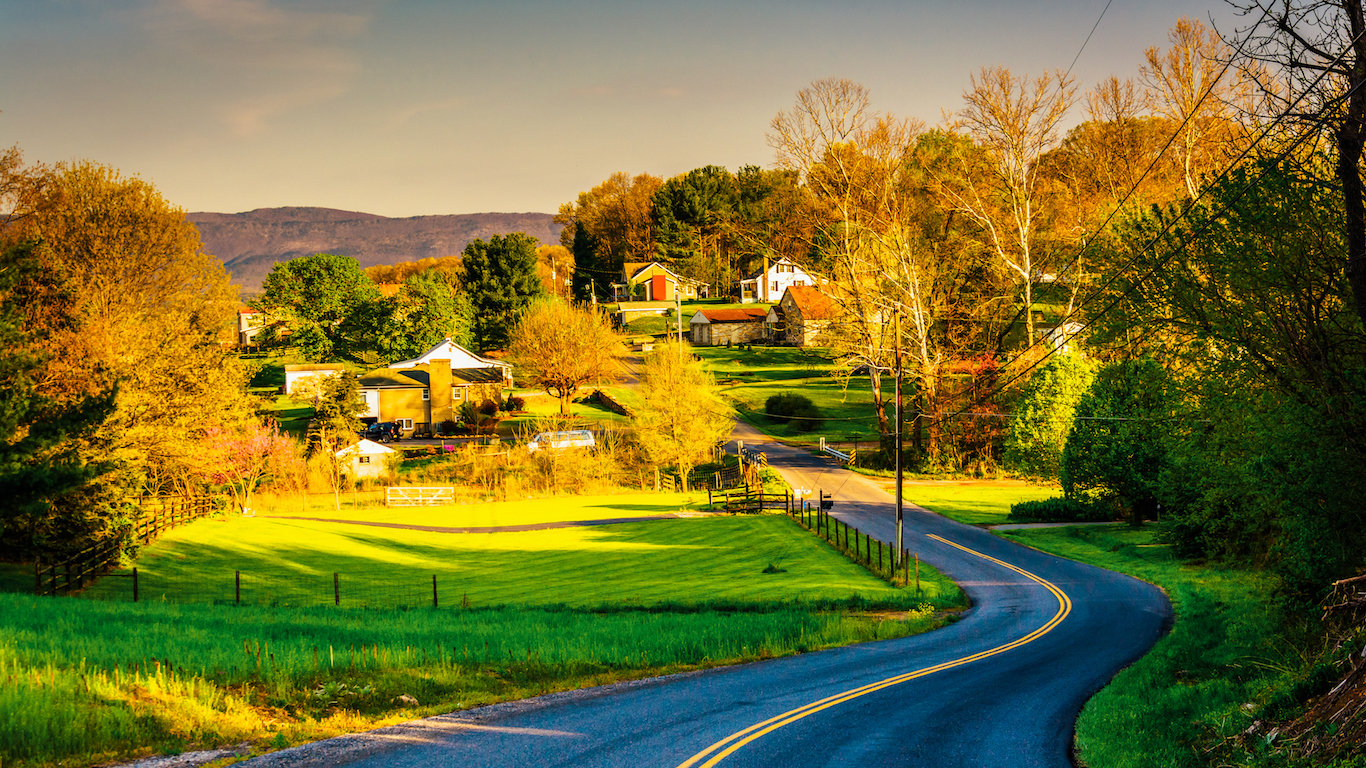
Plenty of D.C.-area couples run into the same problem in their 60s. The suburban house is worth more than they ever expected, the tax bill keeps rising, and staying put gets expensive. Moving to Florida or Arizona would fix the budget, but it would put a plane ride between them and the grandchildren. Virginia’s Shenandoah Valley sits between those two options, which is why it’s worth looking at the numbers for any couple considering such a move.
How Much Equity a Valley Move Frees Up
Home prices account for most of the financial difference. Across the Washington metro, the median single-family sale price hit a record $900,000 in May, according to Bright MLS figures reported by FFXnow. In Harrisonburg and Rockingham County, the median detached home sold for $390,000 in 2025.
A couple who sells at the metro median and buys at the Harrisonburg median frees up about $510,000 before closing costs. Valley prices are still climbing, though. FHFA’s index for the Harrisonburg metro rose 4.45% over the past year, and Winchester’s rose 6.71%.
Property taxes are also lower in the Valley. Harrisonburg’s rate is $1.01 per $100 of assessed value, which comes to about $3,939 a year on a $390,000 house. At Fairfax County’s $1.095 rate from the 2024-2025 cycle, a $900,000 home ran about $9,855.
Monthly Budget and Portfolio Target
Virginia’s price level is 101.104, close to the national benchmark of 100, so national spending data is a good starting point. The average household spent $81,905 in 2025, per the BLS, which is about $6,825 a month.
| Monthly item | Cost |
|---|---|
| Property tax, $390,000 Harrisonburg home | $328 |
| Medicare Part B, two people | $406 |
| Food, utilities, cars, supplemental coverage, maintenance, gifts, reserves | $6,091 |
| Total | $6,825 |
The average senior couple who both collect Social Security gets $3,208 a month after this year’s benefit increase. That’s $38,496 a year, which leaves a gap of $43,409. If that money comes out of traditional IRAs, federal tax adds about $4,460 after the $32,200 joint standard deduction, so savings need to cover about $47,900 a year. At a 4% withdrawal rate, that takes about $1.20 million. At 3.5%, it’s about $1.37 million. If the freed-up equity goes into the portfolio, the remaining savings need to reach roughly $687,000 or $858,000.
At 3.5%, it’s about $1.34 million. If the freed-up equity goes into the portfolio, the rest of the savings needs to reach roughly $662,000 or $829,000, depending on the rate. Inflation for retirees ran 3.6% over the past year, according to the BLS research index for people 62 and older.
Virginia Tax Rules That Matter in the Year the House Sells
Virginia doesn’t tax Social Security benefits, while IRA withdrawals and pensions are taxed at rates from 2% to 5.75%, and the top rate starts above $17,000 of taxable income. People 65 and older can take an age deduction of up to $12,000 each. For most retirees, that deduction shrinks once income passes $75,000 for married couples. The sales tax is 5.3% in most areas, and groceries are taxed at 1%. Local governments, including Harrisonburg, also run real estate tax relief programs for older homeowners.
In the budget above, federal adjusted gross income comes in around $65,267. That keeps the full age deduction and leaves Virginia tax small. The year of the sale works differently. Federal law lets a married couple exclude up to $500,000 of profit on a home sale. If a long-time owner has $700,000 of profit, $200,000 of it is taxable, and that year’s income rises to about $276,000. The age deduction disappears that year.
Medicare sets premiums from tax returns filed two years earlier, so the sale later pushes the couple past the $218,000 joint threshold. Part B then costs $405.80 per person per month, which adds about $4,870 for the year (IRMAA is one of several Medicare surcharges we mapped in a free guide to Medicare’s hidden bills). Holding IRA withdrawals down in the sale year keeps the extra cost to that one year.
What the Valley Offers and Where It Falls Short
The area has mountains, Shenandoah National Park, small downtowns, wineries, and college towns like Harrisonburg. Harrisonburg is about 132 miles from Washington, or roughly 2 hours 15 minutes by car without weather or traffic. Beltway traffic can stretch that drive. Rural areas have fewer specialists, so some appointments mean a longer trip. Winter weather on mountain roads can delay travel, and the area has fewer amenities than the metro.
What It Takes to Pull It Off
A couple getting average Social Security needs about $46,900 a year from savings. That means a portfolio of $1.17 million at 4%, or $1.34 million at 3.5%, and suburban home equity can cover much of it. The figures above assume income stays under $75,000 in normal years and under $218,000 in the year the house sells. The drive from the valley to the grandkids’ front door on a weekday morning is one practical measure of the move.
Contact [email protected] for any questions or corrections.
David Beren has been a Flywheel Publishing contributor since 2022. Writing for 24/7 Wall St. since 2023, David loves to write about topics of all shapes and sizes. As a technology expert, David focuses heavily on consumer electronics brands, automobiles, and general technology. He has previously written for LifeWire, formerly About.com. As a part-time freelance writer, David’s “day job” has been working on and leading social media for multiple Fortune 100 brands. David loves the flexibility of this field and its ability to reach customers exactly where they like to spend their time. Additionally, David previously published his own blog, TmoNews.com, which reached 3 million readers in its first year. In addition to freelance and social media work, David loves to spend time with his family and children and relive the glory days of video game consoles by playing any retro game console he can get his hands on.