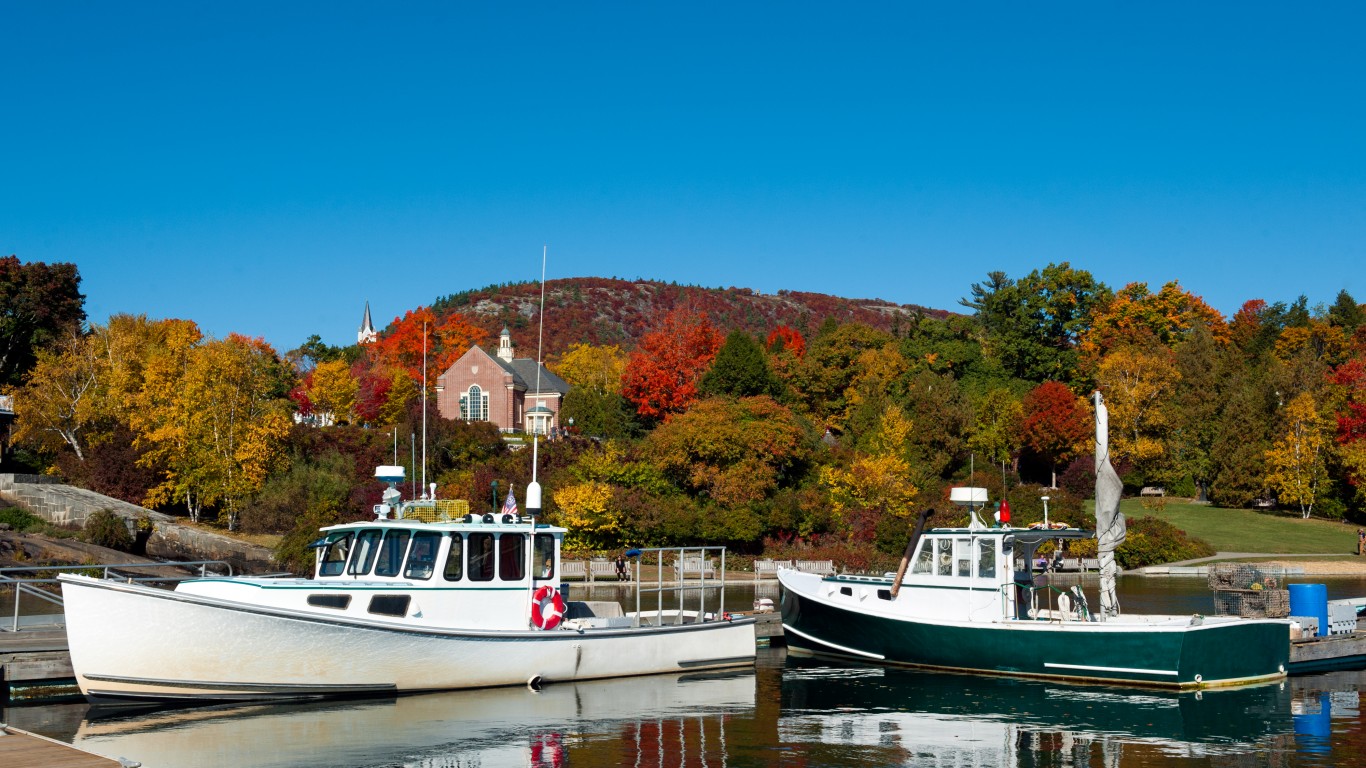
Traverse City Has Lake Michigan Beaches and Cherry Orchards. What It Takes to Retire There at 66 on $1.1 Million

This post may contain links from our sponsors and affiliates, and Flywheel Publishing may receive compensation for actions taken through them.

Can a retired couple afford to live in Traverse City, Michigan, on Grand Traverse Bay? Some couples who vacation in the area consider staying year-round. Here’s the situation: a married couple, both 66, both starting Medicare, with $1.1 million saved. Whether it works depends largely on whether they’ve already paid off their home.
How Far Social Security and a 4% Draw Actually Go
The SSA estimates a typical couple where both spouses collect benefits gets $3,095 a month in 2026, rising to $3,208 a month after the 3.6% COLA for 2027. That comes to about $38,500 a year. Taking 4% of $1.1 million adds $44,000. Put together, that’s roughly $82,500 a year, or about $6,875 a month. A 3.6% COLA is set for 2027.
On the spending side, the BLS puts average household spending at $81,905 for 2025. Michigan’s price level stands at 96.2, compared with the national 100. Adjusted for that, the average is about $78,800, or roughly $6,570 a month. The statewide average may understate Traverse City’s resort housing market, which tends to run hotter than the state overall.
Medicare Part B costs $202.90[1] a month per person, so about $4,870 a year for the two of them. That’s before Part D, a Medigap plan, or the $283[1] deductible each. Their income stands far below the $218,000[1] joint IRMAA threshold, so Medicare’s income surcharges won’t apply.
Federal tax is another line in the budget. With $44,000 in withdrawals, about $22,400 of their benefits become taxable. Subtracting the $32,200 joint standard deduction, a rough estimate lands near $3,600. Spending plus tax comes to about $82,400, which uses up nearly all of the income. Michigan, for its part, doesn’t tax Social Security, and the state finishes its phase-out of the tax on retirement income this year. Other income still gets taxed at the flat 4.25% rate.
Why the House Decides Whether This Works
Recent Grand Traverse County monthly reports show average sale prices from $492,409 to $580,111. Paying cash for a home at the low end of that range out of savings would drop the portfolio to about $607,600. A 4% draw on that is around $24,300, and total income falls to roughly $62,800. That’s well short of the Michigan spending average. The plan holds together only if the house is paid for with equity from a previous home. Renting first is an option, though summer rentals there are priced for tourists.
Michigan’s property tax system includes a rule that affects buyers. Proposal A caps annual increases in a home’s taxable value at inflation or 5%, whichever is less, but only until you sell the home. Once the home changes hands, the cap comes off and the taxable value resets. So the bill printed on a listing is the seller’s maximum number, and the buyer’s first full bill can come in noticeably higher.
Neighbors who’ve owned for decades may pay much less on a similar house. The homestead property tax credit depends on household income and property taxes. At this income level, it may be small.
Winters, Crowds and the Long Drive to Specialists
The area offers lake beaches, cherry orchards, wineries, trails, and a slower small-town pace. Munson Healthcare supports regional care. The trade-offs are long, snowy winters, heavy tourist traffic in summer, and limited flights. Some specialty care may also mean trips downstate.
Retiree inflation is another factor. The CPI for older Americans rose 0.2%[2] in October, and that index gives extra weight to housing and medical care. The Trustees also project the combined Social Security trust funds will run dry in 2034[3]. After that, 83%[3] of scheduled benefits would still be payable.
What It Takes, and a February Test
For this to work, the house has to be owned outright with money from outside the $1.1 million. Spending has to stay close to the Michigan average of about $78,800. The portfolio, held in a mix of broad index funds and a treasury ladder, has to keep a 4% draw going (we made the case for an income-first approach instead of the classic 4% rule in a free report).
If they drop to a more conservative 3.5%, they’d withdraw $38,500 a year, and total income would be about $77,000. At that level, spending would have to stay below the state average, and higher heating bills or a Medigap plan would have to fit within that smaller number.
Some prospective buyers spend a full February in the area before purchasing, which shows what clearing snow, driving icy roads to appointments, and a quiet winter month in town involve. Winter heating bills can then be compared against the budget above.
Contact [email protected] for any questions or corrections.
David Beren has been a Flywheel Publishing contributor since 2022. Writing for 24/7 Wall St. since 2023, David loves to write about topics of all shapes and sizes. As a technology expert, David focuses heavily on consumer electronics brands, automobiles, and general technology. He has previously written for LifeWire, formerly About.com. As a part-time freelance writer, David’s “day job” has been working on and leading social media for multiple Fortune 100 brands. David loves the flexibility of this field and its ability to reach customers exactly where they like to spend their time. Additionally, David previously published his own blog, TmoNews.com, which reached 3 million readers in its first year. In addition to freelance and social media work, David loves to spend time with his family and children and relive the glory days of video game consoles by playing any retro game console he can get his hands on.