At 64, He Sold Standing Timber and Firewood From the Same Woods. Social Security Counted Only One as Work.
Two $40,000 checks arrived from the same Appalachian woods, written by two different buyers, and Social Security treated them as if they came from entirely different universes. The distinction hiding inside those logging contracts could mean thousands of dollars in…

This post may contain links from our sponsors and affiliates, and Flywheel Publishing may receive compensation for actions taken through them.

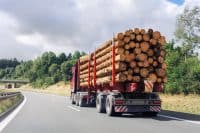
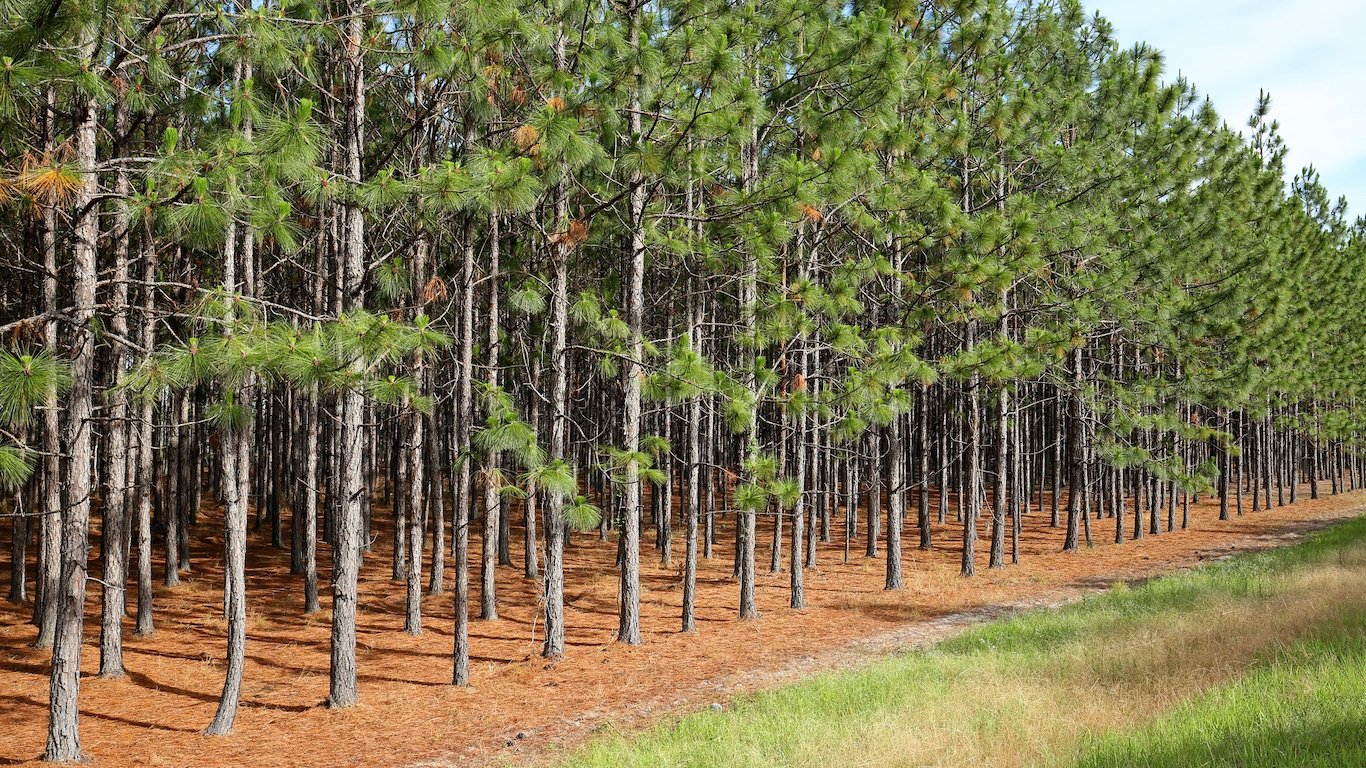
A 64-year-old owns several hundred acres of hardwood in the Appalachian foothills. He occasionally allows a logger to harvest mature trees from a back ridge, but he also cuts lower-quality trees himself, splits them and sells firewood by the cord. Two $40,000 checks arrive from the same woods. One comes from the logger for standing timber. The other arrives gradually from firewood customers.
He has collected Social Security since age 62 and assumes both payments will reduce his benefits. Social Security, however, sees two fundamentally different transactions. One may represent the sale of a long-held asset. The other pays him for operating an active business. That gap can be worth thousands of dollars in benefits.
One Check Bought Trees. The Other Bought His Labor.
Standing timber held as an investment is generally a capital asset. An outright sale after the required holding period can qualify for capital-gain treatment. Timber held for business use can qualify for Section 1231 treatment when the sale or cutting contract meets the applicable rules. Qualifying gain from that timber generally falls outside net earnings from self-employment, and capital gains do not count under Social Security’s retirement earnings test.
Firewood changes the picture entirely, because the landowner contributes his own labor at every step. He cuts the trees, runs the splitter, stacks the cords and delivers orders. The resulting profit is generally ordinary business or farm income, and net self-employment earnings count directly under the test. The distinction is sharper without the tax language: the logger bought trees growing in the ground. Firewood customers bought a finished product he manufactured.
Social Security Counts the Profit, Not the Woodpile
The full $40,000 in firewood receipts does not automatically count against his benefits. Allowable business expenses, including fuel, equipment repairs and delivery costs, reduce the figure that actually matters. A properly established timber basis or depletion deduction can reduce the income further still.
Consider a scenario in which $40,000 in firewood sales leaves $35,000 in net self-employment earnings. In 2026, a beneficiary who remains below full retirement age (FRA) for the entire year can earn $24,480 before benefits are withheld. That puts his firewood profit $10,520 over the limit, producing a potential benefit reduction of $5,260 under the $1-for-$2 formula. A $40,000 standing-timber check, by contrast, could produce a larger taxable gain and still trigger no earnings-test withholding if it qualifies for capital or Section 1231 treatment. Same acreage. Similar dollar amounts. Sharply different Social Security consequences.
One additional rule is worth knowing for new beneficiaries. In the first year of collecting benefits, Social Security can apply a monthly earnings test instead of the annual one. Under that rule, a single filer who earns no more than $2,040 in a given month is considered retired for that month regardless of total annual earnings. That monthly test applies to earned income from work, so a firewood business generating income unevenly across the year can sometimes produce better outcomes than a flat annual calculation would suggest.
The Contract Matters Before the Trees Come Down
Standing timber does not receive capital treatment simply because it remains rooted in the ground. How the owner has held the timber is what controls. Trees maintained as an investment are treated differently from timber held primarily for regular sale to customers. The holding period matters, and so does the sale structure. A lump-sum sale transfers ownership outright. A pay-as-cut contract, known as a Section 631(b) transaction, pays the landowner only as timber is harvested and retains an economic interest in the land. Both structures can qualify for capital gain treatment when the timber has been held for more than one year.
Section 631(a) adds another path for landowners who cut their own timber. A qualifying election allows a harvest to generate Section 1231 gain at the moment of cutting, with any additional profit from selling the resulting wood products treated as ordinary income. That separation is useful planning, but the election is binding in all subsequent years once made and cannot be invented at tax time after the fact. The landowner also needs a defensible timber basis. Without records that allocate part of the property’s original purchase price to the trees, he may forfeit deductions that could meaningfully shrink the gain.
One Check Can Still Affect Social Security Another Way
Avoiding the earnings test does not make a timber gain disappear from the rest of the tax picture. Capital gain flows into adjusted gross income and can push a larger share of his Social Security benefits into taxable territory. It can also trigger Medicare’s Income-Related Monthly Adjustment Amount (IRMAA), a surcharge on top of the standard Part B premium of $202.90 per month in 2026. The surcharge applies when a single filer’s modified adjusted gross income exceeds $109,000.
The IRMAA calculation uses a two-year lookback. For 2026 coverage, Medicare looks at 2024 income. That means a large timber gain booked in tax year 2026 would appear on the return filed in spring 2027, and it would raise his Medicare premiums starting in 2028. Firewood profit carries those same risks while also triggering benefit withholding before full retirement age. That leaves him facing two distinct questions:
- Does the income count as current work under the earnings test?
- Does it increase the taxable portion of his Social Security or push him into a higher Medicare premium bracket?
The standing-timber gain may sidestep the first question while remaining very relevant to the second.
Before the Logger Arrives
The groundwork matters more than the logging contract. He should establish how the timber has been held, review the sale structure and reconstruct the timber’s cost basis before any trees are cut. Firewood income and expenses should be tracked in a separate set of records so that Social Security sees the business’s net result rather than its gross sales. The objective is to recognize accurately what each buyer actually purchased. One paid for trees he owned and held over time. The other paid for cutting, splitting, stacking and hauling. Social Security followed him into the woods for the second transaction, and only for the second.
Editor’s note: This pass added the 2026 first-year monthly earnings test limit of $2,040 and clarified the IRMAA two-year lookback mechanism: for 2026 coverage, Medicare uses 2024 income, so a large timber gain in tax year 2026 would affect 2028 premiums. The 2026 standard Part B premium of $202.90, the $24,480 annual earnings test limit, and the $109,000 IRMAA threshold for single filers were all verified against current CMS and SSA data and remain accurate.
Contact [email protected] for any questions or corrections.
Gerelyn Terzo is the author of dividend investing handbook "Dividend Investing Strategies: How to Have Your Cake & Eat It Too." A veteran financial journalist, she covers agri-finance for outlets like Global AgInvesting and the broader stock market and personal finance for 24/7 Wall Street. She began at CNBC and later helped launch Fox Business in New York. Gerelyn currently resides in Woodland Park, Colorado and dabbles in nature photography as a hobby.