The Southern Timber Market Collapsed After Mill Closures. At 63, a Landowner Can Sell Timber on the Stump Without Social Security Calling It Work.
Southern mill closures are forcing timberland owners to sell now or watch prices fall further, but a single contract detail can determine whether that timber check quietly shrinks a Social Security benefit or escapes the earnings test entirely.

This post may contain links from our sponsors and affiliates, and Flywheel Publishing may receive compensation for actions taken through them.
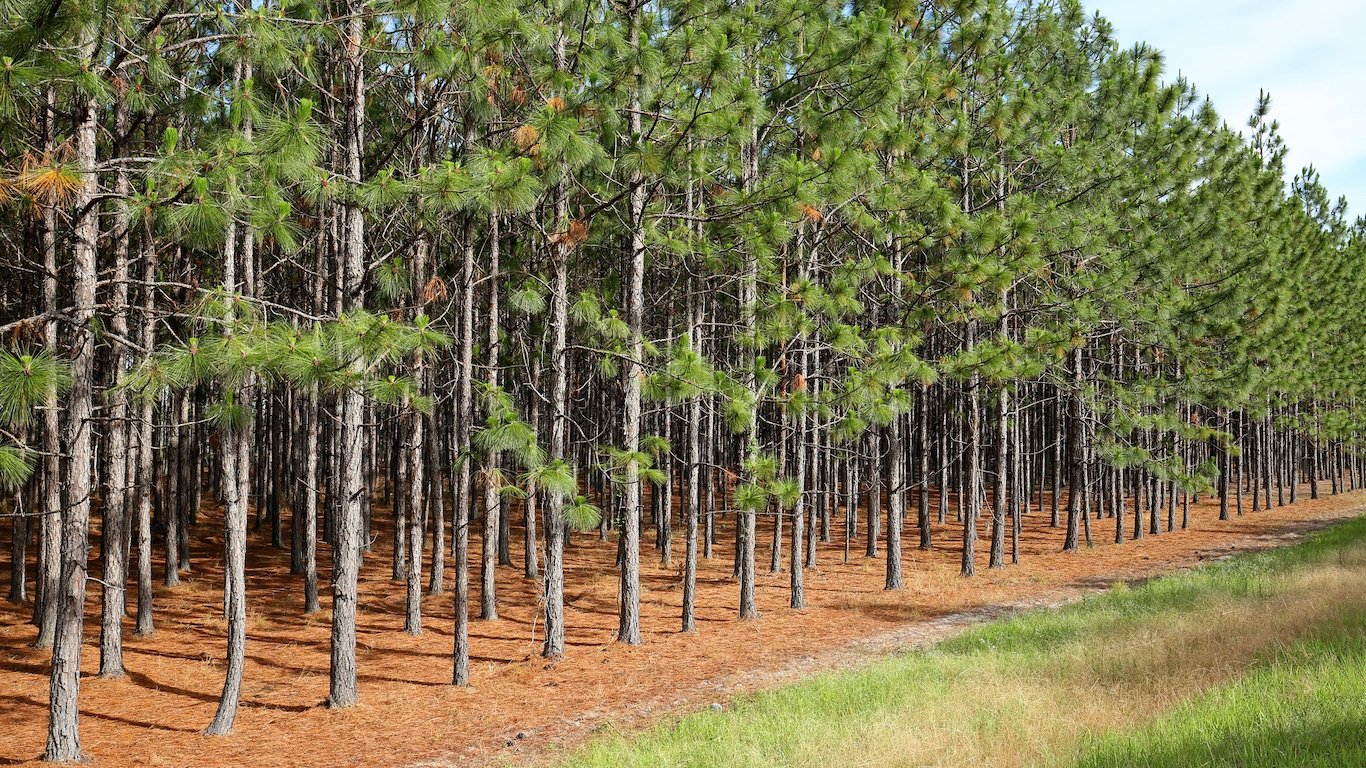
Southern timberland owners are confronting a market few expected to see. Mill closures have gutted pulpwood demand across the pine belt, pushing prices to their lowest inflation-adjusted levels in nearly 40 years. The collapse has a specific anatomy: according to The Wall Street Journal, southern pine pulpwood prices have fallen 46% from their 2022 peak. Between February 2025 and March 2026, American containerboard producers retired roughly 3.9 million tons of capacity, about 10% of the national total. International Paper closed its Savannah and Riceboro, Georgia, mills by the end of September 2025, eliminating about 1,100 jobs. Georgia-Pacific shut its Cedar Springs containerboard mill in August 2025. The Georgia Forestry Commission estimated those closures alone imposed a $1.7 billion direct loss on the state’s economy. In some corners of Arkansas and Georgia, the stumpage price for pine pulpwood has effectively reached zero.
Picture a 63-year-old with 150 acres of pine who was already thinking about Social Security. A logger offers to buy the standing timber while there is still a market for it. The check could be large. But does selling trees from land he has owned for decades suddenly make Social Security treat him as if he went back to work? The answer depends entirely on the contract structure.
Selling the Timber Is Different From Working the Timber
Someone under full retirement age (FRA) all year can earn $24,480 in 2026 before Social Security starts withholding $1 in benefits for every $2 above that limit. That test does not count every dollar appearing on a tax return. It generally looks at wages and net earnings from self-employment. Federal rules specifically exclude certain gains from cutting or disposing of timber when Section 631 of the tax code applies. Standing timber held as an investment can also qualify for capital-gain treatment when sold outright. For the occasional timberland owner, that creates an important distinction.
Suppose that landowner sells standing timber for $60,000 under a qualifying arrangement, with the logger handling the cutting. The taxable gain can fall outside net self-employment earnings and therefore outside Social Security’s $24,480 earnings limit. If that same $60,000 were wages or net self-employment earnings, it would exceed the limit by $35,520 and could trigger $17,760 in benefit withholding. Same check size. Very different Social Security result.
Lump Sum Versus Pay as Cut
The payment structure matters, but it is not the only thing that matters. An outright lump-sum sale of standing timber can qualify for favorable treatment, but so can certain pay-as-cut arrangements. Under Section 631(b), a landowner who has held the timber for more than a year and retains an economic interest can have a qualifying cutting contract treated as a Section 1231 transaction. The risk appears when the facts start looking less like disposing of an asset and more like operating a business.
A farmer who cuts his own trees and regularly sells logs, pulpwood or firewood may have ordinary farm or business income. The Social Security Administration also notes that timber operations tied closely enough to the farm can become part of gross farm income. So a timber check on its own is not enough information. Who owns the timber, who cuts it, how it is sold, and whether Section 631 applies can all change the outcome.
Social Security May Ignore the Sale While the IRS Does Not
Keeping the gain outside the earnings test does not make it tax-free. A qualifying timber sale can still generate taxable capital or Section 1231 gain. The owner’s basis in the timber, including depletion basis, helps determine how much of the proceeds is actually gain. That income can also affect how much of Social Security is taxable in the first place.
For a single filer, combined income above $25,000 can make part of Social Security taxable, while combined income above $34,000 can make up to 85% of benefits taxable. For married couples filing jointly, those thresholds are $32,000 and $44,000. A timber sale can leave every monthly Social Security check intact under the earnings test while simultaneously making more of those checks taxable on the federal return. If the 63 versus 67 versus 70 claiming question is still nagging at you, we have boiled that whole decision down to a single page in a free guide here.
Know What Kind of Timber Sale You Are Making
Before signing a harvest contract, three things can change both the Social Security and tax outcome:
- Ask how the sale will be reported. Confirm whether the transaction is an outright timber sale, a qualifying Section 631 arrangement or ordinary business income.
- Keep the harvest activity separate from the timber ownership. Hiring a logger to buy or cut standing timber can produce very different Social Security treatment from running the logging operation yourself.
- Model the tax bill separately from the earnings test. A gain can stay outside Social Security earnings while still increasing taxable income and the taxable portion of benefits.
The Southern timber slump is forcing landowners to make decisions they hoped to postpone. With south-wide pine pulpwood stumpage averaging just $5.40 a ton as of mid-2026, the pressure to act is real. For someone ready to sell, the core distinction is straightforward: owning the trees and working the trees are not the same thing, and Social Security’s rules reflect that difference.
Editor’s note: This update adds the International Paper Savannah and Riceboro mill closures (September 2025, roughly 1,100 jobs eliminated) and the Georgia-Pacific Cedar Springs closure (August 2025) as named examples of the broader market collapse, incorporates the 46% pulpwood price decline from the 2022 peak and the Q2 2026 south-wide stumpage figure of $5.40 per ton from TimberMart-South, and includes the Georgia Forestry Commission’s $1.7 billion state economic loss estimate tied to those closures.
Contact [email protected] for any questions or corrections.
Gerelyn Terzo is the author of dividend investing handbook "Dividend Investing Strategies: How to Have Your Cake & Eat It Too." A veteran financial journalist, she covers agri-finance for outlets like Global AgInvesting and the broader stock market and personal finance for 24/7 Wall Street. She began at CNBC and later helped launch Fox Business in New York. Gerelyn currently resides in Woodland Park, Colorado and dabbles in nature photography as a hobby.