His Michigan Farm Could Become a Data Center. Social Security Counted the Last Crop and Ignored the Land Beneath It.
A Michigan farmer sits across from a multimillion-dollar data center buyout, and his accountant has some surprising news about which part of that closing statement Social Security will actually notice.

This post may contain links from our sponsors and affiliates, and Flywheel Publishing may receive compensation for actions taken through them.
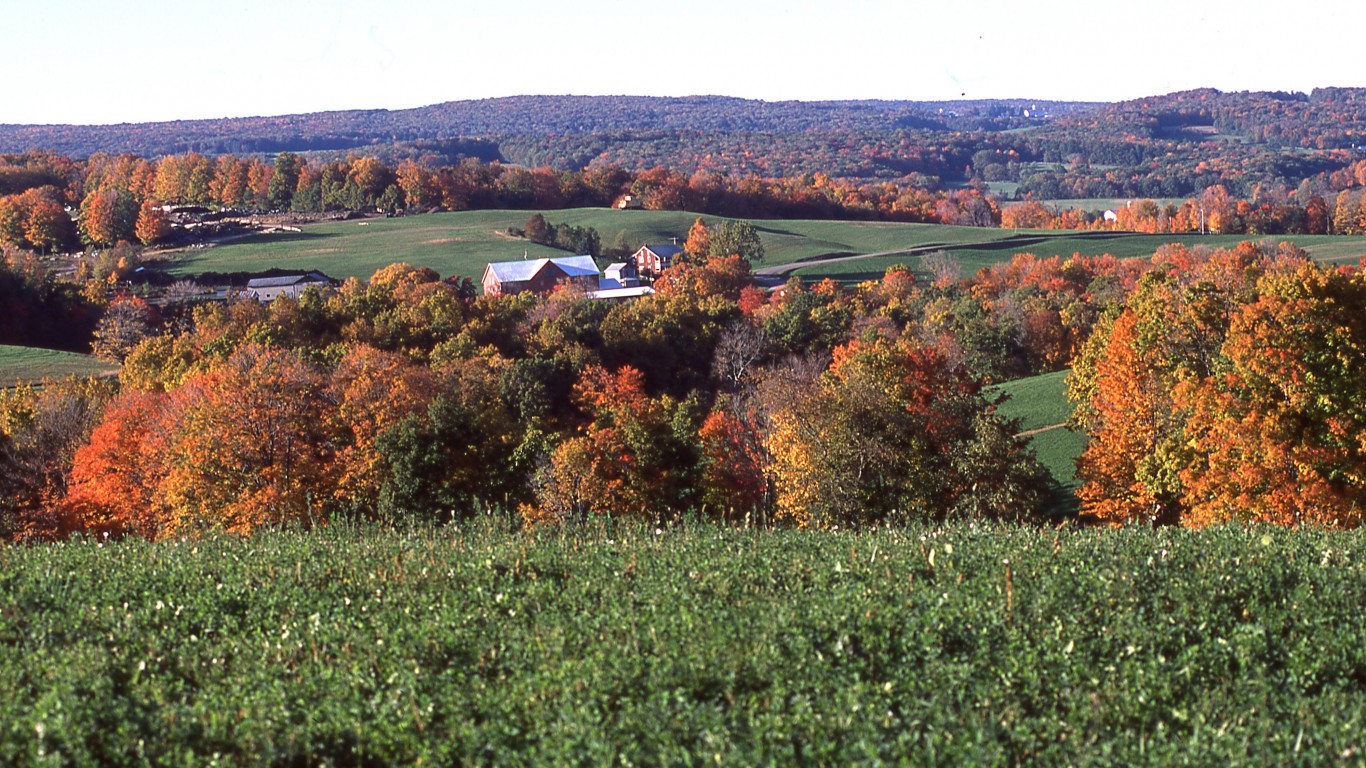
Picture a 64-year-old row-crop farmer near Mason, Michigan. He is one of a group of landowners who have applied to annex more than 400 acres of Vevay Township farmland into the city of Mason so a hyperscale data center can be built on the site. The closing table is stacked with checks that add up to millions. His accountant is gently explaining that Social Security is going to look at almost none of it.
That confusion is common. A recent forum post from a retiree in a similar spot put it plainly: the sale of the farm would be capital gains, not income, and does not shrink your benefit. Right instinct, but the full dynamics are more interesting, because one line on the closing statement does land squarely on his Social Security record.
One Sale, Several Different Assets
The IRS treats a farm sale as the sale of each individual asset, even when everything transfers under a single contract. The purchase price gets allocated across land, buildings, machinery, stored inventory, and any residence. Each bucket has its own tax character, and Social Security only cares about a narrow slice of them.
Run an illustrative closing for our farmer:
- Land and buildings: $3 million. This is capital and business property. Any gain here is generally excluded from net self-employment earnings.
- Noninventory machinery: $250,000. Some of this may be recaptured as ordinary income because of prior depreciation, but ordinary income is not automatically Social Security earnings.
- Harvested crop inventory: $80,000, with net farm earnings of about $60,000 after expenses. This is property produced for sale to customers, flows through Schedule F, and does count.
So out of a roughly $3.33 million closing, Social Security effectively sees the $60,000 of net farm earnings. The other $3.25 million is not added to his covered earnings record, does not generate Social Security credits, and does not count against the retirement earnings test.
Why That $60,000 Is the Number That Matters
For a 64-year-old still under full retirement age (FRA), that self-employment figure is the piece with real Social Security consequences. It can satisfy the year’s four Social Security credits, potentially edge out one of the low or zero years still sitting in his 35-year earnings history, and, if he has already filed for benefits, count toward the earnings test that temporarily withholds a portion of checks once earned income crosses the annual limit for early claimers.
The land, barns, and equipment gains sit outside all of that. The rulebook, essentially SSA Handbook section 1211, excludes gains from property dispositions unless the property was inventory or held primarily for sale to customers. The soil was not produced by his labor this year. The wheat in the bin was.
What “Ignored” Does Not Mean
Ignored by Social Security is not the same as ignored by the tax code. The taxable gain on the land and buildings will still drive a serious federal and Michigan income-tax bill. It can also push up to 85% of his Social Security benefits into taxable territory in the year of sale. And because Medicare looks back two years, that spike in modified adjusted gross income (MAGI) can lift his Part B and Part D premiums through the income-related surcharge in 2028.
The annual cost-of-living adjustment keeps working in the background regardless. The 2027 COLA is currently tracking in the mid-3% range, based on CPI-W readings. That raise applies to his benefit whether the farm sells for $3 million or $30 million.
Practical Takeaways
Two things to think through before a closing like this.
- First, insist that the purchase agreement spell out the allocation across land, buildings, equipment, and stored crop, because that allocation is what your tax preparer and the Social Security Administration will follow.
- Second, if you have already claimed early benefits, model the crop-related self-employment income against the earnings test before you sign, since that is the only sliver of the deal that can pull a check back.
Every farm sale looks a little different once the appraiser walks the property, so treat the numbers above as the shape of the answer rather than the answer itself. This particular quirk, where a seven-figure gain slides past Social Security while a small crop check lands on the record, is one of several retirement rules that behave nothing like people expect (we mapped nine of them in a free guide here: The Retiree’s Tax Trap Map).
Contact [email protected] for any questions or corrections.
Gerelyn Terzo is the author of dividend investing handbook "Dividend Investing Strategies: How to Have Your Cake & Eat It Too." A veteran financial journalist, she covers agri-finance for outlets like Global AgInvesting and the broader stock market and personal finance for 24/7 Wall Street. She began at CNBC and later helped launch Fox Business in New York. Gerelyn currently resides in Woodland Park, Colorado and dabbles in nature photography as a hobby.