A Dinosaur Found on a Montana Ranch Is Headed to Auction for $6 Million to $9 Million. A One-Off Fossil Sale Can Be Taxable Without Counting Against His Social Security’s Earnings Test
A retired rancher unearths a seven-figure dinosaur skeleton on family land and suddenly faces a tax puzzle that could reshape his Social Security checks for years. Whether that windfall counts as a lucky find or a fossil business changes everything.

This post may contain links from our sponsors and affiliates, and Flywheel Publishing may receive compensation for actions taken through them.
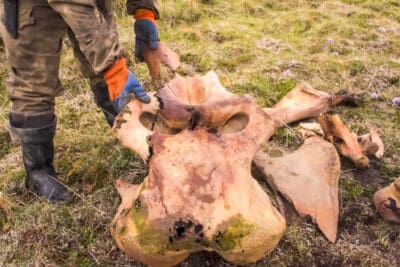
A nearly 20-foot predator nicknamed Jodi for the rancher who discovered it in Montana, goes up for sale at Sotheby’s New York on October 27 with an estimated price tag of $6 million to $9 million. Dinosaur skeletons now sell regularly at major auction houses, and some of them come out of private ranch land.
Now picture a 64-year-old Montana landowner who started Social Security early and then finds a skeleton weathering out of a hillside his family has owned for decades. A retiree living on a fixed income could suddenly be looking at a seven-figure check. His first worry is usually the one a 64-year-old raised online after a large investment payout: does this money count as income, and will it cost me my benefits?
The answer depends on the kind of income the sale produces.
A Big Check Is Not Always Work Income
Retirees who claim before full retirement age (FRA) face an earnings test. In 2026, if you are under FRA all year, Social Security withholds $1 for every $2 you earn above $24,480. His FRA is 67.
The test counts wages and net self-employment earnings. It ignores investment earnings, interest, annuities and capital gains, so a sale of genuine personal or investment property remains outside the test.
Suppose the rancher receives $2,000 a month in Social Security, or $24,000 a year. Under the annual earnings test, $72,480 in countable earnings would be enough to withhold every check. If he is running a fossil business, Social Security looks at net earnings after allowable business expenses, not the auction price. If he sells the skeleton as a capital asset, the gain does not count toward the limit.
When a Lucky Find Starts Looking Like a Fossil Business
IRS guidance says nearly everything you own for personal use or investment is a capital asset, including coin or stamp collections. The main exception is property held mainly for sale to customers. That property counts as inventory, and selling it produces ordinary income.
Self-employment earnings follow the same line. Gains from selling property are generally left out, unless the property is inventory or held for sale to customers. A landowner selling a chance discovery may qualify for capital-asset treatment, but one sale alone does not settle the classification. A landowner who charges for digs, prepares specimens and sells fossils every season looks like he runs a business. That income can trigger withholding under the earnings test, and he would owe self-employment tax on top of income tax.
How the deal is set up matters too. Jodi was dug up by commercial paleontologist Clayton Phipps, the cousin of the woman who found it. Contracts with professional diggers, revenue splits and any record of past sales all shape how the IRS views the seller.
Avoiding the Earnings Test Still Leaves a Tax Bill
A capital gain can keep the rancher’s checks coming and still raise his taxes. Once a single filer’s combined income passes $34,000, up to 85% of benefits become taxable. Combined income means adjusted gross income, plus tax-free interest, plus half of your benefits.
A multimillion-dollar gain puts him far past that line, so about $20,400 of his $24,000 in benefits would be taxable that year. Capital-asset treatment does not guarantee a lower tax rate. Short-term gains generally face ordinary income rates, while long-term gains on items classified as collectibles can face a maximum 28% rate. A large investment gain may also trigger the 3.8% net investment income tax.
Medicare is the other piece. Medicare premiums are based on the tax return from two years earlier, so a big sale at 64 can raise his premiums at 66, after he has enrolled.
Determine the Label Before the Auction
The step that matters most happens before the sale. Sit down with a tax professional and write down how you came to own the fossil, who dug it up, whether you have sold fossils before and how the auction contract is set up. Documenting capital-asset treatment ahead of time is far easier than arguing for it later.
A taxable windfall does not automatically stop his benefits. Even when the earnings test applies, Social Security recalculates his benefit at FRA to credit months when payments were withheld (we walked through the earnings limit and three other traps that catch people easing out of work in a free semi-retirement guide). That raises future monthly checks instead of returning the withheld money in a lump sum, so the immediate cash-flow hit still matters.
The skeleton may command millions at auction. What matters for his Social Security check is whether he sold something he owned or earned money running a fossil business.
Contact [email protected] for any questions or corrections.
Gerelyn Terzo is the author of dividend investing handbook "Dividend Investing Strategies: How to Have Your Cake & Eat It Too." A veteran financial journalist, she covers agri-finance for outlets like Global AgInvesting and the broader stock market and personal finance for 24/7 Wall Street. She began at CNBC and later helped launch Fox Business in New York. Gerelyn currently resides in Woodland Park, Colorado and dabbles in nature photography as a hobby.