China Could Ruin Nvidia’s Best Year
Nvidia faces blocked imports of H200 chips into China, which puts $50 billion in potential revenue up in the air. China seems serious about producing its own AI chips.

It is too early to say for certain. Reuters reports that China has begun to block imports of the powerful H200. That is Nvidia Corp.’s (NASDAQ: NVDA | NVDA Price Prediction) second-most powerful chip. The company’s stock price relies somewhat on the belief that the door is wide open to sell its chips to the second-largest artificial intelligence (AI) market in the world.
Reuters reported on Nvidia’s latest headache: “Chinese customs authorities told customs agents this week that Nvidia’s, opens new tab H200 artificial intelligence chips are not permitted to enter China, according to three people briefed on the matter.” After disputes between the governments of China and the United States, it appeared China’s hard line for Nvidia to tap the demand for its chips was over. China had relented. Nvidia was its only option to move its AI efforts forward quickly.
The AI Arms Race
Nvidia’s shifting China plans over the past several months turned mostly on two things. The U.S. government worried the chips would help China gain on America in the race for AI supremacy. Then, China told the world it could quickly build its own powerful chips that would match the performance of Nvidia chips. The Chinese effort to catch Nvidia even had a name: the “Manhattan Project.” It was meant to mirror the U.S. effort to build the atomic bomb in World War II.
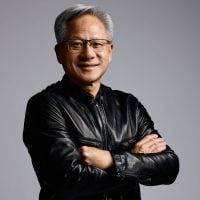
Last year, Nvidia CEO Jensen Huang said the Chinese market could be worth $50 billion in revenue. He said the figure was not in the company’s revenue forecasts. That would be a huge bump to Nvidia. Its revenue in the most recently reported quarter was $57 billion.
It is too soon to tell whether the new import block will force Chinese AI companies to use chips developed and made there. China and the U.S. have been in a period of unfriendly discussions over tariffs. This has occurred since President Trump first announced tariffs on goods from nations around the world that he said had taken advantage of the U.S.’s open trade markets for years.
There is no way people outside of China can gauge how fast it can stand alone in an effort to catch the U.S. in AI without Nvidia chips. For Nvidia, it does not matter if the Chinese government is playing a game. Nor whether the country has a super AI chip just around the corner. What matters is what happens to something that could be a bonanza of revenue for the world’s most valuable company.
Nvidia Stock Price Prediction and Forecast 2026–2030
Contact [email protected] for any questions or corrections.
Douglas A. McIntyre is the co-founder, chief executive officer and editor in chief of 24/7 Wall St. and 24/7 Tempo. He has held these jobs since 2006.
McIntyre has written thousands of articles for 24/7 Wall St. He is an expert on corporate finance, the automotive industry, media companies and international finance. He has edited articles on national demographics, sports, personal income and travel.
His work has been quoted or mentioned in The New York Times, The Wall Street Journal, Los Angeles Times, The Washington Post, NBC News, Time, The New Yorker, HuffPost USA Today, Business Insider, Yahoo, AOL, MarketWatch, The Atlantic, Bloomberg, New York Post, Chicago Tribune, Forbes, The Guardian and many other major publications. McIntyre has been a guest on CNBC, the BBC and television and radio stations across the country.
A magna cum laude graduate of Harvard College, McIntyre also was president of The Harvard Advocate. Founded in 1866, the Advocate is the oldest college publication in the United States.
TheStreet.com, Comps.com and Edgar Online are some of the public companies for which McIntyre served on the board of directors. He was a Vicinity Corporation board member when the company was sold to Microsoft in 2002. He served on the audit committees of some of these companies.
McIntyre has been the CEO of FutureSource, a provider of trading terminals and news to commodities and futures traders. He was president of Switchboard, the online phone directory company. He served as chairman and CEO of On2 Technologies, the video compression company that provided video compression software for Adobe’s Flash. Google bought On2 in 2009.