




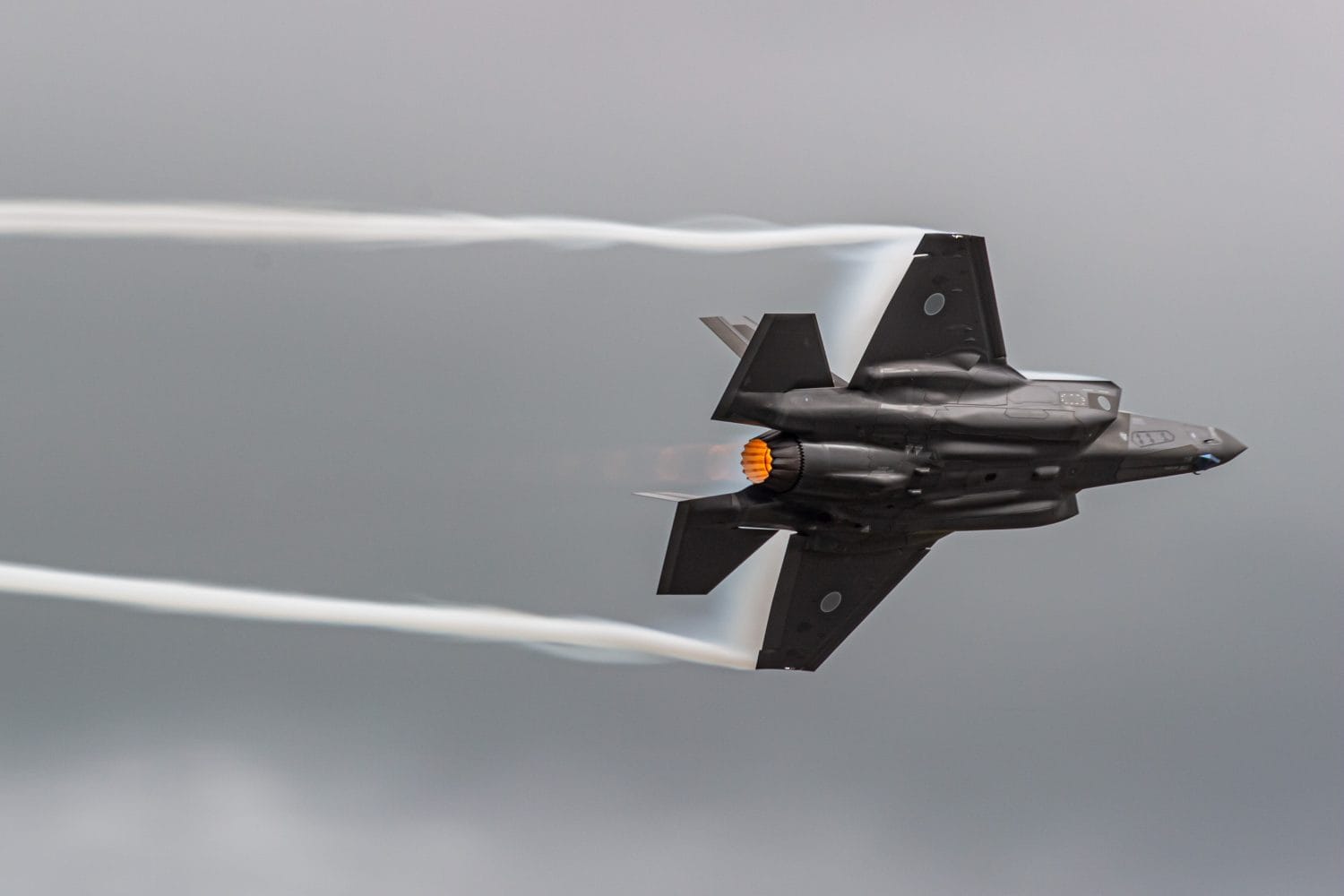
One ETF that is sure to be in the spotlight as Middle Eastern conflicts ramp up, Global X Defense Tech ETF (NYSEARCA:SHLD) is up 82% over the past year, and the conversation around defense tech investing is heating up for reasons that go well beyond quarterly earnings cycles. This ETF undoubtedly sits at the intersection of two powerful forces reshaping global military spending: Europe’s historic rearmament push and an ongoing conflict involving Iran that has accelerated demand for autonomous and AI-driven weapons systems.
Reddit’s r/stocks community has been asking exactly the right questions. A post titled “Future of Drone stocks?” captured the thesis directly:
Future of Drone stocks?
by u/PrestonfromLibira in stocks
The post, which drew 57 comments and 38 upvotes, argued that drones are “the future of warfare” and highlighted names like Kratos, AeroVironment, and Kraken Robotics as potential winners. All three are held inside SHLD’s portfolio.
SHLD’s Sentiment Is Cooling From a Bullish Peak
Retail sentiment has drifted from a quarterly score of 61.2 (bullish) down to 55 (neutral) in the most recent week, with activity remaining low overall. The cooling is not alarming given how thin the discussion volume is, but it does suggest the initial enthusiasm around the drone-warfare thesis has settled into a more measured view.
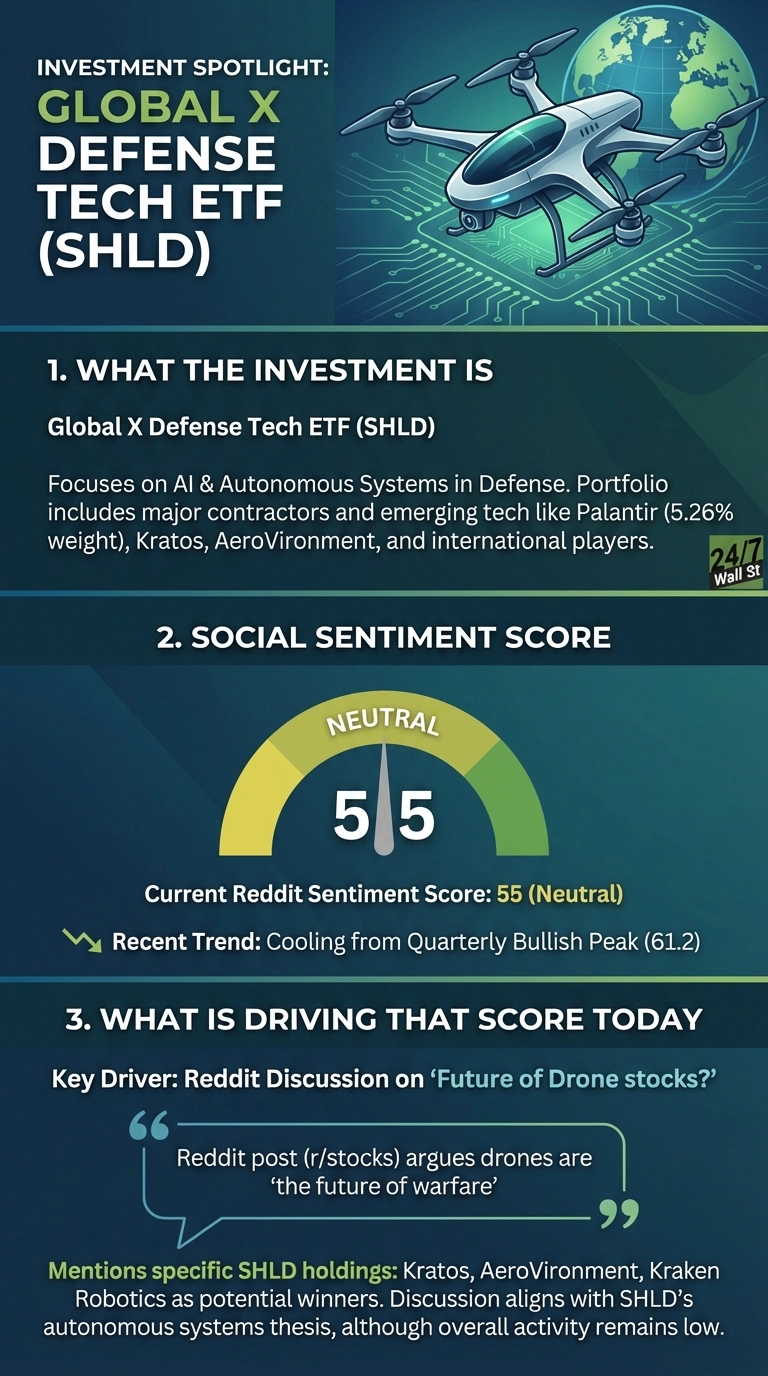
- SHLD holds Palantir at a 5.92% weighting, providing direct AI and data analytics exposure alongside traditional defense primes, including Palantir Technologies (NASDAQ:PLTR | PLTR Price Prediction)
- Over 88% of the fund sits in Industrials, anchored by Lockheed Martin (NYSE:LMT), RTX (NYSE:RTX), and General Dynamics (NYSE:GD), giving it durability through conventional defense budgets
- International holdings, including Rheinmetall, BAE Systems, and Thales, position the fund squarely inside Europe’s rearmament wave, alongside domestic names like Kratos Defense (NASDAQ:KTOS) and AeroVironment (NASDAQ:AVAV)
A Fund Built for the Current Threat Environment
Upon its launch in September 2023, SHLD offered a deliberate thesis: that AI and autonomous systems would converge with traditional defense contracting into a new category of industrial spending. The Iran conflict and European NATO commitments have validated that thesis faster than most expected. A hypothetical $1,000 investment at inception has grown to $2,480.51.
Whether European defense budgets translate into sustained contract flow for the non-US names in the portfolio is the real question, if they do, SHLD’s international diversification becomes a genuine performance driver rather than a structural footnote.













 Top Gaining Stocks

 Top Losing Stocks