IREN’s CEO Just Said 11 Words that Delivered the AI Boom a Brutal Reality Check
The artificial intelligence boom has kicked off one of the largest infrastructure races since the early internet era. Nvidia (NASDAQ:NVDA | NVDA Price Prediction) GPUs are selling faster than they can be packaged. High-bandwidth memory has become scarce enough that…

This post may contain links from our sponsors and affiliates, and Flywheel Publishing may receive compensation for actions taken through them.
The artificial intelligence boom has kicked off one of the largest infrastructure races since the early internet era. Nvidia (NASDAQ:NVDA | NVDA Price Prediction) GPUs are selling faster than they can be packaged. High-bandwidth memory has become scarce enough that companies like Micron Technology (NASDAQ:MU) and SK hynix are effectively sold out months in advance. Utilities from Virginia to Texas are warning that grid demand is accelerating faster than transmission upgrades can keep pace.
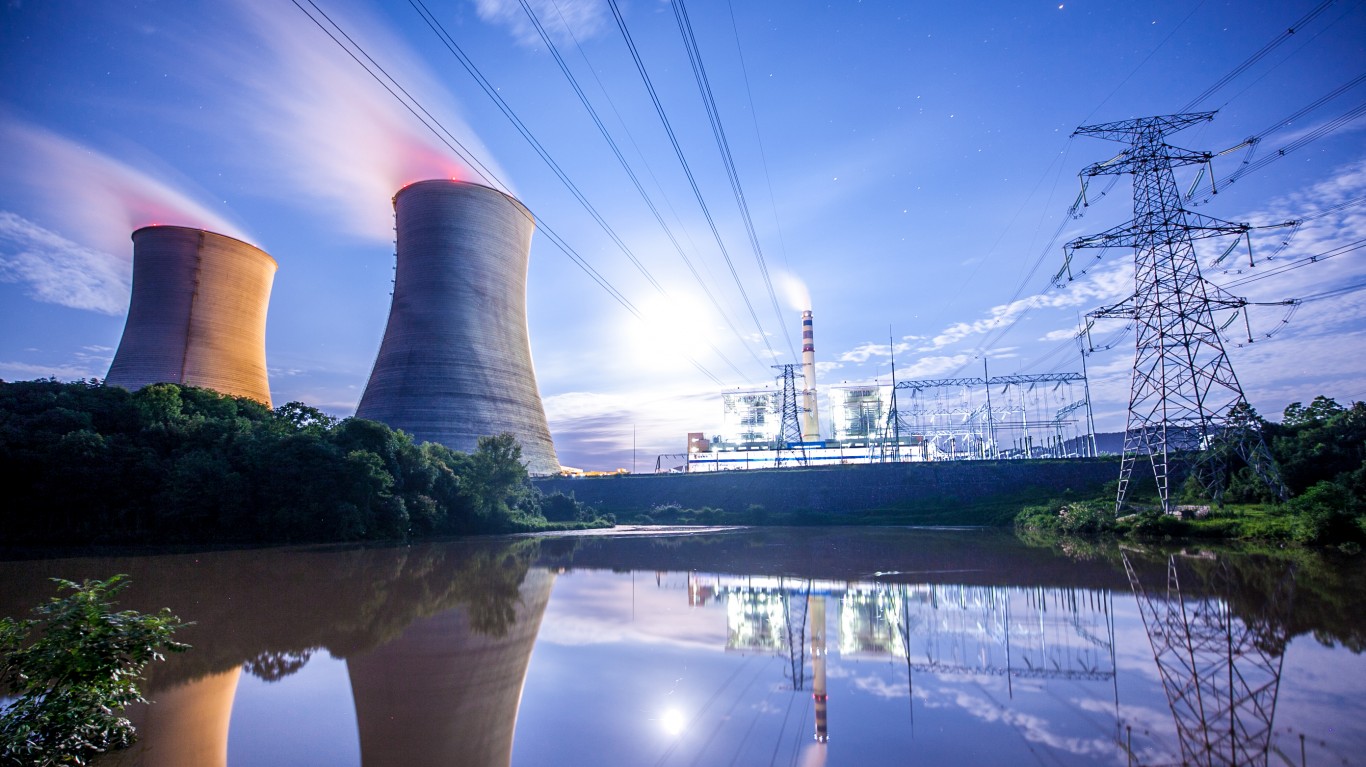
Now comes the next bottleneck — and it may be the biggest one yet. What happens when AI companies can’t even get power connected to new data centers?
That’s the warning Daniel Roberts, CEO of IREN (NASDAQ:IREN), delivered during an interview with Bloomberg Tech. His 11-word statement should grab every data center operator by the collar:
“If you wanted to start today and build a gigawatt AI factory, you are looking 2030 before you get the first compute online.”
The AI Arms Race Is Running Into Physical Limits
For the last two years, investors largely viewed AI as a semiconductor story. Nvidia’s revenue climbed from $27 billion in fiscal 2023 to $215.9 billion in fiscal 2026, but GPUs were only the first layer of the stack.
AI infrastructure requires enormous amounts of electricity, cooling, networking equipment, fiber connectivity, and land positioned near major transmission lines. That combination is becoming harder to secure by the quarter.
Roberts explained that before operators even begin construction, utilities may take 18 to 24 months simply to determine whether a site has available power capacity. That is the starting point — not the finish line.
In plain English, the AI boom is colliding with the realities of the electrical grid.
Consider the scale involved:
| Company | Planned AI/Data Center Capacity | Key Constraint |
| Microsoft (NASDAQ:MSFT) | Tens of billions in AI infrastructure spending in fiscal 2026 | Power availability |
| Amazon (NASDAQ:AMZN) | Expanding AWS AI regions globally | Transmission bottlenecks |
| Meta Platforms (NASDAQ:META) | Multi-gigawatt AI cluster ambitions | Grid interconnection delays |
| IREN | Existing powered campuses and expansion pipeline | Scaling advantage from early infrastructure ownership |
According to the International Energy Agency, global electricity demand from data centers could more than double by 2030. AI facilities are the largest contributor.
That means the companies that already control power access may hold the real advantage — not necessarily the ones still shopping for land.
Why Existing Infrastructure May Become the Most Valuable Asset
Surprisingly, Roberts’ comments suggest the market may still underestimate the value of “ready-to-power” infrastructure.
For years, IREN was viewed primarily as a Bitcoin mining operator. But the company spent years securing land, power agreements, cooling systems, and transmission connectivity in regions with scalable energy access. In today’s environment, those assets may be harder to replicate than investors realize.
That matters because a 1-gigawatt AI factory is enormous. For comparison, 1GW roughly equals the electricity demand of hundreds of thousands of homes. Utilities cannot simply flip a switch and accommodate that level of consumption.
Granted, hyperscalers still possess the financial firepower to spend aggressively. Alphabet (NASDAQ:GOOG), Microsoft, Amazon, and Meta collectively generated more than $800 billion in operating cash flow over the past year. But cash alone cannot accelerate utility approvals or build transmission lines overnight.
In any case, the timeline Roberts outlined changes the narrative. Investors are no longer just evaluating who can buy Nvidia chips. They are evaluating who already has the infrastructure foundation in place today.
Key Takeaway
In short, the AI boom is no longer constrained only by chips — it is constrained by physics, electricity, and time.
Roberts’ warning about 2030 timelines highlights a growing reality: the next wave of AI winners may be the companies that, like IREN, secured power, land, and interconnect capacity years ago. Regardless of how you look at it, operators starting from scratch now face a far steeper climb than investors may appreciate.
That does not guarantee IREN becomes a dominant AI infrastructure player. Competition remains fierce, and capital requirements remain massive. But when all is said and done, Roberts’ comments reinforce one critical point for sharp investors: in the AI era, owning infrastructure early may matter just as much as owning the chips themselves.
Contact [email protected] for any questions or corrections.
After two decades of patrolling the dark corners of suburbia as a police officer, Rich Duprey hung up his badge and gun to begin writing full time about stocks and investing. For the past 20 years, he’s been cruising the markets looking for companies to lock up as long-term holdings in a portfolio while writing extensively on the broad sectors of consumer goods, technology, and industrials. Because his experience isn’t from the typical financial analyst track, Rich is able to break down complex topics into understandable and useful action points for the average investor. His writings have appeared on The Motley Fool, InvestorPlace, Yahoo! Finance, Money Morning, and, of course, 24/7 Wall St. He has been featured in both U.S. and international publications, including MarketWatch, Financial Times, Forbes, Fast Company, and USA Today.